Is London the biggest city in the world? Here's the real ranking
City Population Rank Checker
Enter a city to see its global ranking by metropolitan population.
People often assume London is one of the largest cities on Earth. After all, it’s the capital of a former empire, a global financial center, and a cultural powerhouse. But when it comes to raw population, London isn’t even close to the top. In fact, it doesn’t make the top 20.
What’s the biggest city in the world right now?
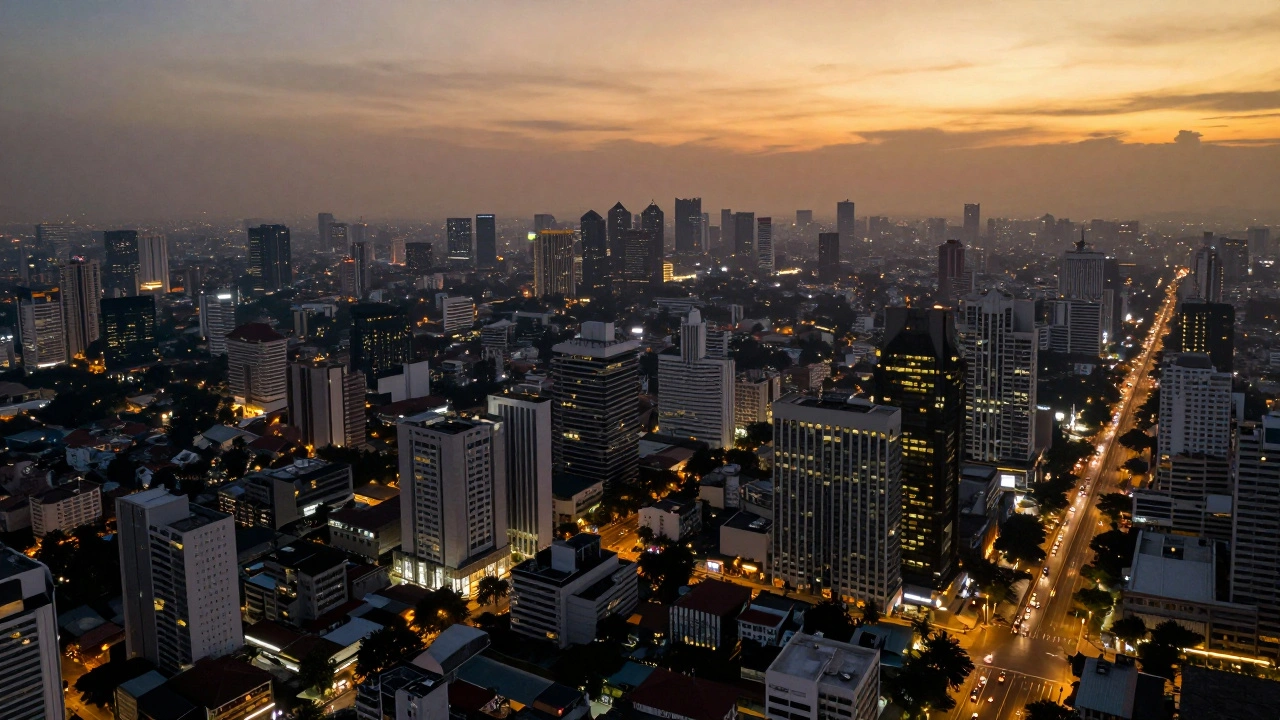
As of 2025, the title goes to Jakarta, Indonesia, with nearly 42 million people living in its urban sprawl. That’s more than four times the population of London’s city center. Right behind it is Dhaka, Bangladesh, at almost 40 million. Tokyo, often thought of as the giant, is third with 33.4 million. These aren’t estimates from old data - they’re the latest figures from the United Nations’ 2025 World Urbanization Prospects report, released just weeks ago.
What’s surprising isn’t just who’s on top, but who’s missing. London, Paris, New York, and even Berlin don’t appear in the top 10. In fact, nine of the top ten most populous cities are in Asia. The only non-Asian city in the top ten is Cairo, Egypt, at number five with over 23 million people.
Why does London seem bigger than it is?
London’s reputation as a giant city comes from history, not numbers. From 1831 to 1925, it was the world’s largest city. Back then, the British Empire stretched across the globe, and London was its beating heart. That legacy lingers. Many Brits still think of London as the biggest, simply because it’s the biggest they’ve ever known.
There’s also confusion over what counts as a “city.” If you measure by administrative boundaries alone - what’s called “city proper” - London has about 8.9 million people. That sounds big, until you compare it to Chongqing in China, which has an official population of 32 million. But here’s the catch: Chongqing’s city limits cover an area the size of Austria. It includes mountains, farmland, and small towns. The actual urban core of Chongqing? Around 16 million. Still bigger than London, but not by 30 million.
For a fairer comparison, you need to look at the metropolitan area - the city plus all the suburbs and commuter zones. London’s metro area has about 14 million people. That’s impressive, but it still falls short of Jakarta’s 42 million, Dhaka’s 40 million, and even Delhi’s 34.7 million. London ranks 12th globally by metro population. Not bad, but nowhere near number one.
Why isn’t London growing like other megacities?
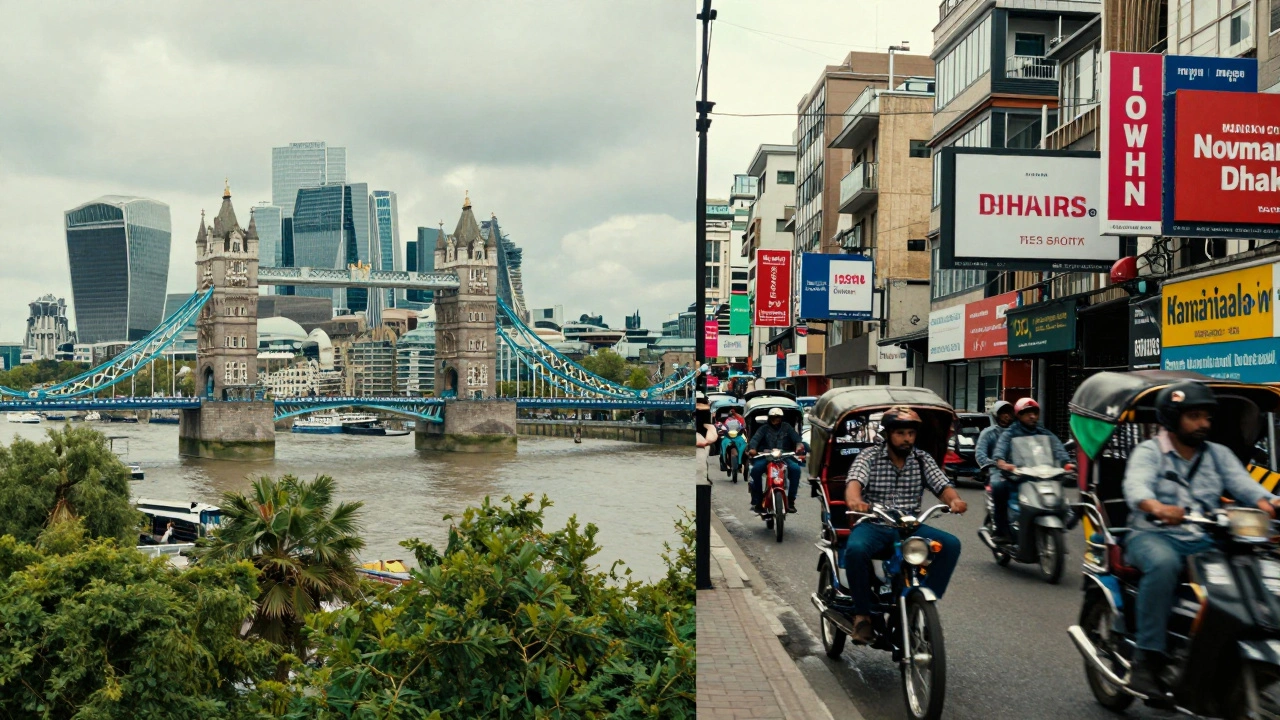
London’s population growth is slow - just 0.5% per year. Compare that to Dhaka’s 3% or Jakarta’s 2.8%. Why the difference? It’s not because people don’t want to move there. London is still one of the most desirable cities in the world for jobs, culture, and education. But its growth is capped by policy.
The Metropolitan Green Belt, created in 1938, is a ring of protected land around London that stops the city from spreading outward. It was meant to prevent urban sprawl and preserve countryside. Today, it’s a major reason London can’t expand like Jakarta or Manila. Those cities simply absorb nearby towns into their official boundaries. London can’t. It’s stuck with 32 boroughs and a fixed border.
Meanwhile, cities in Asia and Africa are growing fast because of rural-to-urban migration. People are leaving farms for jobs in cities. In Bangladesh, Indonesia, and Nigeria, that’s happening at a massive scale. In the UK, population growth is slowing. Immigration helps, but housing shortages and strict planning rules keep the numbers from exploding.
Where does London actually rank?
Here’s the real picture, based on the latest data:
- City proper (administrative boundaries): London is 63rd in the world with 8.9 million people.
- Urban area (continuous built-up zone): London ranks 21st with around 10.3 million people.
- Metropolitan area (city + suburbs): London is 12th with 14 million people.
By any measure, London is not the biggest. But it doesn’t need to be. It’s still the largest city in Europe. It’s home to more Fortune 500 European headquarters than any other city. It’s a top global hub for finance, media, education, and tourism. The UN and World Bank both say London’s influence comes from its economic power, not its population size.
What does the future hold?
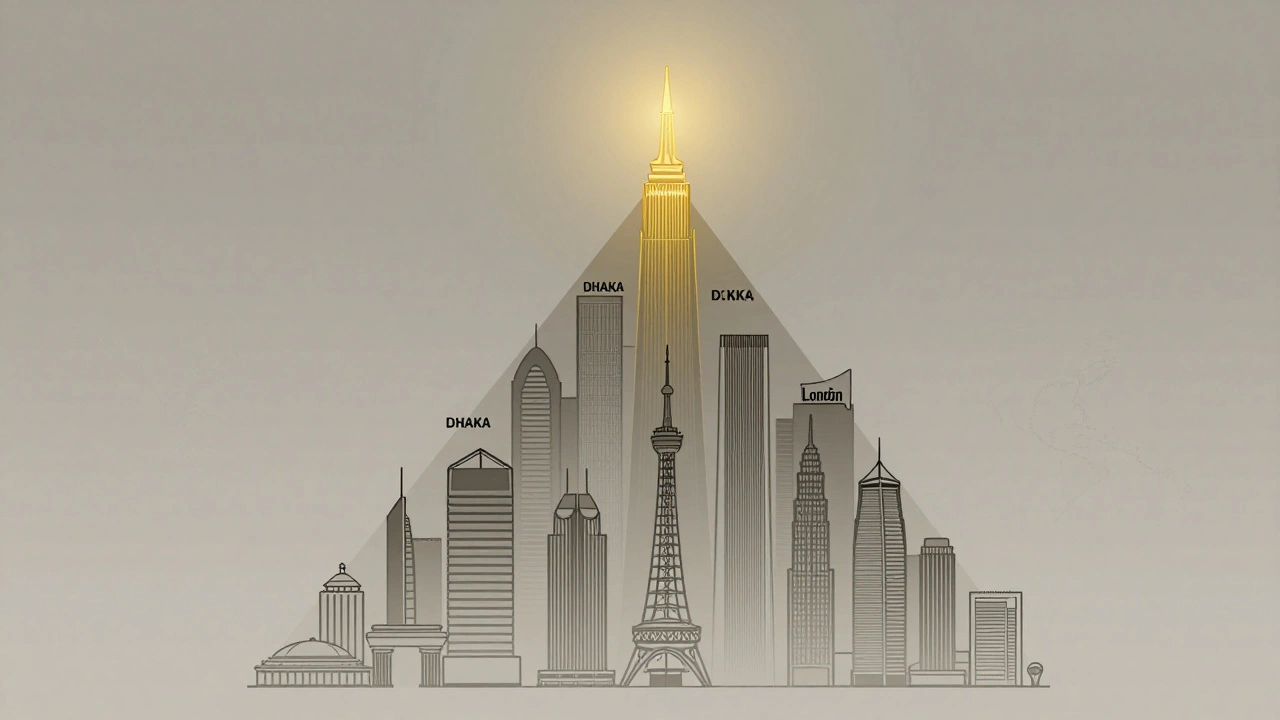
The trend isn’t changing. By 2050, the UN expects Dhaka to become the world’s largest city, with over 45 million people. Jakarta will be close behind. Lagos, Nigeria, will likely join the top five. Tokyo, currently third, will drop out of the top ten.
London? It’s projected to reach 10.3 million by 2043 - a steady climb, but nowhere near the explosive growth seen in Asia and Africa. Experts say this isn’t a failure. It’s a choice. Britain has prioritized quality of life, green space, and manageable density over sheer scale. Other cities are building upward and outward. London is building smarter, denser, and more sustainably - even if that means staying smaller.
So, is London the biggest city in the world?
No. It never has been in the modern era. But it doesn’t have to be. Being the biggest doesn’t mean being the most important. London’s power lies in its banks, its universities, its museums, its global connections, and its ability to attract talent from every corner of the world. Population numbers don’t capture that.
Next time someone says London is the biggest city, you’ll know the truth. It’s not. But it’s still one of the most powerful.


About Author
