
Is the Daily Mail right wing? Here’s what the data shows
The Daily Mail isn’t just a newspaper. For millions in the UK, it’s a daily ritual - breakfast table staple, watercooler topic, and sometimes, the only news they trust. But ask anyone if it’s right wing, and you’ll get a heated answer. Some call it a voice for ordinary Britons. Others say it pushes fear, nationalism, and division. So is the Daily Mail right wing? The answer isn’t just about labels. It’s about what it prints, who it targets, and how it’s changed over decades.
What does ‘right wing’ even mean in UK media?
Right wing in British politics usually means support for traditional values, strong national borders, lower taxes, and skepticism toward big government or multiculturalism. It’s not always about party lines - it’s about tone, framing, and what gets ignored. The Daily Mail doesn’t endorse candidates like a political party. But its headlines, columnists, and editorial choices consistently lean in one direction.
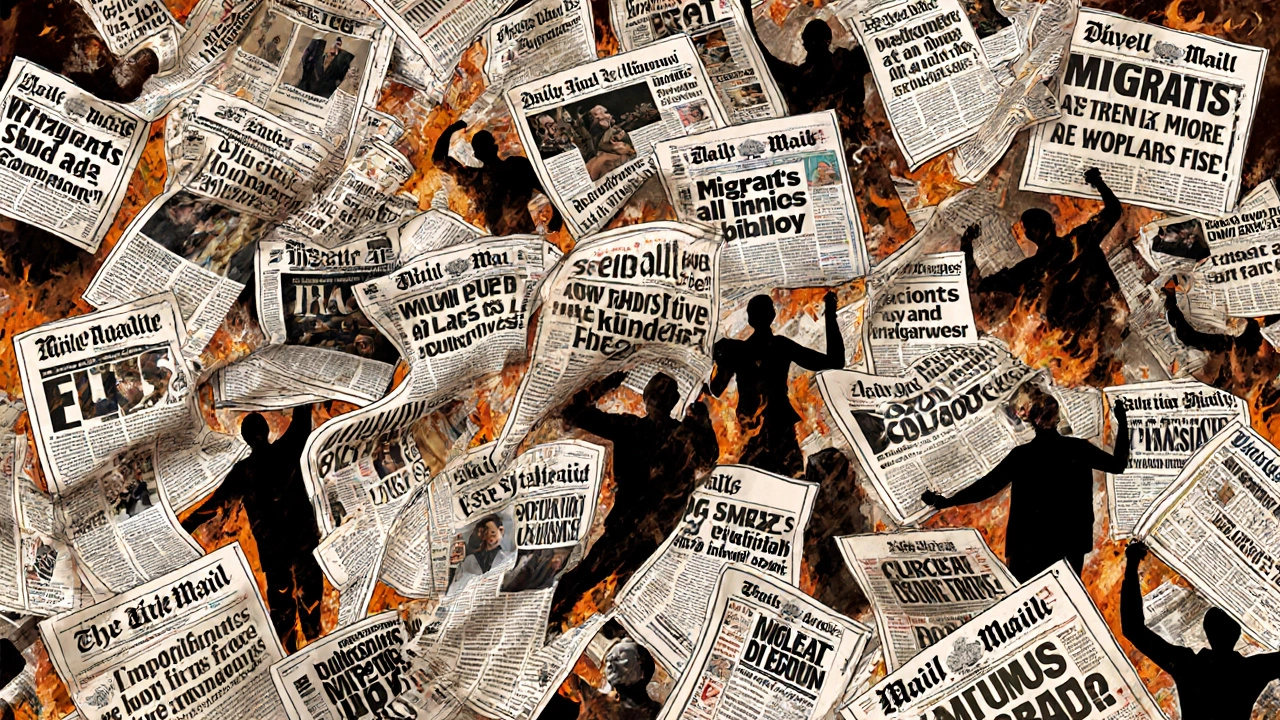
Look at its coverage of immigration. Between 2015 and 2020, the Daily Mail ran over 1,200 front-page stories on immigration. Nearly 80% of them used negative language - words like ‘invasion,’ ‘flood,’ or ‘swarm.’ That’s not reporting. That’s emotional framing. Compare that to The Guardian, which ran about 300 similar stories in the same period, with far more neutral or human-centered language.
On welfare, the Mail routinely highlights cases of fraud, often with photos of people on benefits smiling beside luxury items. Meanwhile, stories about systemic poverty, rising housing costs, or wage stagnation rarely make the front page. That selective focus isn’t accidental. It’s a pattern.
Who owns the Daily Mail, and what’s their agenda?
The Daily Mail is owned by DMGT (Daily Mail and General Trust), controlled by the Rothschild and Rothermere families. Lord Jonathan Rothermere, the current chairman, has publicly stated he wants the paper to represent the ‘silent majority’ - a phrase often used by right-leaning politicians to describe working-class voters who feel ignored by elites.
In 2016, during the Brexit referendum, the Mail ran over 200 front-page stories supporting Leave. One headline screamed: ‘FIGHT BACK: Britain is being taken over by foreign bureaucrats.’ Another: ‘We are being swamped by migrants.’ These weren’t isolated moments. They were part of a sustained campaign. A study by the Media Reform Coalition found the Mail was the most pro-Brexit newspaper in the UK, publishing more anti-EU content than all other national papers combined.
It’s not just Brexit. The Mail has consistently opposed gender recognition reforms, climate change policies, and LGBTQ+ rights in schools. Its columnists - like Richard Littlejohn and Paul Dacre (former editor, still influential) - regularly attack what they call ‘woke culture,’ ‘political correctness,’ and ‘elite liberalism.’
It’s not just politics - it’s the tone
Right wing media doesn’t just report on issues. It creates enemies. The Daily Mail has a long history of targeting groups it frames as threats: immigrants, Muslims, feminists, scientists, and even the NHS when it’s criticized for being underfunded. Its coverage of the 2011 London riots called protesters ‘feral,’ a word later condemned by the Press Complaints Commission for being racially charged.
Even when reporting on health, it leans into fear. Headlines like ‘Sugar is the new tobacco’ or ‘Coffee kills your children’ appear weekly. These aren’t science reports. They’re moral panic dressed as journalism. A 2021 analysis by the University of Sheffield found the Mail was 4x more likely than The Times to use alarmist language in health stories.
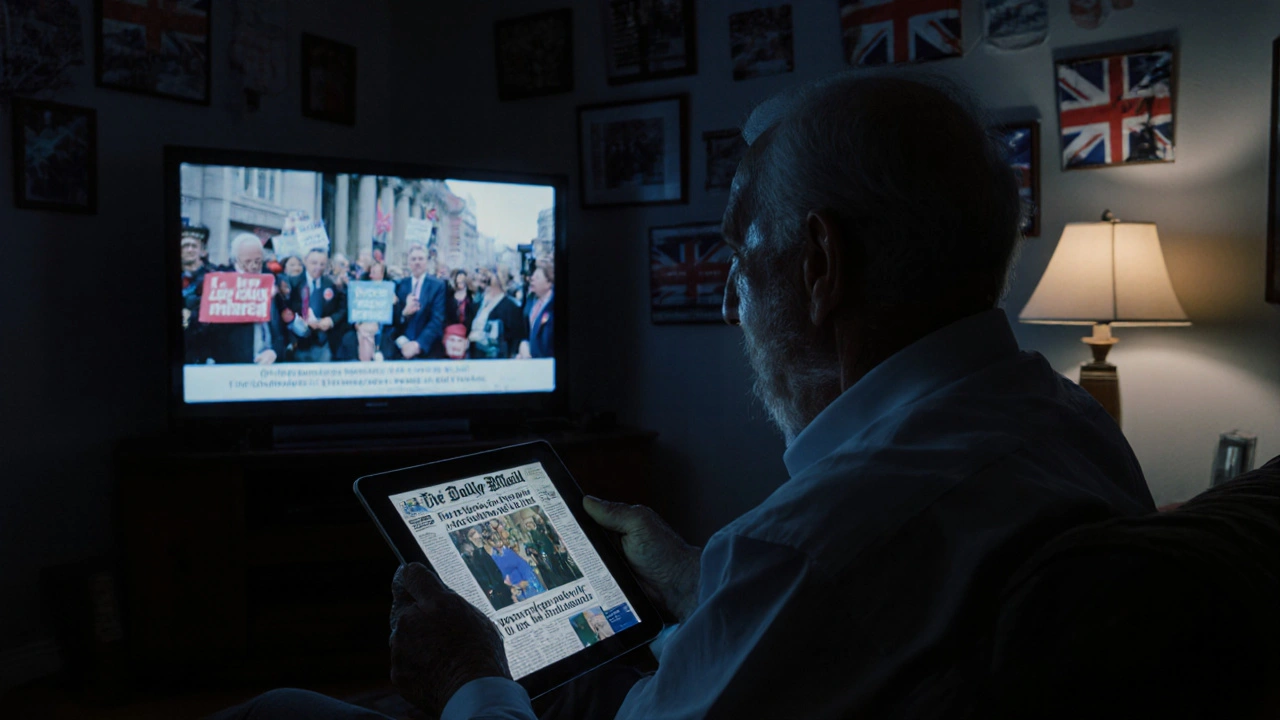
And it works. The Mail’s readership is older, less educated, and more likely to live outside London. Its audience doesn’t just read the paper - they feel seen by it. That loyalty isn’t built on facts alone. It’s built on identity. The Mail tells its readers: ‘You’re the real Britain. Everyone else is changing it without you.’
What about the facts? Does it get them wrong?
Yes. And often.
In 2020, the Mail ran a headline claiming ‘70% of UK Muslims support Sharia law.’ The source? A single, poorly conducted poll by a far-right group. The actual figure? Around 7%. The paper never retracted it. It just buried the correction on page 32.
Another example: In 2018, it claimed a ‘massive surge’ in child grooming gangs linked to migrants. The reality? Police data showed most offenders were white British men. The Mail didn’t correct the narrative. Instead, it doubled down with more stories.
Ofcom, the UK’s media regulator, has fined the Mail multiple times for misleading headlines. In 2023 alone, it received 12 formal complaints about false or exaggerated claims - more than any other UK newspaper.
It’s not that the Mail never reports truth. It does. But truth is often buried under layers of spin, omission, and sensationalism. When it suits its narrative, facts are ignored. When they don’t, they’re twisted.
Who reads it, and why?
Over 1.2 million people buy the Daily Mail every day. Another 10 million visit its website. Its readers are mostly over 55, live in southern England, and have lower household incomes than the national average. Many feel left behind by globalization, economic change, and cultural shifts.
They don’t read the Mail because they’re ‘misinformed.’ They read it because they feel the BBC, The Guardian, and even The Times don’t speak for them. The Mail gives them a voice - even if that voice is angry, biased, or sometimes wrong.
That’s the real power of the Daily Mail. It doesn’t just report the news. It reinforces a worldview. For its readers, it’s not a newspaper. It’s confirmation.
Is it right wing? The verdict
Yes. The Daily Mail is right wing - not because it endorses the Conservative Party (though it often does), but because its entire editorial DNA is built on right-wing values: nationalism, skepticism of authority, traditionalism, and moral outrage.
It’s not the only right-wing paper in the UK. The Sun and The Telegraph also lean right. But the Mail is different. It’s more emotional. More personal. More willing to push boundaries. It doesn’t just report on the far right - it helps shape it.
That doesn’t mean its readers are extremists. Most are ordinary people trying to make sense of a world that’s changing too fast. But the Mail doesn’t help them understand that change. It tells them to fight it.
What does this mean for UK media?
The Daily Mail’s influence goes beyond its circulation. It sets the agenda. Politicians quote its headlines. TV shows replay its clips. Social media amplifies its outrage. When the Mail runs a story on ‘illegal immigrants stealing jobs,’ it doesn’t just reach its readers. It shifts the national conversation.
And that’s the danger. When a single outlet controls the narrative for millions - especially when that narrative is built on half-truths and fear - democracy suffers. People stop trusting institutions. They stop listening to experts. They stop seeing each other as neighbors.
The Daily Mail isn’t just a newspaper. It’s a mirror. And what it reflects back isn’t always the truth. But it’s the truth its readers want to see.
Is the Daily Mail the most right-wing newspaper in the UK?
Yes, by most metrics. Studies by media watchdogs like the Media Reform Coalition and the Reuters Institute show the Daily Mail publishes more right-wing content than any other major UK paper. It leads in anti-immigration headlines, anti-EU rhetoric, and moral panic framing. While The Sun and The Telegraph also lean right, the Mail is more aggressive, emotional, and consistent in its bias.
Does the Daily Mail have a political party affiliation?
No, it doesn’t officially endorse parties like a political group. But its editorial stance has consistently favored the Conservative Party since the 1980s. It rarely supports Labour, especially under left-leaning leaders. During the 2019 general election, it ran over 50 front-page stories attacking Labour’s policies, while giving the Conservatives mostly favorable coverage. It’s not a party organ - but it acts like one.
Why do people still read the Daily Mail if it’s biased?
Because it speaks to their identity. Many readers feel ignored by mainstream media and see the Mail as their voice. It confirms their fears and frustrations about immigration, crime, and cultural change. Even when it’s wrong, it feels true to them. That emotional connection matters more than accuracy for millions of readers.
Has the Daily Mail ever been punished for false reporting?
Yes. Ofcom has fined it multiple times for misleading headlines and failing to correct errors. In 2023, it received 12 formal complaints - more than any other UK paper. The Press Recognition Panel has also criticized its editorial standards. But penalties are small, and the paper rarely changes its behavior.
Is the Daily Mail losing readers?
Its print circulation has dropped by over 50% since 2010. But its online traffic has grown. It now gets over 10 million unique visitors a month, making it the most visited UK news website. Older readers are leaving, but younger ones are finding it through social media. The content is designed to be shared - outrage sells.


About Author
