Is The Guardian left or right? Understanding its political stance in 2025
UK Newspaper Bias Comparison Tool
This tool compares The Guardian's political position against other major UK newspapers based on the latest data from the article. Select another newspaper to see how it aligns with The Guardian's stance.
The Guardian
Key: Left-Center (left of center), Center (middle), Right-Center (right of center). Data based on 2023 trust ratings and media bias analysis.
When people ask if The Guardian is left or right, they’re not just curious about a label-they want to know if they can trust it, if it reflects their values, or if it’s pushing an agenda. The answer isn’t simple, but it’s clear: The Guardian is center-left. Not radical, not fringe, but firmly on the left side of Britain’s mainstream political spectrum. And that’s been true for nearly 200 years.
Where The Guardian Comes From
The paper started in 1821 as the Manchester Guardian, founded by a group of liberal reformers tired of government corruption and industrial exploitation. Their goal? To give a voice to workers, push for fair elections, and challenge the power of the elite. That mission never disappeared. Even after moving to London and dropping ‘Manchester’ from its name in 1959, the core values stayed: accountability, social justice, and a belief that government should protect the vulnerable.
Today, it’s owned by the Scott Trust, a unique structure designed to keep the paper independent from wealthy owners or political parties. The Trust’s charter says its main job is to preserve The Guardian’s liberal tradition-not to chase profits, not to please politicians, but to serve the public with integrity. That’s why, unlike most newspapers, it doesn’t rely on ads alone. It asks readers to contribute. In 2021-2022, readers gave over £144 million. That’s not charity-it’s a vote of confidence. People pay because they believe in what the paper stands for.
How It Votes-And Who Reads It
The Guardian doesn’t just report on elections; it endorses candidates. And when it does, it’s almost always for the left.
- In 2010, it backed the Liberal Democrats because they supported changing the voting system.
- In 2015, it switched to Labour under Ed Miliband, saying Britain needed a stronger push against inequality and corporate greed.
- In 2019, it strongly supported staying in the EU-publishing 78 editorials for Remain versus just 3 for Leave.
- In 2024, it endorsed pro-EU, progressive candidates across Europe.
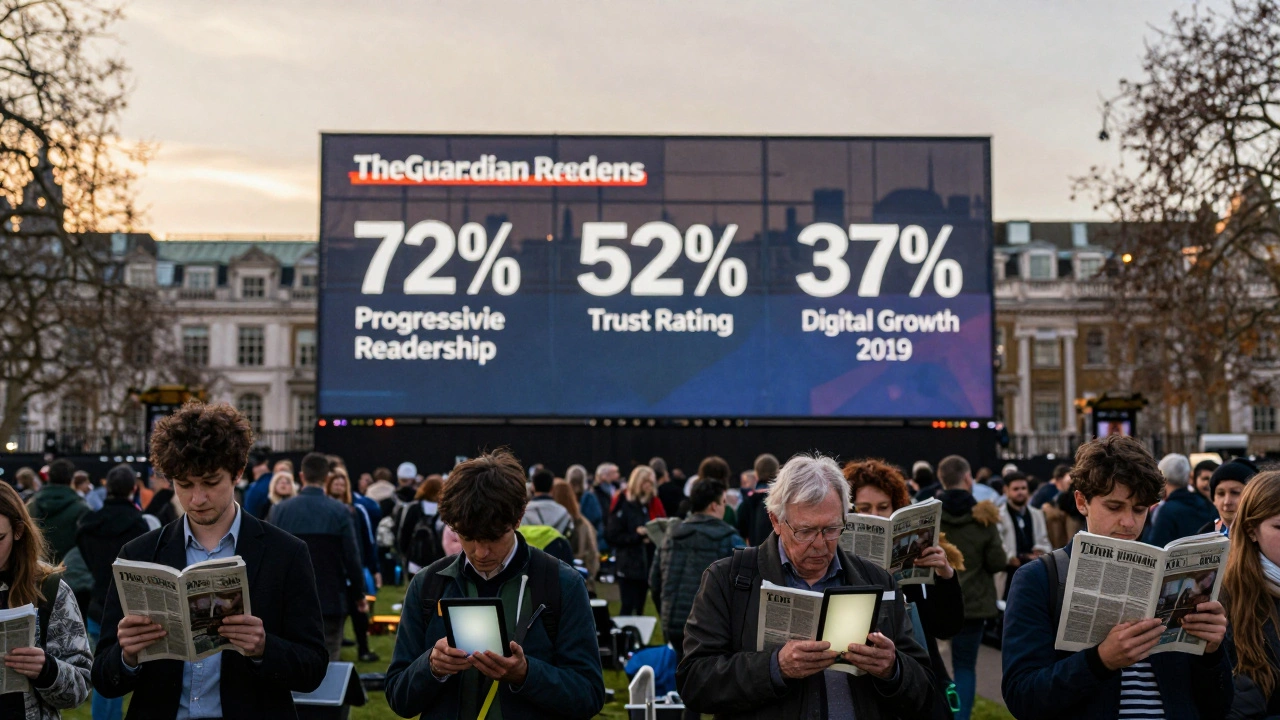
Who reads it? Polls show 72% of its audience identifies as liberal or progressive. Only 9% are consistently conservative. Among Labour voters, it’s one of the most trusted sources. Even among those who don’t vote Labour, 81% of British adults still see The Guardian as left-leaning-according to a 2023 YouGov survey of over 1,700 people. That’s higher than any other major UK paper. The Mirror comes second, but even it’s seen as less left than The Guardian.
How It Covers Issues
It’s not just who it supports-it’s how it talks about issues.
On climate change? The Guardian runs daily coverage, calls for bold action, and names fossil fuel companies as key obstacles. In 2023, it made headlines by cutting ties with oil and gas companies as advertisers.
On welfare? It frames cuts as harmful to children and the elderly. A 2021 study from Cardiff University found 65% of its articles on welfare used positive language toward recipients-compared to just 28% in right-leaning papers like The Daily Mail.
On race and gender? It amplifies marginalized voices. It covers police reform, trans rights, and pay gaps with depth and regularity. Its headlines don’t say “woke madness” or “snowflakes.” They say “systemic racism,” “transphobia,” and “economic inequality.”
But here’s the nuance: it doesn’t always back the far left. In 2015, during the Labour leadership race, it supported Yvette Cooper-a centrist Blairite-over Jeremy Corbyn. Critics on the left called it out. The Morning Star, a Communist paper, accused The Guardian of being “conservative.” And they weren’t entirely wrong. On economic policy, The Guardian often stops short of calling for wealth taxes or nationalizing industries. It supports higher taxes on the rich, yes-but rarely pushes for radical redistribution. As one academic found after analyzing 1,200 editorials from 2015-2020, it’s progressive on social issues but cautious on economic ones. It’s liberal, not socialist.
How It Compares to Other Papers
Think of the UK press like a spectrum:
| Newspaper | Political Bias | Trust Rating (UK) | Primary Audience |
|---|---|---|---|
| The Guardian | Left-Center | 52% | Progressive, urban, educated |
| The Mirror | Left | 48% | Working class, older readers |
| The Independent | Center | 45% | Centrist, digital-first |
| The Telegraph | Right-Center | 41% | Conservative, older, affluent |
| The Daily Mail | Right | 37% | Right-leaning, tabloid readers |
Media Bias/Fact Check rates The Guardian as “Left-Center” with “High” factual accuracy. That means it picks stories that favor the left-but doesn’t make up facts. In 2022, it had only one major correction for every 1,200 articles. That’s better than most. The Telegraph, by contrast, has a “Right-Center” bias and higher rates of misleading framing on issues like immigration and climate.
Why People Trust-or Distrust-It
Trust isn’t universal. About 19% of UK readers actively distrust The Guardian. Why? Because they see it as elitist. Or out of touch. Or too focused on identity politics.
But for many, especially younger, urban, and educated readers, it’s one of the few outlets that doesn’t treat climate denial as a legitimate debate, or poverty as a personal failure. It’s not perfect. It’s been criticized for being too cautious on economic reform, too slow to cover certain working-class issues, and sometimes too eager to please its digital audience with click-friendly headlines.
Still, it’s the only major UK paper that’s grown its audience while staying true to its values. Between 2019 and 2023, its digital readership jumped 37%. The Telegraph grew just 12%. The Independent, 28%. The Guardian didn’t become popular by chasing outrage. It became popular by offering something rare: consistent, fact-based reporting with a clear moral compass.
Is It Still Relevant?
In 2023, The Guardian posted its first operating profit in 20 years. That’s not luck. It’s strategy. It doubled down on its core audience-progressive, digitally engaged, willing to pay. But it also launched “Common Ground,” a section focused on bipartisan solutions. It’s not trying to become The Telegraph. But it’s not ignoring conservatives either.
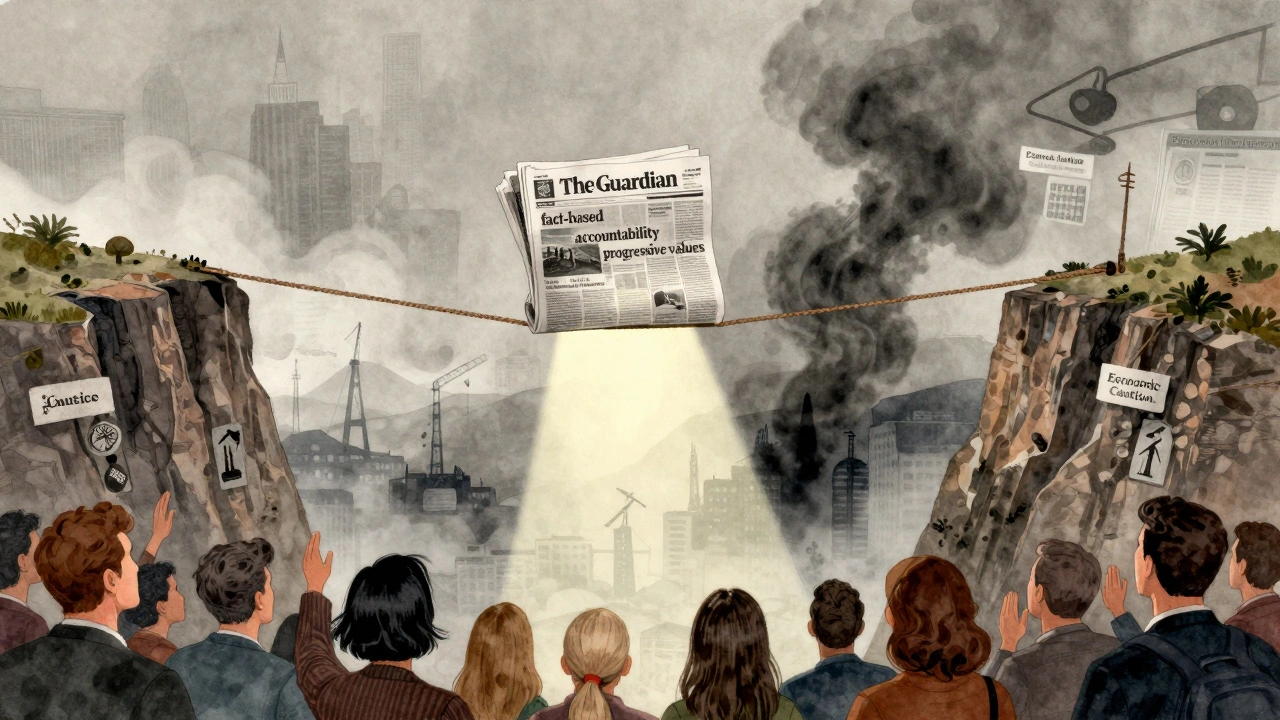
Its CEO, Anna Bateson, says its role is to “advocate for progressive values while holding all political parties to account.” That’s the tightrope. It’s not a mouthpiece for Labour. It’s not an activist group. It’s a newspaper with principles-and it’s not afraid to say what it believes.
So is The Guardian left or right? Left. Center-left, to be precise. It’s the most left-leaning major paper in Britain. But it’s not radical. It’s thoughtful. It’s fact-driven. And it’s still changing-just not the way its critics fear.
What This Means for You
If you’re on the left, you’ll find your views reflected here-sometimes too gently, sometimes too loudly. If you’re on the right, you’ll find plenty to disagree with. But if you want to understand how progressive ideas shape policy, how inequality is framed in public debate, or why climate change dominates headlines, The Guardian is essential reading.
Don’t read it because it agrees with you. Read it because it challenges you-with facts, not fury. That’s why, after nearly two centuries, it still matters.
Is The Guardian biased?
Yes, but not in the way most people think. The Guardian has a center-left editorial bias, meaning it favors progressive perspectives in story selection and framing. However, its factual accuracy is high. Independent fact-checkers like Media Bias/Fact Check rate it as having “High” credibility, with only one major correction per 1,200 articles. It doesn’t fabricate facts-it chooses which facts to highlight, and that choice leans left.
Does The Guardian support Labour?
It has endorsed Labour in recent elections, including in 2015 under Ed Miliband. But it doesn’t always support the party. In 2015, it backed centrist Yvette Cooper over Jeremy Corbyn in the Labour leadership race. It supports policies, not parties. If Labour moves too far left or right, The Guardian will criticize it. Its loyalty is to its values-social justice, climate action, democracy-not to any political brand.
Is The Guardian trustworthy?
Among UK readers, 52% trust The Guardian, placing it seventh among major news outlets. While 19% actively distrust it-often because they see it as elitist or overly political-it’s consistently rated as one of the most factually accurate newspapers in the country. Its corrections rate is lower than The Telegraph, The Daily Mail, and even The Independent. Trust depends on whether you value its perspective, not just its accuracy.
Why does The Guardian have so many readers if it’s left-wing?
Because it’s not just left-wing-it’s high-quality. Its journalism is rigorous, its investigations are deep, and its digital experience is clean and accessible. It doesn’t rely on clickbait. It attracts readers who want substance over outrage. Between 2019 and 2023, its UK digital audience grew by 37%, while right-leaning rivals grew much slower. People don’t read it because it’s left-they read it because it’s good.
Does The Guardian cover conservative viewpoints?
Yes, but not as a matter of balance-it’s as a matter of accountability. It reports on conservative ideas, interviews right-wing figures, and critiques left-wing policies when needed. But it doesn’t give equal space to false claims, like climate denial or anti-vaccine myths. Its goal isn’t neutrality-it’s truth. So if a conservative argument is factually flawed, it will say so. That’s why some conservatives feel it’s unfair. But that’s also why many others trust it.


About Author
