Is the USA Today Conservative? The Real Picture Beyond the Headlines
Political Divide Calculator
This tool compares your political views with national statistics from the article. Based on Gallup data and other sources, we'll show how your opinions align with current political divisions in America.
Abortion
LGBTQ+ Rights
Climate Policy
Government Role
Economic Policy
Is the United States conservative today? It’s a question that pops up every election cycle, but the answer isn’t as simple as counting votes or checking party labels. The truth is, America isn’t uniformly conservative - it’s deeply divided, and the parts that are conservative are pushing harder than ever. What’s happening now isn’t just about policy differences. It’s about a fundamental shift in who holds power, what they want to change, and how far they’re willing to go to get it.
More Americans Identify as Conservative - But Not Enough to Call It a Majority
In 2024, Gallup found that 37% of Americans called themselves conservative or very conservative. That’s a solid chunk - bigger than the 25% who identify as liberal or very liberal. But it’s not a majority. Nearly one-third of the country still sees itself as moderate. So if you’re asking whether the U.S. is a conservative nation, the data says no. But if you’re asking whether conservative ideas are dominating the political conversation, the answer is yes - and here’s why.
The real story isn’t in the overall numbers. It’s in the parties. Among Republicans, 77% now identify as conservative - the highest level in 30 years. That’s up from 51% in 1994. Meanwhile, 74% of Democrats call themselves liberal, also a record. The parties aren’t just different anymore. They’ve become ideological fortresses. And inside those fortresses, conservative ideas aren’t just accepted - they’re enforced.
Project 2025: The Blueprint for a Radical Restructuring
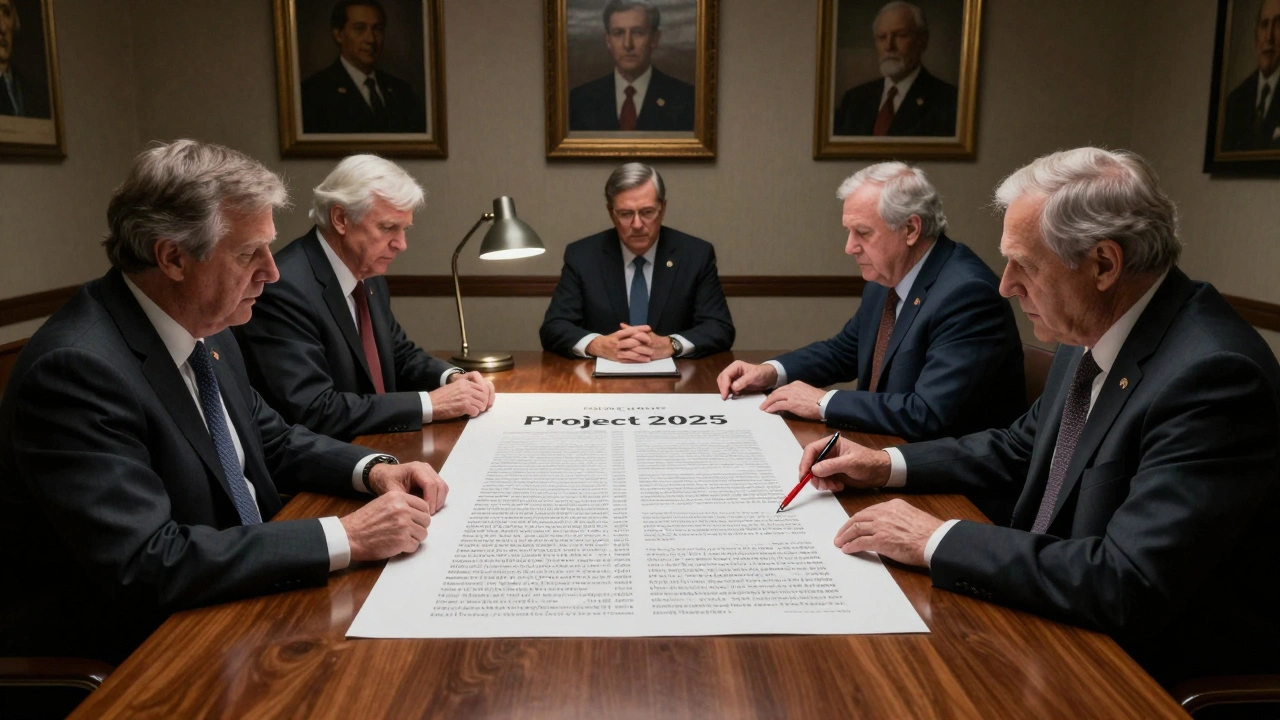
If you want to understand where the conservative movement is headed, look at Project 2025. It’s not a campaign slogan. It’s a 900-page manual written by over 100 conservative groups, including 140 former Trump administration officials. The Heritage Foundation led it, but it’s backed by Christian nationalists, hardline anti-abortion activists, and deregulation advocates who see government as the enemy.
The plan? Rewrite how the federal government works. It wants to eliminate diversity, equity, and inclusion (DEIA) programs, calling them "managerialist left-wing race and gender ideology." It wants to turn the Department of Justice and the EEOC into tools to punish companies that support LGBTQ+ rights or hire based on race or gender. It wants to gut food assistance programs, cut overtime pay for millions of workers, and strip protections for federal employees who speak out against political interference.
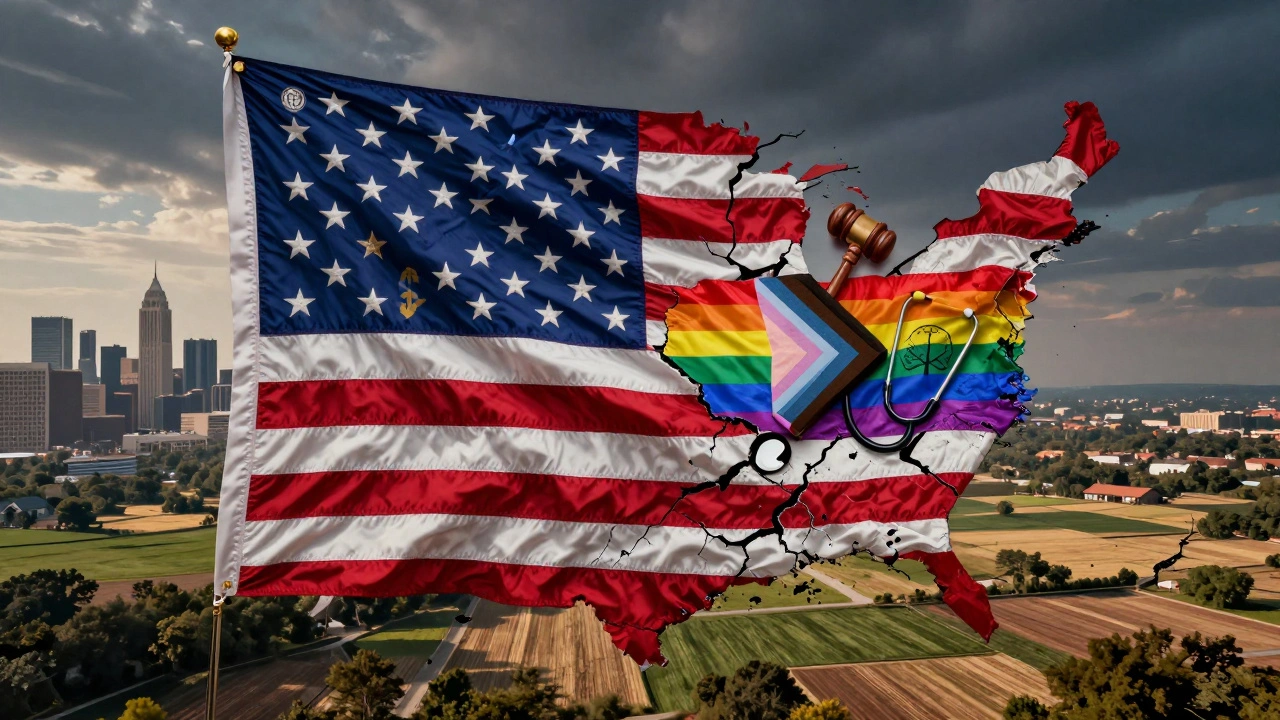
That’s not speculation. That’s the document itself. The ACLU calls it "outright unconstitutional." American Progress says it would create an "imperial presidency." And it’s not just theory - it’s already being tested in states. Texas banned gender-affirming care for minors. Florida passed the "Don’t Say Gay" law. Alabama made abortion a felony. These aren’t fringe actions. They’re the first steps of a national strategy.
Where Conservatives Win - And Where They’re Losing Ground
Conservatives don’t control everything. In fact, on key issues, they’re losing public support.
On crime and immigration, Republicans hold clear advantages. Pew Research’s October 2025 data shows a 17-point gap on crime (45% trust Republicans more) and a 9-point gap on immigration. But on healthcare, climate, abortion, and race, Democrats lead by 10 points or more. Even on LGBTQ+ rights - once a clear Democratic edge - the gap has shrunk to just 2 points. That’s a huge shift in just two years.
And here’s the kicker: Republicans’ economic edge has all but vanished. In 2023, they led Democrats by 12 points on handling the economy. In 2025? Just 3 points. That’s a collapse. Voters aren’t buying the old story that lower taxes and deregulation automatically mean more jobs and more money in your pocket. The economy’s still messy, and people are blaming both parties.
White Evangelicals Are the Engine - and the Limit
Behind the policy shifts is a powerful cultural force: white evangelical Christians. They make up about 23% of U.S. adults, but they vote at much higher rates than other groups. In 2024, 72% of them identified as conservative. That’s not just political - it’s religious. Their values drive opposition to abortion, support for school prayer, and resistance to LGBTQ+ rights.
But here’s the problem: this group is shrinking. Younger Americans are leaving religion behind. Only 18% of religiously unaffiliated adults identify as conservative. As this group grows, the conservative movement’s base gets older, whiter, and more isolated. That’s why Project 2025 feels so extreme to outsiders - it’s designed for a demographic that won’t be dominant forever.
State vs. Federal: The Real Battlefield
Washington isn’t the only place where conservatism is changing America. In fact, it’s often not the main one.
When the federal government is gridlocked - and it usually is - conservative state legislatures step in. Florida’s governor signed laws banning classroom discussions on gender identity. Texas cut funding for public schools that teach about systemic racism. Oklahoma banned gender-affirming care for minors. These aren’t random acts. They’re part of a coordinated effort to create a patchwork of conservative America - even if the White House doesn’t change hands.
Meanwhile, blue states like California and New York are doubling down on their own policies: expanding abortion access, protecting transgender rights, and tightening environmental rules. The country isn’t becoming conservative. It’s splitting into two separate countries - one that wants to roll back decades of social progress, and one that wants to build on it.
Public Trust Is Crumbling - Even Among Conservatives
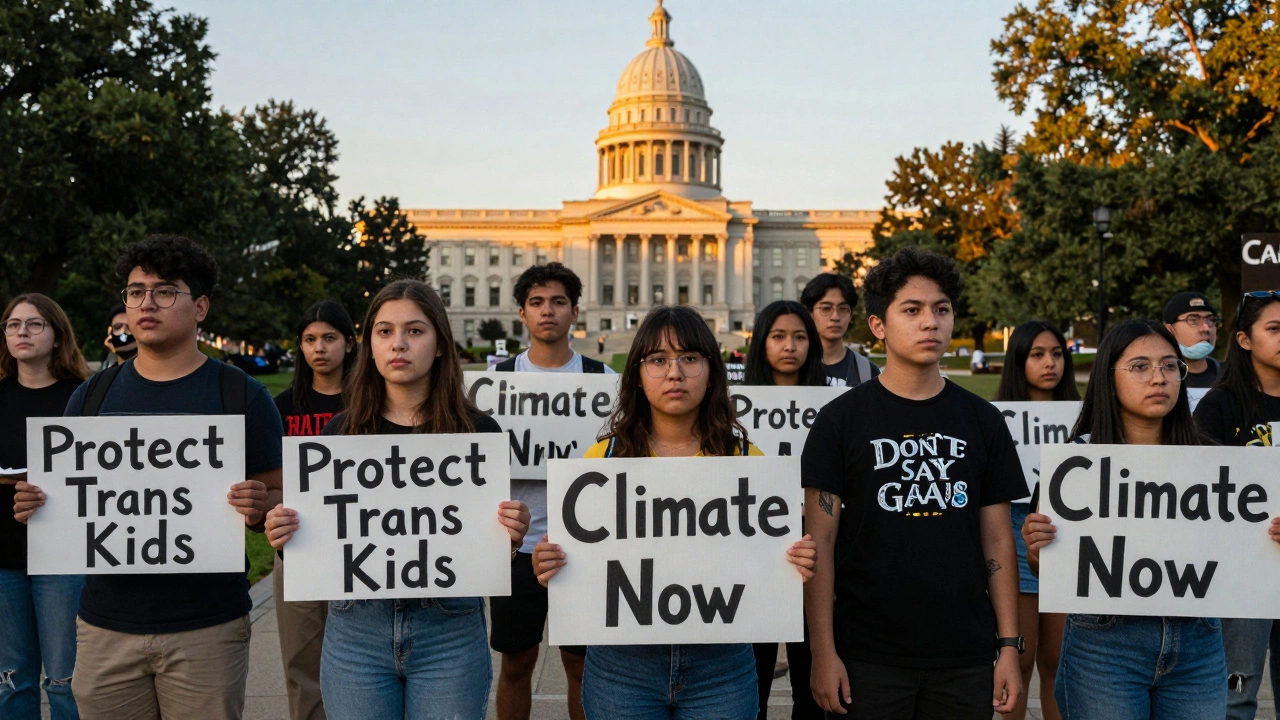
Here’s something you won’t hear on cable news: most Americans don’t trust either party. Only 39% believe the Republican Party governs ethically. That’s slightly lower than the 42% who say the same about Democrats. And a majority - 61% - think the GOP is too extreme. Even among self-identified conservatives, there’s unease. Many are tired of the culture wars. They want lower prices, better roads, and safer neighborhoods. But the party they vote for keeps pushing battles over books, bathrooms, and abortion.
That disconnect is dangerous. It means conservative leaders are governing for a vocal minority - not the public. And when the public realizes they’re being left behind on real issues, trust evaporates. That’s not sustainable.
The Future Isn’t Written - Yet
Is the USA conservative today? Not as a whole. But the conservative movement is more organized, better funded, and more aggressive than it’s been in decades. Project 2025 isn’t just a wishlist - it’s a playbook. And if Donald Trump wins in 2024, it could be put into action within weeks.
But the country isn’t sitting still. Young voters are turning out. Suburban women are rejecting extreme positions. Even some Republicans are quietly pushing back against the most radical ideas. The fight isn’t over. It’s just getting louder.
The real question isn’t whether America is conservative. It’s whether it can still find common ground - or if the divide has become too wide to cross.
Is the United States officially a conservative country?
No, the U.S. is not officially conservative. There’s no legal or constitutional designation for political ideology. Public opinion shows 37% of Americans identify as conservative, 34% as moderate, and 25% as liberal. That means conservatives are the largest single group, but not a majority. The country’s institutions remain neutral by design - even if the people running them aren’t.
What is Project 2025 and why does it matter?
Project 2025 is a 900-page policy plan developed by the Heritage Foundation and over 100 conservative groups. It outlines how to radically reshape the federal government if a conservative candidate wins the presidency. It calls for eliminating DEIA programs, using the DOJ to target diversity efforts, cutting food aid, and removing protections for federal workers. It’s not a campaign platform - it’s a detailed blueprint for executive power. If implemented, it would change how America functions in ways that affect millions.
Are conservative policies winning in Congress?
Not consistently. Congress is deadlocked. Most major conservative legislation - like national abortion bans or sweeping tax cuts - fails to pass because of Democratic opposition and internal GOP divisions. But conservative victories are happening at the state level, where Republican-controlled legislatures are passing laws on abortion, education, and gender identity without needing federal approval.
Why do some conservatives support extreme ideas?
Many conservatives feel that mainstream politics has moved too far left on culture, immigration, and identity. They believe traditional values - religious faith, national sovereignty, and limited government - are under attack. Some see extreme positions as necessary to stop what they view as cultural decline. Others are motivated by political strategy: polarizing issues drive turnout, donations, and media attention. The result is a movement that rewards the loudest voices, even if they don’t represent most Americans.
Can the U.S. become more liberal in the next few years?
Possibly - but not easily. While Democrats lead on healthcare, climate, and abortion rights, they struggle with messaging and voter turnout. Many voters who support liberal policies don’t trust the Democratic Party to deliver them. For liberalism to grow, it needs to reconnect with working-class voters, especially in rural and suburban areas. That means focusing less on identity politics and more on economic fairness, affordable housing, and public services - issues that cross ideological lines.
Is white Christian nationalism the same as conservatism?
No, but it’s become a major part of it. Traditional conservatism focuses on limited government, fiscal responsibility, and strong national defense. White Christian nationalism adds a layer of religious and racial identity - the belief that America should be a Christian nation ruled by white, traditional values. This version of conservatism is more exclusionary and is explicitly rejected by many mainstream conservatives. But it’s now the driving force behind Project 2025 and many state-level laws.


About Author
