Nuclear Weapons: What They Are, How They Work, and Why They Still Threaten the World
When we talk about nuclear weapons, devices that release massive energy through atomic fission or fusion, capable of destroying entire cities in seconds. Also known as atomic bombs or thermonuclear weapons, they are the only weapons ever used in war — and the only ones that can end human civilization in minutes. These aren’t science fiction. They’re real, deployed, and actively shaping global politics today.
Nuclear weapons rely on nuclear fission, the splitting of heavy atoms like uranium or plutonium to trigger a chain reaction. The first bomb, dropped on Hiroshima in 1945, killed 70,000 people instantly. Modern warheads are hundreds of times more powerful. A single missile can wipe out a metropolis, and a full-scale nuclear exchange could send enough soot into the atmosphere to block sunlight for years — a phenomenon called nuclear winter, a global climate collapse caused by firestorms from multiple detonations. Even a limited strike between India and Pakistan could cause famine for over a billion people.
The world still holds over 12,000 nuclear warheads. The U.S. and Russia own 90% of them. Others — China, France, the UK, India, Pakistan, Israel, and North Korea — have built their own. The fear isn’t just about war. It’s about accidents, miscalculations, or rogue actors. In 2022, Russia threatened nuclear use during its invasion of Ukraine. In 2023, North Korea tested a new intercontinental missile. These aren’t bluffs. They’re signals that nuclear deterrence — the idea that having these weapons stops others from attacking — is holding by a thread.
There’s no treaty that’s fully working anymore. The last major arms control deal, New START, is barely functional. Talks have stalled. New weapons are being developed — hypersonic missiles that can’t be intercepted, low-yield nukes meant to be "usable" in battle. These changes make the risk higher, not lower. People think nuclear weapons are a Cold War relic. They’re not. They’re the loudest alarm bell still ringing in the 2020s.
What you’ll find here aren’t just headlines. These are real stories — from the politics behind nuclear deals to the science of radiation, from the people who live near testing sites to the experts warning we’re closer to disaster than ever before. No theory. No speculation. Just what’s happening, what’s been revealed, and what’s at stake.
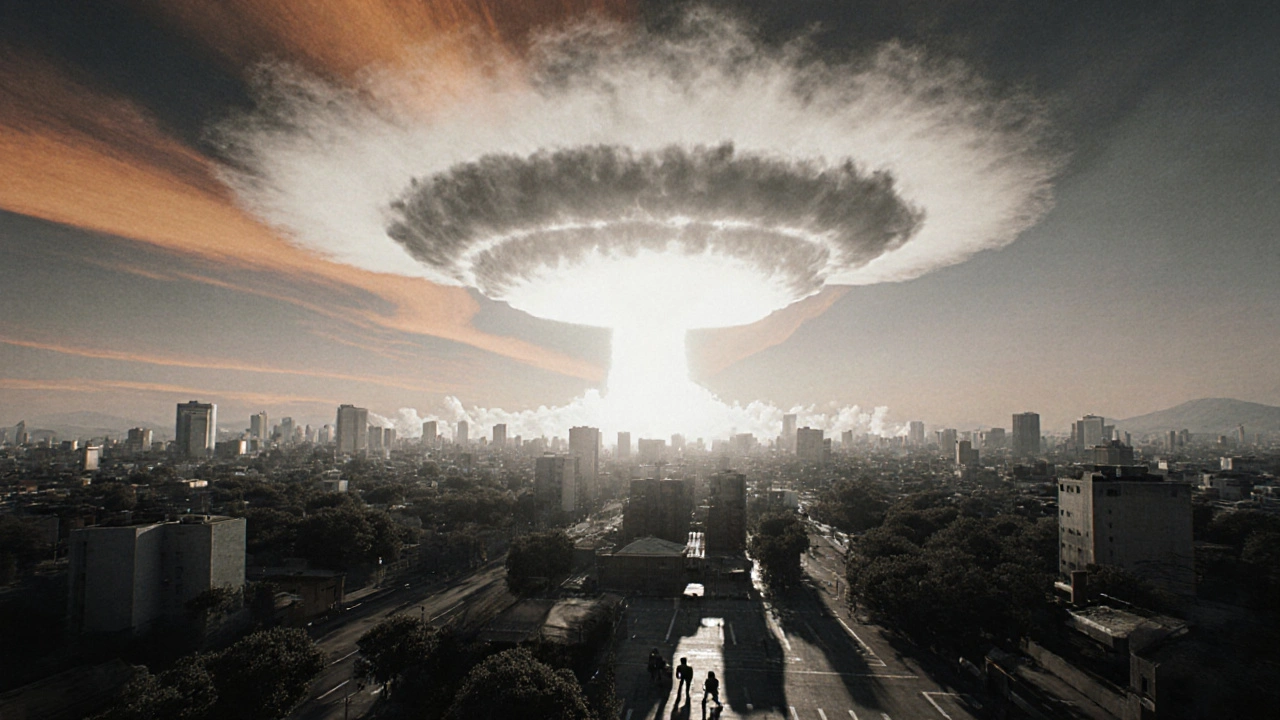
What Is the Most Famous Moment in History? The Atomic Bombing of Hiroshima
The atomic bombing of Hiroshima on August 6, 1945, is the most famous moment in history due to its global recognition, lasting impact on international law, and its role as the first use of nuclear weapons - a turning point that reshaped war, peace, and human survival.