What Is the Most Watched TV Show of All Time? Baywatch’s Record Explained
Viewership Comparison Calculator
How Viewership Metrics Compare
Traditional TV measured unique viewers across networks. Streaming measures hours watched. See how these metrics differ using Baywatch's record as reference.
Your Streaming Metrics
Comparison Results
Estimated Unique Viewers
Enter metrics above to see comparison
When you think of the most watched TV show ever, you might picture Game of Thrones or Stranger Things. But the real record holder isn’t a fantasy epic or a Netflix binge. It’s Baywatch - a show about lifeguards in swimsuits that aired in the 1990s and reached more than 1.1 billion people every week at its peak.
How Baywatch Became a Global Phenomenon
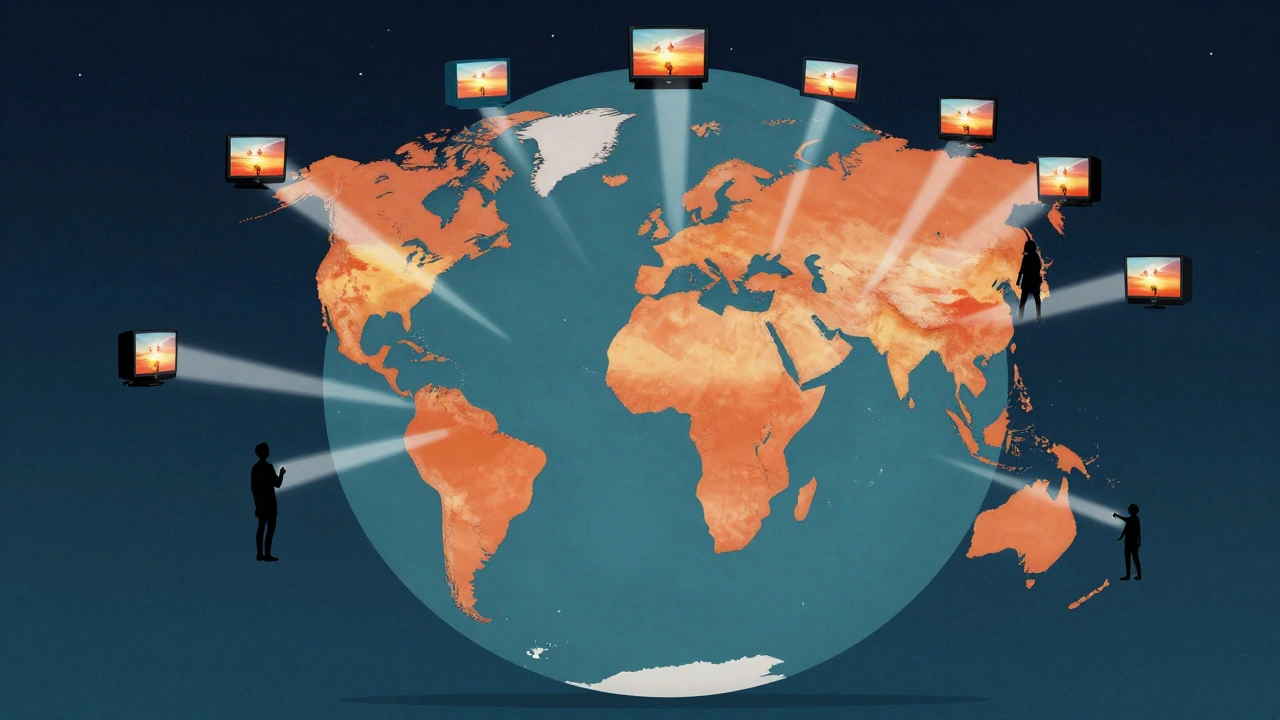
Baywatch didn’t start as a smash hit. It premiered on NBC in 1989 and got canceled after one season. But then something unexpected happened: international broadcasters bought the rights. By 1991, it was in syndication - meaning local TV stations around the world could air it whenever they wanted. That flexibility turned it into a global event.
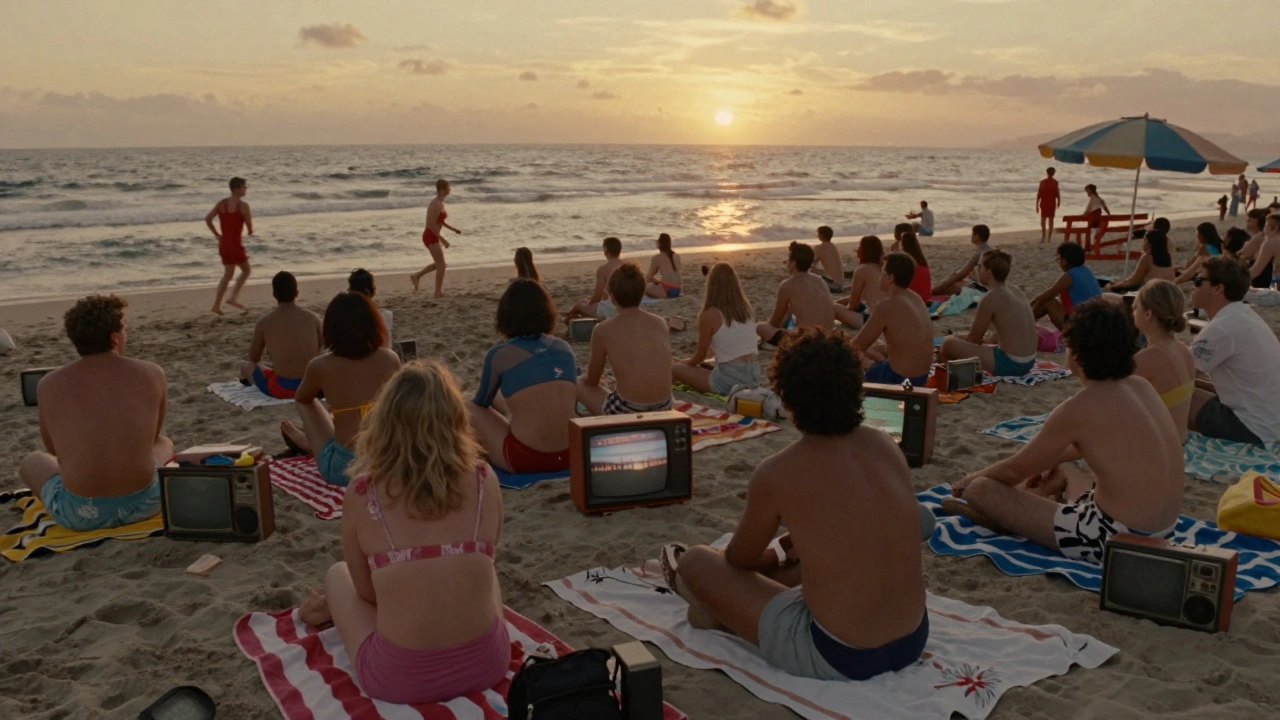
By 1996, Baywatch was on the air in 148 countries and translated into 44 languages. In Germany, kids talked about it in school. In Brazil, it shaped beach fashion. In India and Southeast Asia, families gathered to watch it on TV sets with poor reception but big smiles. The show didn’t need high production value. It had David Hasselhoff, slow-motion runs, and sunsets over the ocean - simple, visual, and universal.
Guinness World Records verified this in 2023. Their official record: Baywatch had an estimated 1.1 billion unique viewers per week during its peak. That’s not the same person watching 10 times. That’s 1.1 billion different people tuning in across different time zones, over the course of a week.
Why This Record Can’t Be Broken Today
Today, streaming platforms like Netflix and Disney+ release shows globally on the same day. So why hasn’t something like Squid Game or Wednesday surpassed Baywatch?
Because the way we measure viewership changed. Baywatch’s number was built on cumulative reach - people watching on different channels, at different times, across dozens of countries over a full week. Modern streaming stats count something different: total hours watched.
For example, Squid Game got 1.65 billion viewing hours in its first 28 days. That sounds huge - and it is. But that’s not the same as 1.65 billion people watching. If 100 million people each watched 16.5 hours, that still adds up to 1.65 billion hours. Meanwhile, Baywatch’s 1.1 billion weekly viewers meant nearly every person who owned a TV in many countries tuned in at least once that week.
Dr. Amanda Lotz, a media professor at the University of Michigan, puts it simply: “Baywatch’s record was built on broadcast TV’s ability to reach everyone at once, across borders. No single streaming platform has that kind of universal access today.”
How Modern Shows Compare
Let’s look at some modern contenders:
- Game of Thrones’s 2019 finale had 44 million global viewers across all platforms - impressive, but less than 5% of Baywatch’s weekly reach.
- Stranger Things Season 4 earned 1.345 billion minutes viewed in the U.S. alone in one week - still far below Baywatch’s global weekly footprint.
- Wednesday Season 2 hit 2.1 billion viewing hours in its first month - the highest streaming number ever - but again, that’s hours, not people.
Even the most-watched single broadcast in U.S. history - Super Bowl LVIII with 123.7 million viewers - doesn’t come close to Baywatch’s weekly global numbers. Why? Because sports events are one-time spectacles. Baywatch was on TV every week for over a decade.
The Measurement Problem
Here’s the real issue: we’re comparing apples to oranges. Back in 1996, TV ratings were rough estimates. Networks reported viewership based on cable subscriptions, advertising sales, and surveys. Guinness World Records didn’t just take their word for it - they demanded proof from broadcasters in 142 countries. That’s why Baywatch’s record still stands.
Today, Netflix and Disney+ track every click, pause, and rewind. But they count “accounts that watched at least two minutes” as a viewer. That’s not the same as someone sitting down to watch an entire episode. A 2024 study by the Television Bureau of Advertising found that 150 million streaming viewers don’t equal 100 million traditional TV viewers - the behaviors are too different.
And here’s the kicker: in 1996, only about 78% of households worldwide had a TV. Today, it’s 92%. So if Baywatch reached 1.1 billion people back then, what would it reach now? Maybe 1.4 billion. But no show today can replicate its distribution model.
Why People Still Remember Baywatch
A 2025 YouGov survey asked 8,500 people across 15 countries which show they remembered as the most globally popular from their youth. Among people over 45, 68% picked Baywatch. Among people under 30, 82% picked Stranger Things. That tells you something important: each generation has its own definition of “most watched.”
On Reddit, users from Germany, Mexico, and the Philippines still post about watching Baywatch in their childhood. One user wrote: “We didn’t have much, but we had Baywatch on Friday nights. Everyone knew the same lines.” That kind of cultural saturation doesn’t happen anymore.
Even IMDb - a site where fans vote on their favorite shows - ranks Game of Thrones as the top show. But that’s based on ratings, not viewership. You can love a show and never watch it. Baywatch didn’t need love - it just needed to be on TV.
What Does the Future Hold?
Guinness World Records says they’ll keep Baywatch’s record - but they’re adding new categories. There’s now a “Most Viewed Streaming Series” category, and another for “Most Social Media Mentions.”
Media analyst Van Jones says we’re moving away from “most watched” to “most engaged.” A show like Squid Game didn’t just get views - it sparked memes, TikTok dances, Halloween costumes, and debates about capitalism. That’s a new kind of success.
And as TV fragments into hundreds of apps, platforms, and algorithms, the idea of one show reaching billions may be gone forever. We won’t have a single global event like Baywatch again. Instead, we’ll have dozens of niche hits - each loved by millions, but never by the whole world at once.
So when someone asks you what the most watched TV show of all time is - the answer isn’t the one you think. It’s the one that reached every corner of the planet before the internet changed everything.
Is Baywatch still the most watched TV show ever?
Yes, according to Guinness World Records, Baywatch holds the official record for the largest weekly television audience, with an estimated 1.1 billion viewers in 1996. No other show has matched that global reach under the same measurement standards.
Why hasn’t Stranger Things or Squid Game broken the record?
Because they’re measured differently. Streaming platforms count viewing hours or accounts that watched at least two minutes. Baywatch’s record was based on unique viewers across hundreds of TV networks in different countries over a week. The two metrics aren’t directly comparable.
How many people watched the Game of Thrones finale?
HBO reported 44 million global viewers across all platforms for the Season 8 finale in 2019. That’s a huge number, but it’s less than 5% of Baywatch’s peak weekly audience.
Was Baywatch popular in the United States?
Not as much as abroad. In the U.S., it was canceled after one season and only gained popularity after going into syndication. Its biggest audiences were in Europe, Latin America, and Asia.
What’s the most watched show in the U.S. today?
In terms of same-day viewership, the Super Bowl still leads. Among scripted series, shows like Stranger Things and The Last of Us rank highest in streaming hours, but no single U.S. show comes close to the 52.5 million viewers who watched the Friends finale in 2004.
Will we ever see another show like Baywatch?
Unlikely. The TV landscape has changed too much. Back then, one show could air on dozens of local networks worldwide. Today, content is split across Netflix, Hulu, Amazon, Apple, and more - each with their own audiences. Global reach now means millions, not billions.


About Author
