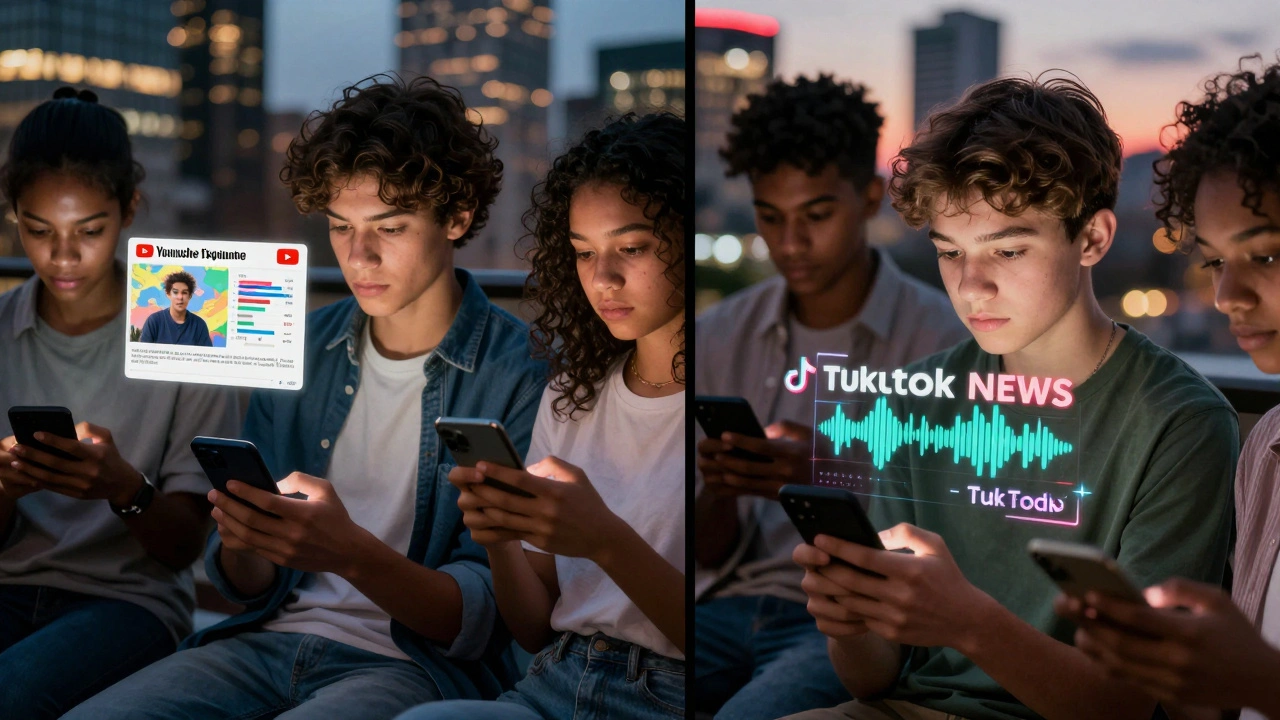
What Social Media Has the Most News? 2025 Breakdown
By 2025, if you want to know what’s happening in the world, you’re not turning on the TV or picking up a newspaper. You’re scrolling. Social media isn’t just a place to share memes or check in with friends-it’s now the primary source of news for millions of Americans. But which platform actually delivers the most news? The answer isn’t simple. It depends on who you are, how old you are, and what kind of news you’re looking for.
YouTube Leads in News Reach
YouTube is the biggest news platform in the U.S. by total number of users. About 35% of American adults get news there regularly, according to Pew Research Center’s 2025 data. That’s more than Facebook, which sits at 38% of adults-but Facebook has a much larger user base. On YouTube, nearly half of all active users (42%) are consuming news. That’s a massive adoption rate.
Why YouTube? It’s not just about news channels. It’s about creators. People trust independent journalists, analysts, and explainers more than corporate news outlets. A Reddit thread from October 2025 with over 2,300 upvotes summed it up: “I get my news from YouTube creators who actually research topics rather than corporate news outlets pushing agendas.”
YouTube also works for both entertainment and information. Over half of users aged 18-29 say it’s their main source for both fun and facts. The platform’s algorithm pushes long-form explainers, live updates, and short clips-all in one place. You can watch a 30-second summary of a breaking story, then dive into a 15-minute deep-dive on the same topic. That flexibility keeps people coming back.
TikTok Is the Fastest-Growing News Source
If you’re under 30, TikTok is probably your go-to for news. In 2025, 55% of TikTok users in the U.S. regularly get news on the app-up from just 22% in 2020. That’s the steepest rise of any platform in the last five years.
TikTok doesn’t just show headlines. It shows context. A 60-second video can explain why a policy changed, what it means for your taxes, or how a protest started. The format forces clarity. If you can’t explain it fast, you don’t get seen. That’s why Gen Z trusts TikTok more than CNN or Fox News for community-focused stories. Pew found that 78% of Black TikTok users aged 18-34 say they find news about local issues more relevant and timely than traditional media.
But there’s a catch. TikTok’s algorithm doesn’t care about accuracy-it cares about engagement. That means extreme takes, misleading clips, and emotionally charged content often rise faster than balanced reporting. A 2025 internal survey of TikTok’s r/TikTokNews community (45,000 members) showed 87% of users think the format is “more digestible,” but only 41% say they verify sources before sharing.
Facebook Still Has the Most Users, But Not the Most Trust
Facebook still has the highest number of news consumers-38% of U.S. adults. But that number is falling. Only 31% of Facebook’s total user base gets news there. And trust? It’s at an all-time low.
Older users still rely on it. About 68% of adults 50+ use Facebook regularly, compared to just 32% of the same age group on TikTok. But for younger people, Facebook feels outdated. It’s full of family updates, political arguments, and ads. News is buried under noise.
And then there’s misinformation. Facebook’s relaxed moderation policies since 2022 have made it a hotspot for false claims. A 2025 eMarketer analysis found that 61% of users under 30 say they’ve seen false news on Facebook that was later proven wrong. That’s why many now use it only for local updates-like neighborhood alerts or event cancellations-not national or global stories.
X (Twitter) Is Where Journalists Go-But Not Everyone Else
X (formerly Twitter) reaches only 12% of U.S. adults with news. But among journalists, politicians, and policymakers, it’s essential. If something breaks, you’ll see it first on X. Reporters post live updates. Sources leak documents. Experts react in real time.
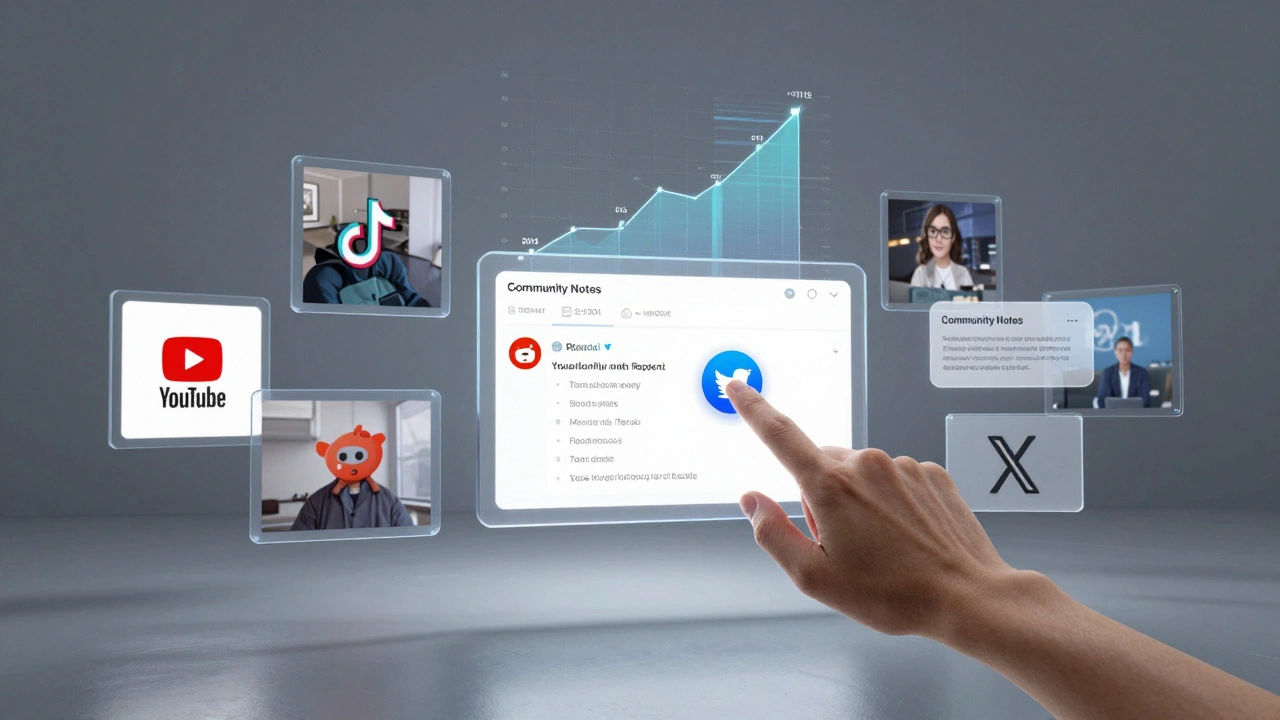
But that’s also the problem. X is a firehose of unverified claims. A 2025 GWI survey found that 63% of journalists say it’s harder to fight misinformation because false stories spread faster than corrections. The platform’s Community Notes feature helps-63% of users who use it say it improves accuracy-but most people don’t use it at all.
For the average person, X feels overwhelming. You need to follow the right accounts, mute the noise, and constantly fact-check. Most users don’t have the time-or the patience-for that.
Instagram and Reddit: The Quiet Contenders
Instagram reaches 20% of U.S. adults with news, but only 28% of its users do. That’s low penetration. People use Instagram for aesthetics, not analysis. News here comes in carousels, Reels, or Stories from big outlets like BBC or The New York Times. It’s digestible, but shallow.
Reddit, on the other hand, is the most trusted platform for deep news. Subreddits like r/news, r/worldnews, and r/TrueReddit have millions of active users who upvote verified reports and downvote speculation. A 2025 Reddit survey showed users who follow news on Reddit are 47% more likely to cross-check facts than those who rely on TikTok or Facebook.
But Reddit isn’t easy to navigate. You need to know which subreddits to join. You need to understand voting systems and flair tags. It’s not for beginners. But for those who stick with it, it’s the most reliable corner of social media news.
Why This Matters
The way we get news is changing-and fast. In 2015, only 4% of Americans said social media was their main news source. By 2025, that number is 54%. TV news is down to 50%. Print media? 48%.
This isn’t just about convenience. It’s about control. People don’t want to wait for the 6 p.m. news. They want updates the second something happens. They want to see it from someone who looks like them, speaks like them, and understands their world.
But this shift comes with risks. Algorithms reward outrage. Misinformation spreads faster than truth. Filter bubbles trap people in echo chambers. A 2025 Knight Foundation report warns that “algorithmic curation creates filter bubbles that reinforce existing beliefs and limit exposure to diverse perspectives.”
So what’s the solution? Hybrid habits. The most informed users don’t rely on one app. They check YouTube for context, TikTok for quick updates, Reddit for verification, and X for live reactions. They use tools like Community Notes, cross-reference stories, and follow verified journalists-not just big brands.
How to Get Better News on Social Media
If you’re using social media for news, here’s how to do it smarter:
- Follow verified news organizations-like AP News, Reuters, BBC, NPR. They have blue checks for a reason.
- Use multiple platforms. Don’t trust one source. Compare what’s trending on TikTok, YouTube, and Reddit.
- Turn on fact-checking tools. Use X’s Community Notes. Look for “Fact Check” labels on Facebook and Instagram.
- Check the date. A viral clip from 2023 can be shared as if it’s new. Always look for timestamps.
- Unfollow or mute accounts that push extreme takes. Your feed should inform, not anger you.
The goal isn’t to quit social media. It’s to use it better. News isn’t going back to TV or newspapers. It’s here to stay-on your phone, in your feed, in 60-second bursts. The question isn’t which platform has the most news. It’s: how do you make sure it’s the right news?
Is TikTok the most reliable source for news?
No, TikTok is not the most reliable source for news. While it’s the fastest-growing platform for news consumption-with 55% of its U.S. users getting news there-it prioritizes engagement over accuracy. Misinformation spreads quickly because the algorithm favors emotional, surprising, or controversial content. For reliable news, use TikTok to spot trends, then verify facts on verified outlets like Reuters or AP News through YouTube or Reddit.
Why is YouTube better than Facebook for news?
YouTube is better than Facebook for news because it offers more depth and context. On YouTube, you can watch long-form explainers, interviews, and investigations from credible creators and news organizations. Facebook, while still used by more people overall, is cluttered with personal updates, ads, and misinformation due to weaker content moderation. YouTube’s audience also tends to seek out news intentionally, while Facebook users often stumble on it accidentally-making the quality less consistent.
Do older people still get news from social media?
Yes, but not as much as younger people. About 68% of adults aged 50+ use Facebook regularly, and many get news there. However, only 12% of people over 55 say social media is their main news source, compared to 44% of those aged 18-24. Older users tend to stick with Facebook and YouTube, while younger users are moving to TikTok and Instagram. TV and websites still dominate news for those over 55.
Can I trust news I see on Reddit?
Reddit can be one of the most trustworthy places for news-if you know how to use it. Subreddits like r/news and r/worldnews are moderated and rely on user voting to surface verified reports. However, not all subreddits are reliable. Some are filled with rumors or bias. Always check if a post links to a reputable source, and cross-reference with other platforms. Reddit’s strength is community verification, not automatic accuracy.
What’s the best way to avoid fake news on social media?
The best way to avoid fake news is to use multiple sources and verify before sharing. Follow only verified news accounts. Use tools like X’s Community Notes or fact-check labels on Facebook and Instagram. If a story seems too shocking or emotional, wait a few hours-reputable outlets will confirm or correct it. Never share a story unless you’ve checked the original source and date. Most fake news spreads because people share it without reading it.
By 2027, social media will be the primary news source for 41% of U.S. adults. The future of news isn’t on TV or in print. It’s in your feed. The challenge isn’t finding news anymore. It’s finding truth.
About Author
