Which Is the No. 1 News Channel in the World? BBC, Fox News, and CNN Compared by Traffic, Reach, and Engagement
News Channel Comparison Tool
Compare Key Metrics
Select a metric to see how BBC, Fox News, and CNN compare:
Web Traffic Comparison
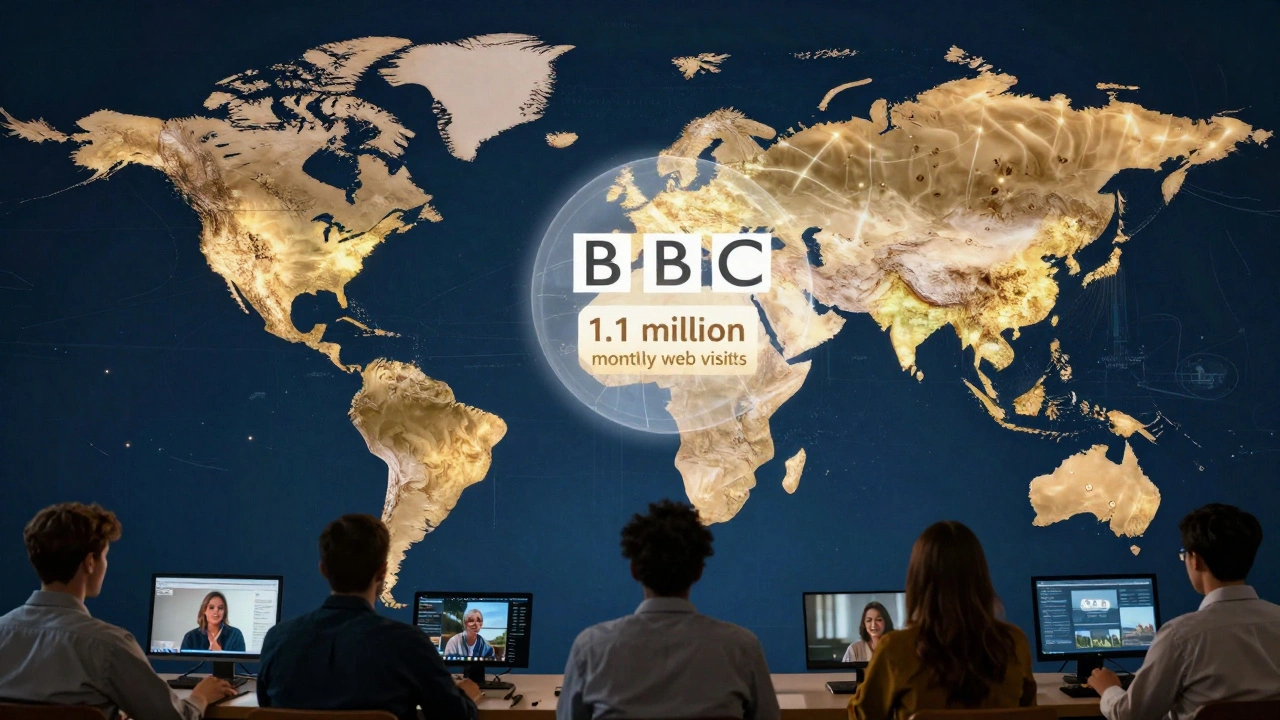
BBC leads with 1.1B monthly visits (62% international traffic). CNN has 640M visits, while The New York Times has 685.5M.
There’s no simple answer to which news channel is the No. 1 in the world. It depends on whether you’re measuring web traffic, YouTube views, cable viewership, or global trust. Each metric tells a different story. What’s clear is that no single outlet dominates every category anymore. The news landscape has fractured, and the title of "world’s best" now shifts depending on where you look.
BBC Leads in Global Reach and Web Traffic
The BBC is the most visited news website on the planet. In June 2025, it recorded 1.1 billion monthly visits, according to Similarweb data analyzed by Press Gazette. That’s more than double the traffic of CNN (640 million) and nearly 60% higher than The New York Times (685.5 million). It’s not a fluke - the BBC has held this top spot for over a year, and its growth continues at 3.3% year-over-year.
Why? Because the BBC doesn’t just serve the U.S. It reaches people in India, Nigeria, Brazil, and Indonesia. Over 62% of its digital traffic comes from outside the United States. That’s thanks to 40 international bureaus and 250 correspondents stationed around the globe. Its newsrooms in Delhi, Nairobi, and Singapore produce content tailored for local audiences while staying true to its public service mission.
The BBC World Service - which includes TV, radio, and online - reaches 317 million weekly users across 40 languages. That’s bigger than any commercial news network. Its funding model also helps: it’s supported by the UK license fee, which gives it £4.8 billion annually. That means no ads, no corporate pressure, and no need to chase clicks just to survive. It can afford to cover slow-moving stories like climate policy in the Pacific or elections in Mozambique.
Fox News Dominates YouTube and U.S. Cable
If you’re looking at YouTube, Fox News is the powerhouse. In 2025, it generated 4.5 billion video views - a 69% jump from the year before. That’s more than CNN, ABC News, and CBS News combined. Shareablee data shows it earned 1.5 billion total social media interactions across Facebook, Instagram, X, and TikTok last year, up 239% from 2024.
On cable TV, Fox News has been the most-watched news channel in the U.S. for over 23 years straight. It reaches nearly 200 million people monthly across all platforms, including streaming. Its audience is older - median age 68 - and heavily conservative. That loyalty drives engagement. People don’t just watch; they comment, share, and argue about it. That’s why it leads in social metrics, even if its total web traffic is lower than the BBC’s.
Fox News isn’t trying to be global. It’s built for American viewers. Its international expansion - Fox News International - has 28 million subscribers across 150 countries, but that’s still a fraction of the BBC’s reach. Its strength lies in emotional connection, not breadth. When the U.S. election results came in, or when the World Cup draw happened in December 2025 (which drew 1.23 million viewers - the most-watched Final Draw in U.S. history), Fox News was the go-to.

CNN and The New York Times: The Middle Ground
CNN still holds strong. It’s the third most-visited news site globally with 640 million monthly visits. Its social media engagement is higher than Fox News in Europe and parts of Asia. But it’s lost ground in the U.S. cable ratings. CNN’s audience is more international than Fox’s, but less consistent than the BBC’s. It’s the channel people turn to during breaking crises - wars, disasters, major political events - but it struggles to build daily habits.
The New York Times is the fastest-growing major news outlet. It saw a 35.1% jump in web traffic in 2025. That’s because it’s betting big on subscriptions. Over 10 million people pay for its digital access. It doesn’t rely on ads or clicks. Instead, it invests in deep reporting: investigations into government corruption, climate science, and global inequality. Its audience is educated, urban, and globally minded. But it doesn’t have the raw scale of the BBC or the viral punch of Fox News.
Trust, Bias, and Audience Perception
Who do people trust? That’s where things get messy.
BBC News has a 4.2/5 rating on Trustpilot from over 12,500 reviews. International users praise its "comprehensive global coverage." But in the UK, 32% of Reddit users say it’s too biased toward British interests. It’s seen as fair abroad, but partisan at home.
Fox News? It has a 2.8/5 rating from 8,700 reviews. International users call it "U.S.-centric" and "unreliable." But among U.S. conservative viewers, 65% of positive reviews say it gives an "unapologetic American perspective." On Reddit, 78% of international users dislike it - but 63% of U.S. conservative users love it.
This isn’t about accuracy anymore. It’s about identity. People choose news channels that reflect who they are, not just what they know.
The Bigger Picture: Fragmentation Is the New Normal
Five years ago, you could say CNN was the global leader. Ten years ago, it was BBC. Today, the idea of one "No. 1" is outdated.
Google News, which aggregates content from hundreds of sources, gets 383 million visits a month. Substack, a newsletter platform, hit 86.9 million visits in 2025 - up 44% - because readers are moving away from big brands and toward niche writers they trust.
And in emerging markets? Indian sites like News18.com (254 million visits) and India.com (191 million) are growing faster than any Western outlet. The global news map is no longer centered on London or New York.
By 2027, experts predict no single news organization will control more than 15% of global news consumption. We’re moving toward a world where people get their news from TikTok clips, WhatsApp groups, Substack newsletters, and YouTube channels - not just one TV network.
So, Who’s Really No. 1?
If you measure by total audience across all platforms - TV, radio, web, mobile - the BBC is still the largest. It’s the only one with true global infrastructure and public funding backing its reach.
If you measure by digital engagement, especially on YouTube and social media, Fox News wins. It’s the most talked-about, most shared, most commented-on news brand in the world.
If you care about quality journalism and long-form reporting, The New York Times leads.
There’s no single answer. But if you want the most widely accessed, most consistently trusted, and most globally present English-language news organization - the BBC is still the closest thing to No. 1.
Just don’t expect everyone to agree.


About Author
