Which News Source Is Most Popular in the USA?
News Source Popularity Calculator
How to Use This Tool
Select a popularity metric to see which news organization leads. Remember: popularity means different things in different contexts.
Which Metric Matters Most?
Digital Traffic
Monthly website visitsTV Viewership
Prime-time audienceTrust Score
Public confidence ratingGrowth Rate
Year-over-year traffic increaseResults
Select a metric above to see the winner
Select a metric to see which news source leads in that category
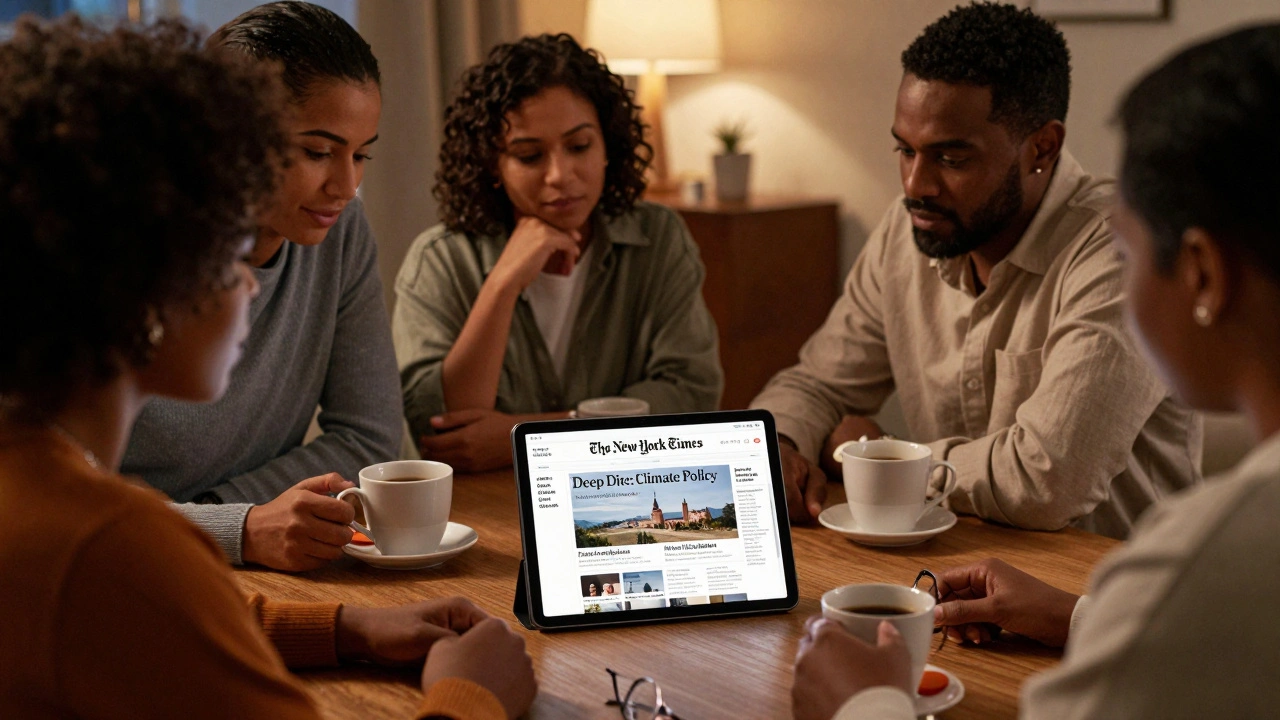
When you ask which news is most popular in the USA, you’re not just asking who has the most clicks. You’re asking who people trust, who they talk about, and who shapes what they think. And the answer isn’t simple. It depends on whether you’re looking at website visits, TV ratings, subscriber numbers, or social media buzz. The New York Times leads in digital traffic, but Fox News pulls in more loyal viewers. NPR has the highest trust score, while Reddit users praise Reuters for being straight-up factual. There’s no single winner-just different kinds of popularity.
The Digital King: The New York Times
In December 2025, The New York Times hit 479.3 million monthly visits, according to Comscore data analyzed by Press Gazette. That’s more than CNN, Fox News, and ESPN combined. It’s not just big-it’s growing. Year-over-year, its traffic rose 9%, even as other big names like USA Today and CNN lost ground. What makes it stand out isn’t just volume, but how long people stay. The average session lasts 6 minutes and 22 seconds-almost double the industry average. People aren’t just clicking headlines. They’re reading deep dives, investigations, and global coverage.
Behind the numbers is a business model that works: 10.5 million digital-only subscribers as of December 2025. That’s more than any other news organization in the U.S. And it’s not because they’re cheap. The Times charges for access. But people pay because they believe the reporting holds up under scrutiny. In a world full of clickbait, The Times has built a reputation for thorough fact-checking and long-form journalism. It’s not the loudest voice, but it’s the one most journalists, academics, and policymakers turn to when they want to understand what really happened.
The Cable Giant: Fox News
If you measure popularity by TV ratings, Fox News wins. In 2025, it averaged 1.9 million viewers during prime time-far ahead of CNN’s 1.2 million and MSNBC’s 1.6 million. On YouTube, Fox News videos get the most comments: an average of 1,243 per clip. But here’s the catch: half of those comments are angry. A sample of 15,000 YouTube comments found that 42% of negative feedback called out its partisan framing. Fox News doesn’t just attract viewers-it attracts a very specific kind of viewer. According to Pew Research, 87% of its audience identifies as Republican or Republican-leaning. Its popularity isn’t about broad appeal. It’s about loyalty.
Its website, foxnews.com, pulled in 272.8 million visits in December 2025, putting it third behind The New York Times and CNN. But that traffic is driven by breaking alerts, political hot takes, and opinion-driven headlines. It’s not the most trusted source-NewsGuard gave it a credibility score of 57/100, far below The Times’ 95. But for millions of Americans, it’s the only news they watch. And that makes it powerful, even if it’s not the most widely read.

The Quiet Leader: NPR and the Trust Factor
NPR doesn’t have the traffic of CNN or the drama of Fox News. It got 112.4 million monthly visits in December 2025. But when you ask Americans who they trust most, NPR comes out on top. In the Reuters Institute Digital News Report, it ranked as the most trusted news brand in the U.S., beating even The New York Times. Why? Because it’s consistent. It doesn’t chase outrage. It doesn’t push partisan narratives. It reports. And people notice.
Its audience is diverse-college-educated, urban, and politically moderate. But it’s not just about who listens. It’s about how they listen. NPR’s podcasts, like “Morning Edition” and “All Things Considered,” are among the most downloaded in the country. People tune in while driving, cooking, or working. It’s background noise that feels reliable. In a time when trust in media is crumbling, NPR’s steady tone stands out. It’s not flashy. But it’s the one most Americans say they’d turn to if they wanted the truth without the noise.
The Wildcard: Broadcast Networks and Local News
Feedspot’s 2026 ranking lists NBC News, ABC News, and CBS News as the top three news websites in the U.S. That’s surprising if you’re only looking at digital traffic. But those rankings include broadcast news sites-where millions still get their daily update. Local TV news is still alive. Nearly half of Americans watch their local station at least once a week, even though that number has dropped 12% since 2020. Why? Because it’s personal. It tells you when the school bus is late, when the power’s out, or when a neighbor went missing. It’s not glamorous, but it’s essential.
Meanwhile, digital-native outlets like The Washington Post and The Wall Street Journal punch above their weight. The Post has 3.8 million digital subscribers. The Journal has 3.5 million. They’re not the most visited, but they’re the most influential among business leaders and government officials. Their reporting shapes policy, not just headlines.

The Fragmented Reality
The truth is, there’s no single “most popular” news source in America anymore. The audience is split. You can’t talk about popularity without talking about politics. The Knight Foundation found that 63% of Americans now only consume news from sources that match their political views. That’s up from 48% in 2020. So when someone says “I get my news from Fox,” they’re not just choosing a channel-they’re choosing a worldview. And when someone says “I read The New York Times,” they’re doing the same.
Even the way we measure popularity is broken. Press Gazette counts website visits. Nielsen counts TV viewers. Pew counts trust. Feedspot counts broadcast sites. SCImago counts reputation. All of them are right. But none of them tell the whole story. The New York Times has the most traffic. Fox News has the most loyal viewers. NPR has the most trust. And local stations still serve communities that no digital outlet ever will.
What’s Changing Fast
The news landscape is shifting faster than ever. Digital revenue now makes up more than half of the U.S. news industry’s income. Print is dying-2,167 U.S. counties now have no local newspaper. Meanwhile, newsletters are rising. Substack hit 73.1 million visits in December 2025, up 22.5% in a year. Independent journalists are building audiences without big media backing.
And then there’s AI. Google News and Apple News now deliver news to millions, but they don’t produce it. They just sort it. The FCC is now considering rules to make those platforms more transparent about how they choose what you see. That could change everything.
One thing’s clear: the old model-where three networks and two newspapers dominated-is gone. Today, popularity is personal. It’s political. It’s fragmented. And it’s not going to get simpler.
Is The New York Times the most popular news source in the USA?
Yes, by digital traffic. In December 2025, The New York Times had 479.3 million monthly visits, the highest of any U.S. news website. But popularity isn’t just about numbers. Fox News has more loyal TV viewers, and NPR has higher trust ratings. So while The Times leads in online visits, it doesn’t lead in every category.
Why does Fox News have more viewers than CNN?
Fox News appeals to a politically conservative audience that’s highly engaged and loyal. In 2025, it averaged 1.9 million prime-time TV viewers, compared to CNN’s 1.2 million. Its content is opinion-heavy and fast-paced, which drives clicks and comments. But it also has lower trust scores and a more polarized audience. CNN, while still popular, has lost ground due to criticism over sensationalism and declining digital traffic.
Which news source is the most trusted in the USA?
NPR is the most trusted, according to the Reuters Institute Digital News Report 2025. The Associated Press and Reuters also rank near the top, with NewsGuard giving them 95/100 credibility scores. The New York Times is trusted by many, especially among educated and urban audiences, but NPR’s consistent, non-partisan tone gives it an edge in public confidence.
Are local news stations still relevant?
Yes. Even as national outlets dominate headlines, 47% of Americans still watch local TV news at least once a week. Local stations cover things national media ignores-school board meetings, weather emergencies, community events. They’re the last line of reporting for many small towns. But they’re struggling financially. Over 2,100 U.S. counties now have no local newspaper, and many TV stations have cut staff.
Is digital news replacing TV and print?
Yes, but not completely. Digital revenue now makes up $24.3 billion of the $42.7 billion U.S. news market-more than print. But TV news still reaches millions daily, especially older adults. Print is declining fast, with most newspapers shutting down or going digital-only. The future belongs to digital-native platforms, newsletters, and apps-but local TV and radio still serve communities that haven’t fully switched over.
Why do some rankings put NBC News above The New York Times?
Some rankings, like Feedspot’s, include broadcast news websites that get heavy traffic from TV audiences. NBCNews.com, for example, benefits from millions of viewers who go online after watching the nightly broadcast. The New York Times, while bigger overall, is a digital-native site without a TV channel. Different methods measure different things-traffic, influence, trust, or platform type. That’s why rankings vary.
What’s the future of news in the USA?
The future is fragmented. More people will get news through newsletters, apps, and AI-curated feeds. Subscription models will grow-The New York Times and The Washington Post are proof that people will pay for quality. But polarization will deepen. Trust will keep splitting along political lines. And local news will keep fading unless new funding models emerge. The real challenge won’t be finding the most popular source-it’ll be finding one that still brings people together.



About Author
