Who Controls British Media? The Real Owners Behind the Headlines
UK Media Ownership Calculator
How Media Ownership Affects Democracy
The UK media landscape is dominated by three companies that control 90% of national newspaper circulation. This calculator shows how changes in ownership affect market concentration and local news availability.
DMG Media: 43.36% | News UK: 32.38% | Reach Plc: 14.36% | Total: 90.1%
Adjust Ownership Percentages
Market Concentration
Impact Analysis
Total Ownership: 90.10%
Local News Availability: 3.97% of circulation
News Desert Risk: High
This level of concentration means 90% of national news is controlled by just 3 companies.
The UK doesn’t have a free and open media landscape. It has a media landscape controlled by a handful of corporations - and a few tech giants who decide what you see, when you see it, and how much you pay to see it. If you think you’re getting a wide range of perspectives from your morning paper or news app, you’re being misled. The truth is, British media is dominated by just three companies that together control 90% of national newspaper circulation. And it’s getting worse.
The Big Three: DMG Media, News UK, and Reach Plc
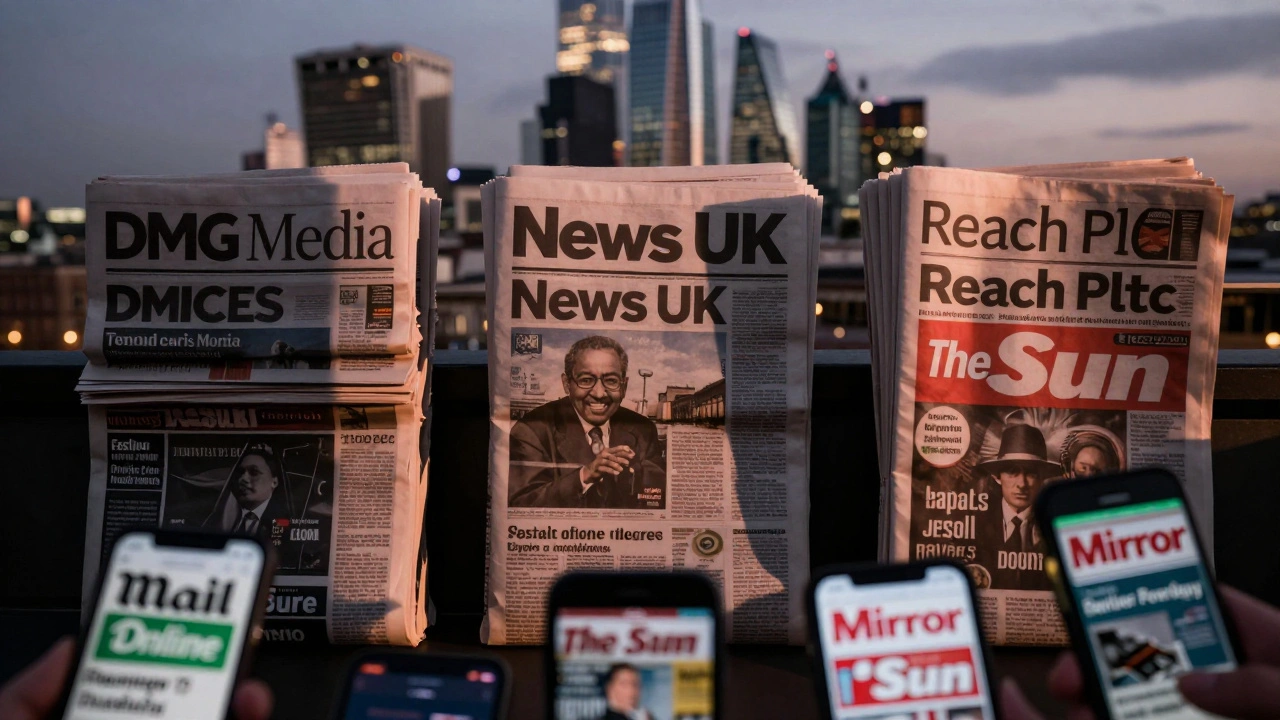
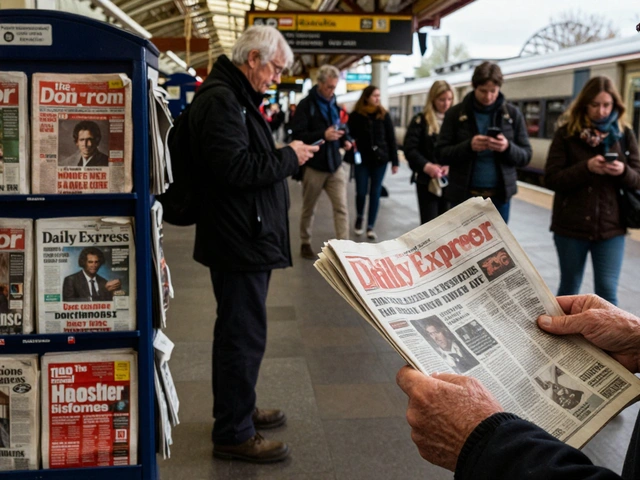
Three names dominate the British press: DMG Media, News UK, and Reach Plc. Together, they own nearly every major national newspaper you read. DMG Media runs Mail Online and the Metro - the most-read news site in the UK and the most-distributed free newspaper. In 2024, DMG sold over 10.2 million print copies weekly, giving it 43.36% of the market. News UK, owned by Rupert Murdoch’s News Corp, publishes The Sun, The Times, and The Sunday Times. It controls 32.38% of print circulation. Reach Plc, formerly Trinity Mirror, owns the Daily Mirror, Daily Express, Daily Star, and more than 100 regional papers. Its share is 14.36%, bringing the trio’s total to 90.1% of national newspaper sales.It’s not just about circulation. These companies also control 40% of the combined reach of the UK’s top 50 online news brands. That means if you’re reading news on your phone, chances are you’re seeing content shaped by one of these three. Their influence stretches beyond print. They set the tone for TV news, radio segments, and even what gets picked up by social media.
Who Owns Who? The Hidden Players
Behind each of these companies is a billionaire or a global conglomerate. DMG Media is owned by the Daily Mail and General Trust, controlled by the Rothschild family’s investment arm and Jonathan Harmsworth, the 4th Viscount Rothermere. News UK is a subsidiary of News Corp, run by the Murdoch family - a name synonymous with media power across the world. Reach Plc is publicly traded but controlled by a small group of institutional investors and its CEO, Jim Mullen, who argues consolidation is necessary to survive.The Guardian is the exception. It’s owned by the Scott Trust, a structure designed to protect editorial independence. Profits are reinvested into journalism, not shareholders. The Independent is owned by Evgeny Lebedev, a Russian-born British billionaire who also owns the London Evening Standard. But even these outliers are dwarfed in scale. The Guardian gets 19.3% of online news reach - impressive, but far behind Mail Online’s 25%.
Big Tech: The Silent Gatekeepers
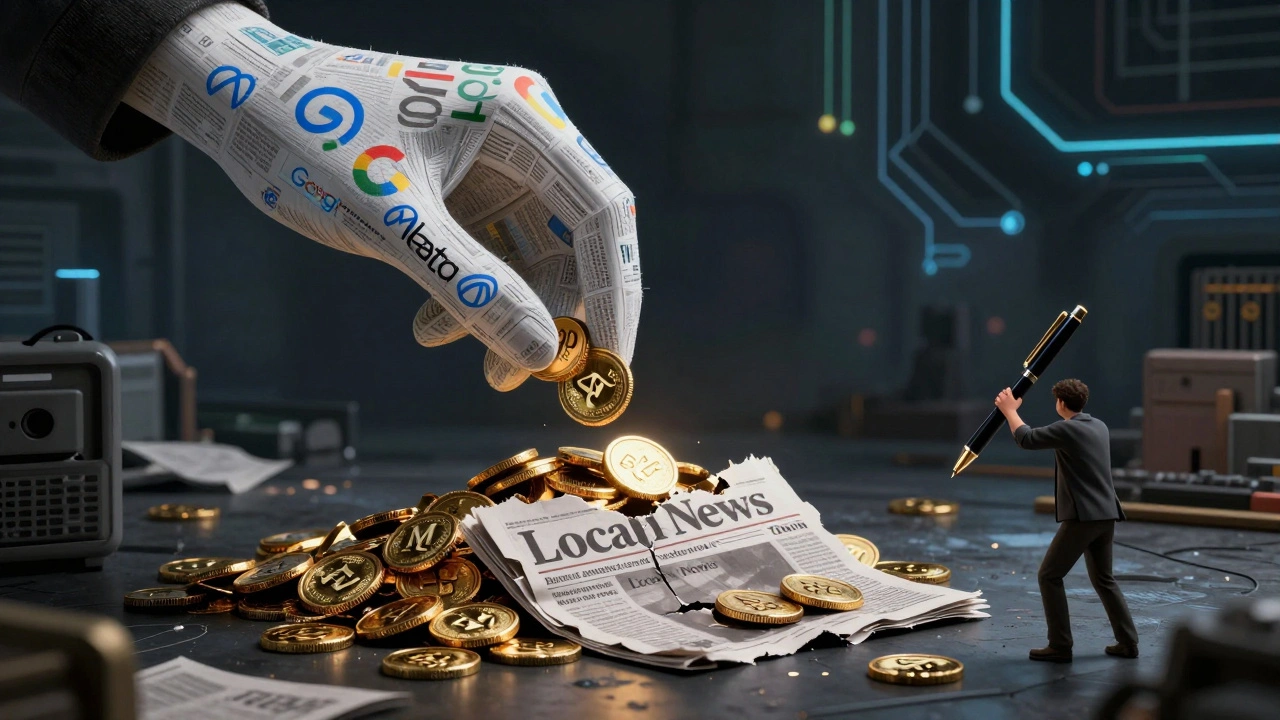
Even if you think you’re avoiding the big newspapers, you’re still under their control - because you’re using Google, Facebook, or YouTube to find news. Seven of the top 15 platforms used to access news in the UK are owned by Meta, Google, or X Corp. Google alone handles 93% of all search queries in the UK. If you’re searching for “UK election results” or “cost of living crisis,” Google decides which links appear first. And those links? Most often, they lead back to DMG, News UK, or Reach.These platforms don’t just distribute news - they profit from it. In 2024, Google and Meta together took 59% of all UK advertising revenue - £24 billion. That’s more than every newspaper, TV station, and radio network combined. News outlets rely on them for traffic, but they get only a fraction of the ad money. Google and Meta keep the bulk. The result? Newspapers are forced to chase clicks, not truth. Sensational headlines, outrage-driven stories, and emotionally charged content dominate because that’s what the algorithms reward.
The Collapse of Local News
While national papers consolidate, local journalism is vanishing. In 2005, the UK had 1,200 local newspapers. By 2025, that number had dropped to fewer than 600. A quarter of UK towns and cities now have no dedicated local news outlet - they’re called “news deserts.” Reach Plc used to run many of these local papers, but it’s shut down dozens, replacing them with centralized, automated content written from a single office. The result? A town council meeting in Barnsley gets the same generic headline as one in Bournemouth. Local accountability disappears. Corruption goes unchecked. Community issues get ignored.There’s no one left to hold power to account at the grassroots level. When the only news you get is national, you stop knowing what’s happening in your own street. And that’s exactly what the big players want - a public that’s disconnected from local realities and more easily swayed by national narratives.
Why This Matters: Democracy Under Pressure
Media plurality isn’t just about choice. It’s about democracy. When one company controls the majority of news, it can shape public opinion, influence elections, and push political agendas. The Daily Mail’s editorial stance on immigration, for example, has been shown to directly affect public attitudes in surveys. The Sun’s support for Brexit in 2016 wasn’t just reporting - it was campaigning. And when 90% of the press echoes the same line, dissenting voices get drowned out.Reddit threads from late 2024 show how extreme this is. One user documented how 12 different UK news outlets published nearly identical stories on a government policy announcement - within 30 minutes. No independent investigation. No different angles. Just the same script, rewritten slightly. That’s not journalism. That’s coordinated messaging.
Trust in the media is collapsing. The Sun averages 2.1 out of 5 stars on Trustpilot. The Daily Mail gets 2.3. The top complaints? “Bias,” “sensationalism,” “lying.” People know something’s wrong. But they don’t know where else to turn.
The Regulatory Gap
The UK government has done almost nothing to stop this. Media ownership laws haven’t been meaningfully updated since the 1990s. The Competition and Markets Authority (CMA) can’t block mergers on the grounds of media plurality - only on economic competition. That’s like letting one company own every grocery store in a city because “it’s cheaper,” even if no one else can speak up.The 2025 White Paper on Media Plurality from the Department for Culture, Media and Sport proposed weak restrictions on cross-media ownership. It didn’t break up any companies. It didn’t limit tech dominance. It didn’t fund local news. It was a gesture. The Media Reform Coalition calls it a “toothless response.”
What’s Next? The Future Is Bleak - Unless We Act
Without intervention, the top three newspaper publishers will control 95% of national circulation by 2027. Big Tech’s share of UK ad spending will hit 63%. Local news deserts will spread. Independent journalism will become a luxury for the few.There are glimmers of hope. The Scott Trust model proves independent media can survive. Community radio stations in Manchester and Glasgow are thriving. Small digital outlets like Novara Media and Byline Times are building loyal audiences. But they’re fighting an uphill battle against billions in ad revenue and algorithms designed to favor the biggest players.
The solution isn’t simple. It requires breaking up media monopolies, taxing Big Tech’s ad profits to fund public journalism, and creating legal protections for local news. It means rethinking how we fund journalism - not as a market commodity, but as a public good.
Right now, the British media is owned by a few billionaires and Silicon Valley tech firms. The public doesn’t own it. The government doesn’t own it. And if we don’t change that, we’ll stop having a free press - and start having a controlled one.
Who owns the Daily Mail in the UK?
The Daily Mail is owned by DMG Media, which is controlled by the Daily Mail and General Trust (DMGT). The company is largely influenced by the Harmsworth family, particularly Jonathan Harmsworth, the 4th Viscount Rothermere. DMG Media also owns Metro and MailOnline, making it the single largest newspaper publisher in the UK by circulation.
Is the BBC controlled by the government?
No, the BBC is not controlled by the UK government. It operates under a Royal Charter and is funded by the TV license fee paid by households. While the government appoints the BBC Board and sets the charter terms, editorial decisions are meant to be independent. However, critics argue that political pressure and funding threats can influence its tone, especially on sensitive issues like immigration or Brexit.
Why is media concentration a problem for democracy?
When a few companies control most news, they can shape public opinion by choosing what stories to highlight, how to frame them, and which voices to ignore. This limits public debate, reinforces political bias, and reduces accountability. If all major outlets push the same narrative - whether on immigration, taxes, or foreign policy - voters can’t make informed choices. Democracy needs diverse perspectives, not echo chambers.
Do tech companies like Google and Facebook own news content?
No, Google and Meta don’t own the content of UK newspapers. But they control how people find it. Google decides which news stories appear in search results. Meta decides what shows up in news feeds. They also take the majority of digital ad revenue - leaving news publishers with little money to fund real journalism. This gives them enormous power without accountability.
Are there any independent UK news outlets still thriving?
Yes, but they’re small. The Guardian (funded by the Scott Trust), Byline Times, Novara Media, and Tortoise Media are growing their audiences through subscriptions and member support. Local independent outlets like The Bristol Cable and The Ferret in Scotland also provide vital community reporting. But they lack the reach and funding of the big players, making them vulnerable to financial pressure.
What can I do to support better media in the UK?
Subscribe to independent outlets. Avoid clicking on sensational headlines from the big three. Support local journalism through donations or community initiatives. Pressure your MP to demand media reform and stronger regulation of Big Tech. And most importantly - question what you read. If every outlet reports the same thing the same way, it’s not journalism. It’s propaganda.
About Author
