Are Political Independents Left or Right? The Real Story Behind the Label
Political Identity Quiz
Take this 5-question quiz to see where you fall on the political spectrum. Most people hold a mix of views—exactly what the article describes. Your results will show whether you lean left, right, or hold a more complex position.
When someone says they’re an independent voter, what do you picture? Someone in the middle? A fence-sitter? A person who just doesn’t care? The truth is far more complicated - and far more common - than you think.
Independents Don’t Fit in Boxes
The idea that politics is a straight line - left on one end, right on the other - is a myth. It started in 1789, during the French Revolution, when supporters of change sat on the left of the assembly and defenders of the monarchy sat on the right. That’s where the terms came from. But today, that line doesn’t capture how real people think. Take a person who believes in strong public healthcare, free college, and protecting LGBTQ+ rights - classic left-wing positions. But they also think taxes should be lower, businesses should be free from government rules, and the military budget should stay high. That’s not left. That’s not right. That’s just how they see the world. And millions of voters in the UK and the US think this way. In the UK, about 25% of voters identify as independent or non-aligned. In the US, it’s closer to 40%. But here’s the kicker: most of them aren’t neutral. Most lean one way or the other - just not enough to join a party. They might vote Labour one election and the Conservatives the next, depending on who’s running, what’s happening in their town, or which candidate actually listens.Why the Left-Right Line Doesn’t Work Anymore
The left-right spectrum was never meant to be a perfect map. It was a starting point. Today, it’s broken. On the left, you’ve got people pushing for universal basic income, climate action, and open borders. On the right, you’ve got people demanding lower taxes, tighter immigration, and stronger police. But what about the person who wants all of that - except for one thing? What if they support welfare but hate bureaucracy? What if they want business deregulation but also want big companies to pay fair wages? That’s not extremism. That’s reality. And it’s why so many people refuse to wear a party label. They’ve seen how parties pick and choose which parts of their platform to follow - and how often they betray their own promises. A 2024 YouGov poll in the UK found that 58% of independent voters said they agreed with Labour on social issues but with the Conservatives on economic ones. Another 22% said they agreed with neither party on most things. Only 15% consistently sided with one party across all issues. That’s not a middle ground. That’s a mosaic.Independents Are More Polarized Than You Think
Here’s the twist: even though independents don’t join parties, they’re not calm, reasonable centrists. Many are just as angry as the partisans. A 2025 study from the London School of Economics found that independents who lean left are more likely to unfriend someone on social media over a political difference than moderate Labour voters. Independents who lean right are more likely to say they’d never date someone from the opposite side than moderate Conservatives. Why? Because the parties have become echo chambers. The left has become more progressive on identity issues. The right has become more nationalist and anti-establishment. The middle didn’t disappear - it got squeezed out. People who used to be moderate now feel like they don’t belong anywhere. So they drop the label - but not the beliefs. In London, you’ll find independents in Hackney who support rent controls and public housing but oppose open borders. You’ll find independents in Kent who want lower taxes and fewer regulations but also want the NHS protected. These aren’t contradictions. They’re real priorities.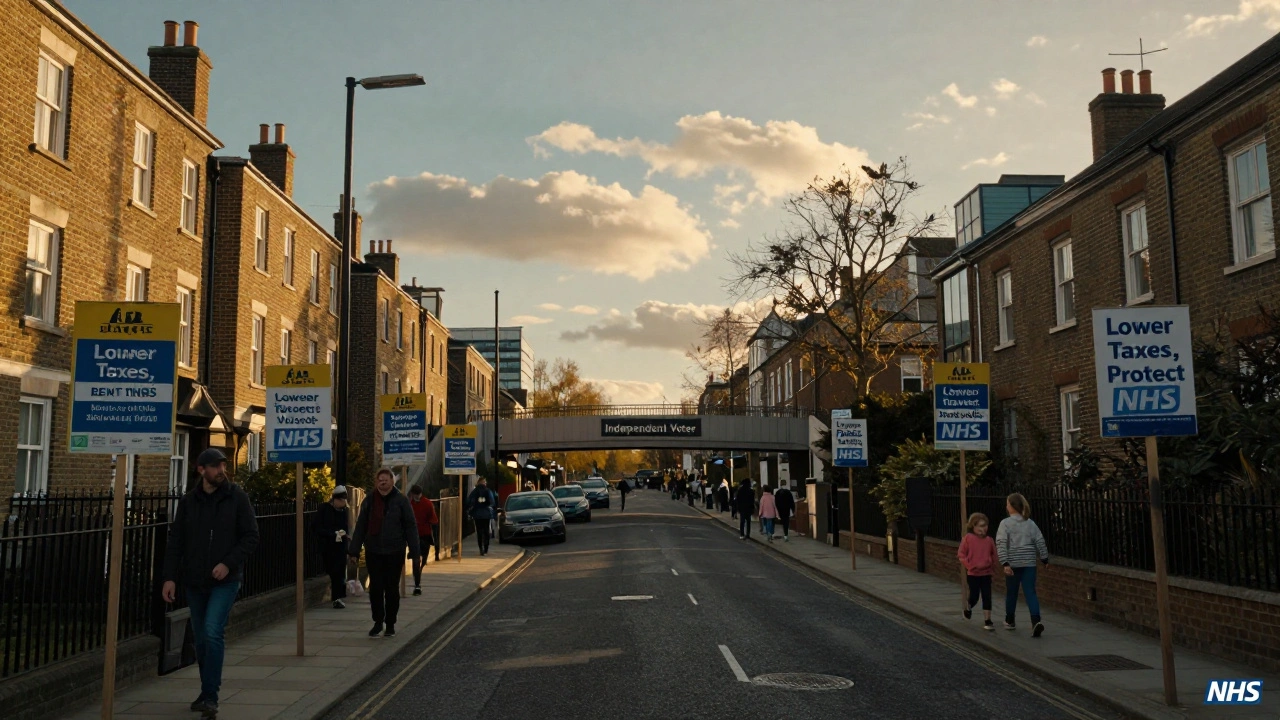
What Independents Actually Care About
Forget ideology. What drives independents isn’t theory - it’s daily life. In a 2025 survey of 2,000 UK independents, the top three concerns were:- Cost of living (87%)
- Healthcare access (82%)
- Public safety and crime (76%)
The Myth of the Swing Voter
Politicians love talking about swing voters. They think independents are up for grabs - that if they just say the right thing, they’ll win them over. But that’s not how it works. Most independents aren’t waiting to be convinced. They’ve already decided. They just won’t tell you which party they’re voting for until the day they cast the ballot. In the 2024 London mayoral election, 31% of voters said they were independent. Of those, 44% voted for the Labour candidate. 38% voted for the Conservative. 18% voted for someone else - or spoiled their ballot. That’s not a swing. That’s a split. The real swing isn’t between parties. It’s between issues. One election, it’s housing. The next, it’s transport. The next, it’s policing. Independents don’t follow a party. They follow what’s broken.
Why Parties Are Losing Them
Parties used to be home for people. Now, they’re just brands. And like any brand, they’ve lost trust. Labour used to stand for workers. Now, some see it as a university club for urban elites. The Conservatives used to stand for stability. Now, they’re seen as a club for wealthy donors and tax avoiders. Independents see both sides as out of touch. And they’re right - in ways that matter. A 2025 report from the Institute for Public Policy Research found that 68% of independents believe both major parties are more interested in winning elections than solving problems. That’s why you see independents voting for smaller parties - the Greens, Reform UK, or local candidates - even when they know those candidates won’t win. It’s not protest. It’s precision. They’re saying: I’m not choosing between two bad options. I’m choosing the one that actually gets something done.What This Means for the Future
The old system is crumbling. Parties are losing members. Turnout is dropping. But independents? They’re growing. In 2010, 17% of UK voters called themselves independent. By 2025, it’s 25%. In some boroughs of London - like Lewisham and Croydon - it’s over 30%. This isn’t chaos. It’s evolution. Voters are no longer asking: “Which party do I belong to?” They’re asking: “Who’s going to fix this?” The parties that survive won’t be the ones with the best slogans. They’ll be the ones who stop treating independents like undecideds - and start treating them like people. The future of British politics isn’t left or right. It’s local. It’s specific. It’s personal. And it’s being written by voters who refuse to be labeled.Are independents more left or right?
There’s no single answer. Independents span the entire political spectrum. Some lean left, some lean right, and many hold mixed views - like supporting strong public services but wanting lower taxes. Most don’t fit neatly into either box. Surveys show roughly equal splits between left-leaning and right-leaning independents, with a growing number holding truly hybrid positions.
Why do people call themselves independent?
Most do because they feel neither major party represents their full set of beliefs. They may agree with Labour on healthcare but with the Conservatives on crime. Or they distrust party politics entirely and want to vote based on candidates, not labels. It’s not about being neutral - it’s about being selective.
Do independents swing elections?
Yes - but not the way people think. Independents don’t flip between parties randomly. They vote based on local issues: housing, crime, transport, or NHS wait times. In tight races, they can tip the balance - but only if a candidate speaks directly to their concerns, not party lines.
Are independents more moderate than partisans?
Not necessarily. Many independents hold strong, even extreme, views - they just don’t want to be tied to a party that might contradict them on other issues. In fact, research shows independents can be just as polarized as partisans, especially on social media. Their independence is about control, not compromise.
Is the rise of independents good for democracy?
It’s complicated. On one hand, it shows people are thinking for themselves and rejecting rigid ideology. On the other, it weakens party accountability and makes it harder to build long-term policy. The real challenge isn’t the rise of independents - it’s whether parties can adapt to serve them, not just win them.


About Author
