Has Anyone Other Than a Republican or Democrat Been President?
Third-Party Impact Simulator
How Third-Party Candidates Changed Elections
See how third-party candidates affected key U.S. presidential elections. Select an election year to simulate the impact of the third-party candidate and see how the outcome might have changed.
Select an Election
Why This Matters
Third-party candidates rarely win elections, but they can dramatically alter the outcome by splitting the vote between the major parties. In close elections, this can make all the difference.
The Electoral College system means candidates need to win entire states, not just get the most votes. This makes it difficult for third-party candidates to get electoral votes, but even if they don't win, they can still change who wins.
Voting matters - in the 2016 election, Jill Stein got 50,000+ votes in Michigan, which was just enough to change the outcome.
Current Election Results
What If the Third-Party Candidate Hadn't Run?
When people think of U.S. presidents, they usually picture Republicans or Democrats. But the truth is, three men have held the office without being affiliated with either party during their time in the White House. And none of them were elected under a third-party banner. Their stories reveal how messy, unpredictable, and sometimes accidental American politics can be.
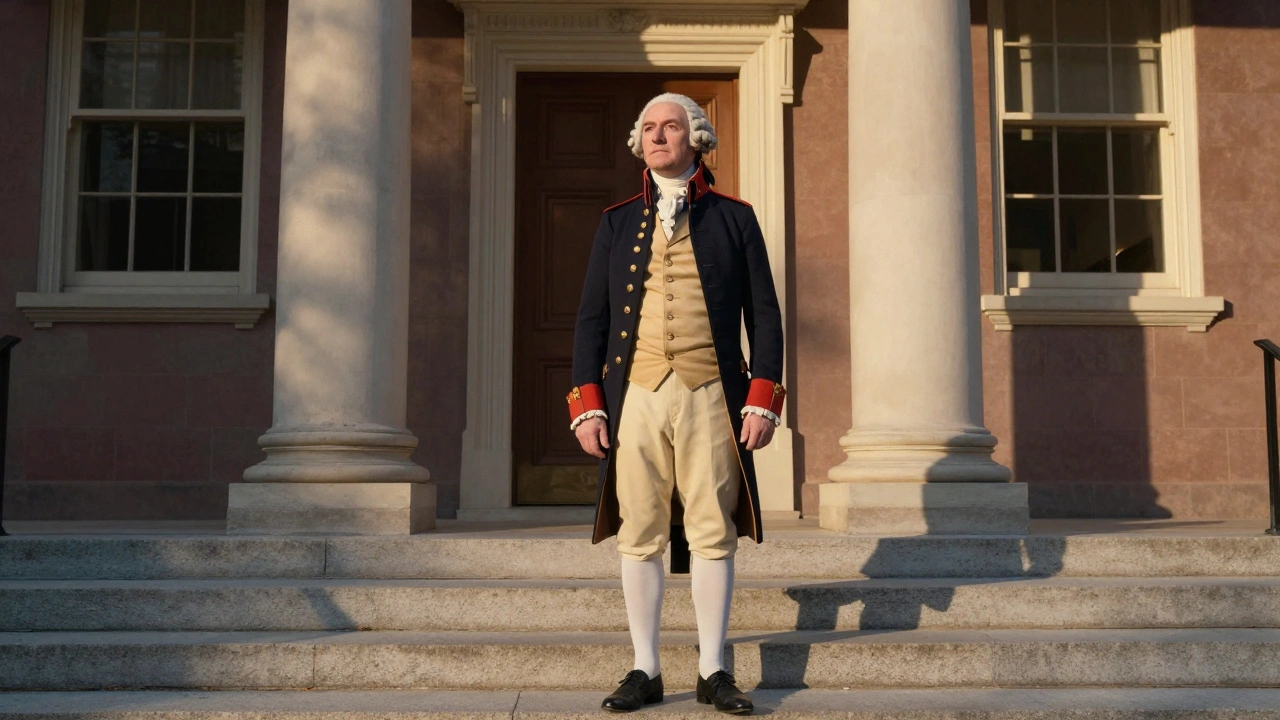
George Washington: The Only Truly Independent President
George Washington didn’t just break the mold-he didn’t even know there was one. When he became president in 1789, political parties didn’t exist yet. The idea of organized factions was still new, and Washington actively warned against them. In his farewell address, he called party loyalty a threat to national unity. He served two full terms from 1789 to 1797 with no party label. No running mate. No party platform. Just a national hero trusted to lead.By the time he left office, factions had already started forming. Alexander Hamilton’s Federalists and Thomas Jefferson’s Democratic-Republicans were beginning to clash. But Washington stayed above it. He’s the only president in U.S. history who never officially belonged to a party-before, during, or after his presidency.
John Tyler: The President Who Got Kicked Out
John Tyler’s path to the presidency was anything but smooth. He was elected vice president in 1840 as part of the Whig Party ticket, running alongside William Henry Harrison. The Whigs were a coalition of former National Republicans and Anti-Masons, formed to oppose Andrew Jackson’s Democrats. They picked Tyler because he was a states’ rights Southerner who’d broken with Jackson.Then Harrison died just 31 days into his term. Tyler became president. And almost immediately, he started vetoing Whig legislation-especially bills to create a national bank. The Whigs were furious. They called him "His Accidency" and expelled him from the party. His entire cabinet resigned. He was left alone in the White House with no party, no allies, and no support.
He finished his term (1841-1845) as a president without a party. He didn’t run again. No one else would have him. But he still governed. He signed the bill that admitted Texas as a state. He negotiated a trade treaty with China. He proved you could run the country without a party label-even if no one wanted to work with you.
Andrew Johnson: The Impeached President Who Lost His Party
Andrew Johnson was Lincoln’s vice president in 1864-not because the Republicans trusted him, but because they needed a Southern Democrat to balance the ticket during the Civil War. The ticket was called the National Union Party, which was just a temporary name for Republicans trying to look bipartisan. Johnson was a lifelong Democrat who hated slavery but hated Black equality even more.When Lincoln was assassinated in 1865, Johnson became president. He quickly started pardoning ex-Confederates and letting Southern states rejoin the Union with almost no conditions. The Republican-controlled Congress was horrified. They passed laws to protect freed slaves. Johnson vetoed them. Congress overrode his vetoes. He clashed with them at every turn.
In 1868, the House impeached him for violating the Tenure of Office Act. He was acquitted by one vote in the Senate. By then, he was completely isolated. No party claimed him. No one wanted to nominate him again. He finished his term in 1869 as a president with no party, no allies, and no legacy he could call his own.
Why No Third-Party President Since 1869?
After Johnson, no president has ever been elected without being a Republican or Democrat. That’s not because no one tried. It’s because the system makes it nearly impossible.The Electoral College is the biggest hurdle. To win, you need 270 electoral votes. But most states award all their electors to the winner of the popular vote in that state. That means if you’re not the top candidate in a state, you get zero. No partial credit. No reward for coming in second.
Ballot access is another wall. In some states, third-party candidates need tens of thousands of signatures just to get on the ballot. In others, they must win a certain percentage in previous elections. The process is expensive, confusing, and stacked against outsiders.
Then there’s the media. The big networks and newspapers treat Republicans and Democrats as the only real options. Third-party candidates rarely get invited to debates. When they do, they’re treated like oddities. Voters hear the same two names over and over. It’s hard to break through.
The Closest Calls: Roosevelt, Wallace, Perot
The closest anyone’s come to breaking the two-party lock was Theodore Roosevelt in 1912. He’d been president from 1901 to 1909 as a Republican. But when his chosen successor, William Howard Taft, won the 1912 nomination, Roosevelt bolted. He formed the Progressive Party-nicknamed the “Bull Moose” Party-and ran again.He won 27% of the popular vote and 88 electoral votes. He carried six states. He came in second. But he split the Republican vote. Taft got only 23%. The Democrat, Woodrow Wilson, won with just 42% of the vote-and 435 electoral votes. Roosevelt didn’t win. But he changed the election.
George Wallace did something similar in 1968. Running as an American Independent, he won five Southern states and 45 electoral votes. He got 13.5% of the popular vote. He didn’t win the presidency. But he showed that a candidate outside the two parties could still win real power-by tapping into racial resentment and populist anger.
Then came Ross Perot in 1992. He spent $60 million of his own money on TV ads. He didn’t have a party. He had charts. He had a plan. He got 19% of the vote-more than any third-party candidate since Roosevelt. But he didn’t win a single state. He didn’t get a single electoral vote. He didn’t change the outcome as much as people thought. Studies later showed he took about equal votes from both Bush and Clinton.
What About Modern Third Parties?
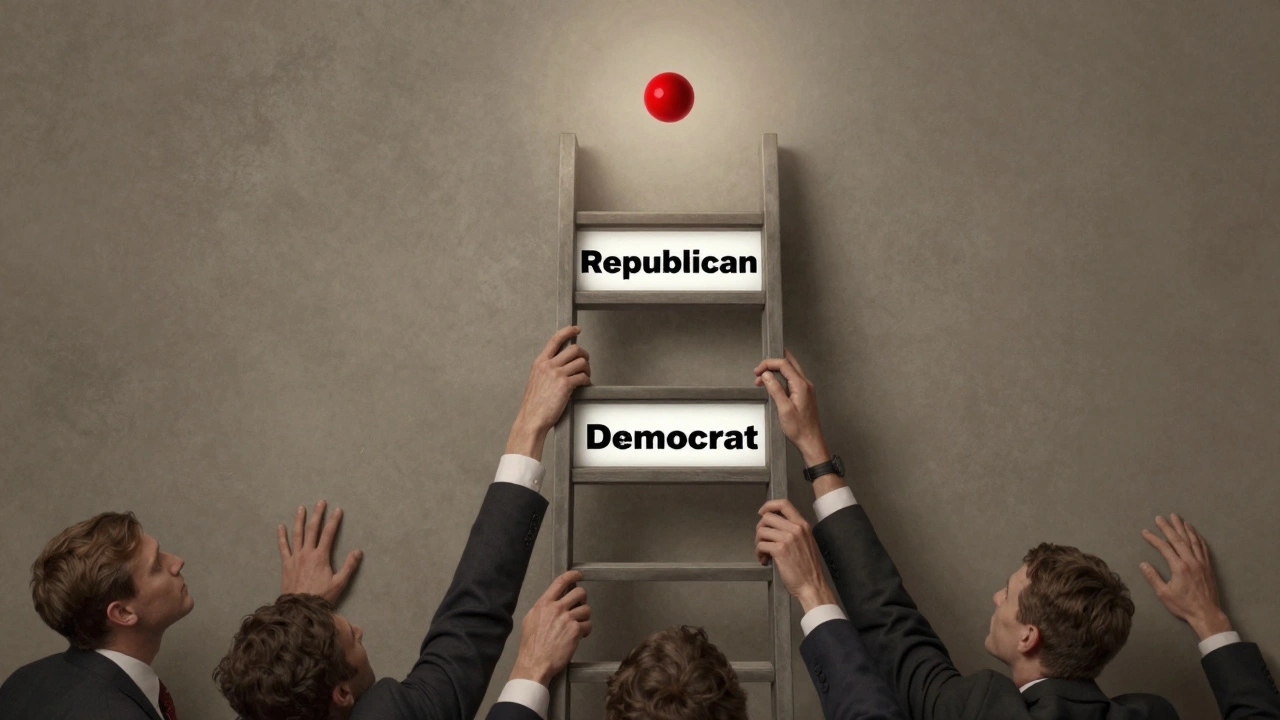
Today, the Libertarian and Green parties regularly run candidates. Gary Johnson got 3.3% in 2016. Jill Stein got 0.7%. Neither came close to winning. But their votes mattered in tight states. In Michigan, Wisconsin, and Pennsylvania, Trump won by less than 80,000 votes total. Stein got over 50,000 in Michigan alone. Some analysts say she tipped the balance.But here’s the catch: even if a third-party candidate gets a million votes, it doesn’t help them win. It just makes the two major parties blame each other for losing. That’s how the system protects itself.
Will We Ever See Another Independent President?
It’s not impossible. But it would take a perfect storm. A major party fracture. A charismatic outsider with massive funding. A public fed up with both parties. And a system that suddenly allows for real competition.Right now, the rules are written to keep the two parties in charge. The Electoral College. Ballot access laws. Debate rules. Media coverage. All of it favors the status quo.
So the answer to the question is yes-three people have been president without being Republicans or Democrats. But none of them were elected that way. And none of them left behind a path for others to follow.
Until the system changes, the White House will stay in the hands of the two big parties. The rest of us? We’ll keep watching, hoping, and wondering what might have been.
Has any president ever been elected as an independent?
No. George Washington was the only president who never belonged to a party, but he was elected before parties existed. Since then, every president has either been elected as a Republican or Democrat-or inherited the office after the death of a president from one of those parties. No independent candidate has ever won the presidency.
Why didn’t John Tyler run for re-election?
After being expelled from the Whig Party and losing support from both Democrats and Republicans, Tyler had no political base left. He couldn’t get nominated by any party. He also didn’t want to run as an independent because he knew he’d have no chance of winning. He left office in 1845 and retired from public life.
Did Andrew Johnson ever join a party after his presidency?
No. After his impeachment and defeat, Johnson remained politically isolated. He returned to the Senate in 1875 as a Democrat, but only because Tennessee’s Democratic Party wanted to rehabilitate his image. He died just a few months later. He never rejoined the Republican Party or any other organized group.
Could a modern independent candidate win today?
It’s extremely unlikely. The Electoral College requires winning entire states. Third-party candidates rarely get enough support in any one state to win its electoral votes. Ballot access laws make it hard to even appear on the ballot in all 50 states. And without major media coverage or debate inclusion, it’s nearly impossible to reach enough voters.
What’s the difference between a third-party candidate and an independent?
A third-party candidate runs under the banner of a minor political party-like the Libertarian or Green Party. An independent runs with no party affiliation at all. George Washington was an independent. Ross Perot was an independent. Theodore Roosevelt was a third-party candidate under the Progressive Party.


About Author
