Is Homelessness Worse in the US or UK? The Data Says One Is Far Worse
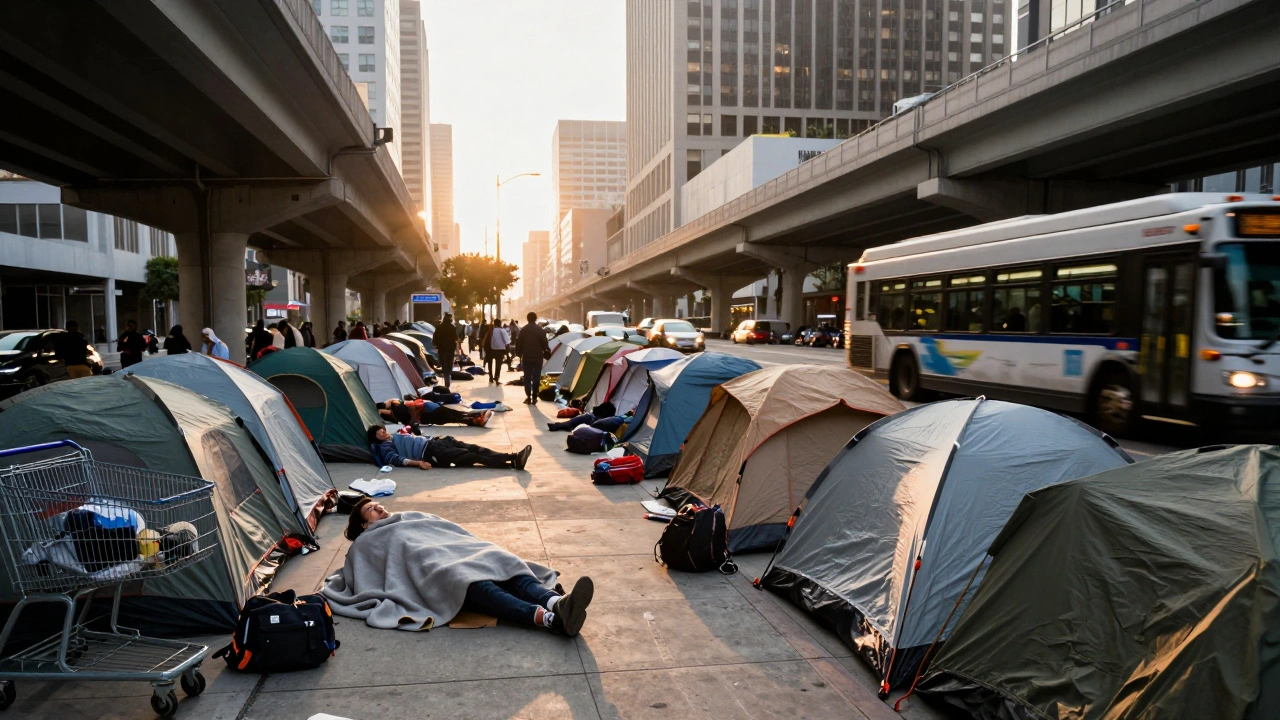
On a single night in January 2024, 771,480 people in the United States had nowhere to sleep. That’s more than the entire population of cities like Cleveland or Pittsburgh. And it’s not a one-time spike - it’s the highest number ever recorded. Homelessness in the U.S. jumped 18% from 2023 to 2024, and over 36% of those people were sleeping on streets, in cars, or in abandoned buildings. No shelter. No safety net. Just the open air.
What the Numbers Don’t Tell You
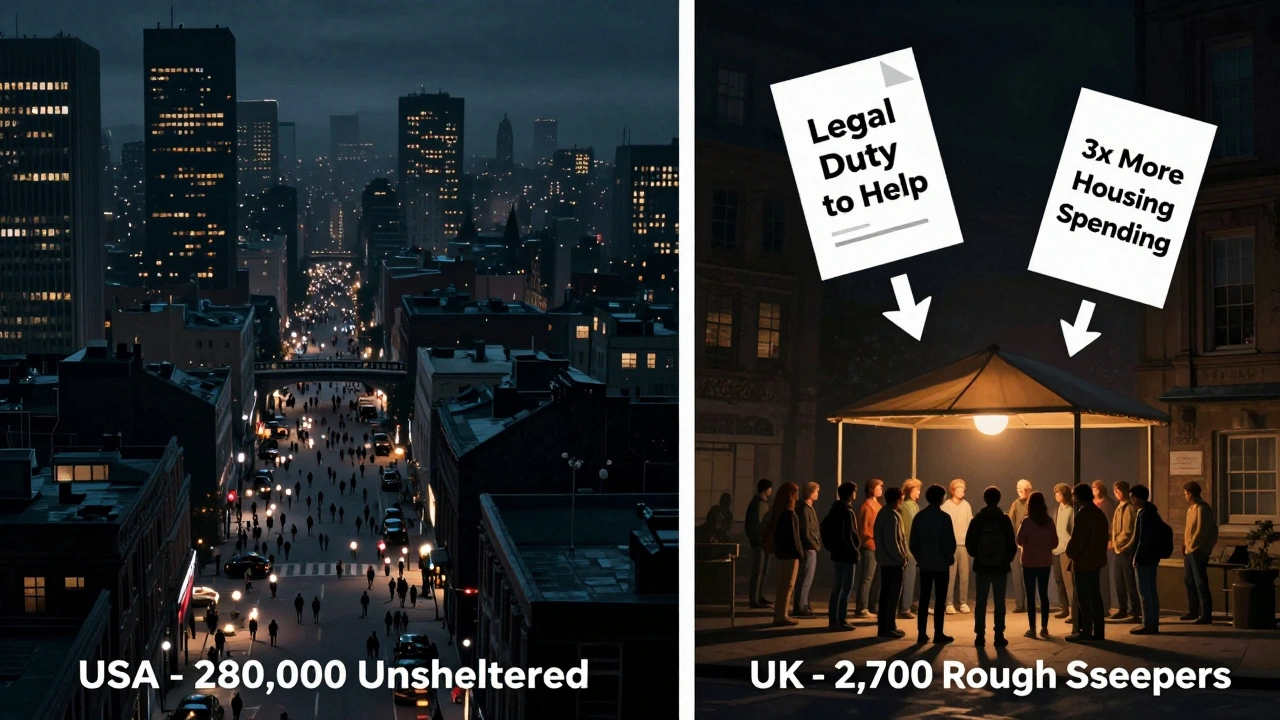
The U.S. doesn’t just have more homeless people - it has more people without any protection at all. In 2024, nearly 280,000 people in the U.S. were unsheltered. That’s more than the total homeless population of the entire United Kingdom in any given year. In cities like Los Angeles, San Francisco, and New York, tent cities have become permanent fixtures. People live in cardboard boxes under overpasses. Kids sleep in cars parked outside schools. Families wait months just to get into a shelter bed.The root cause? Housing costs have exploded while wages stayed flat. In 2024, the average rent for a one-bedroom apartment in the U.S. was $1,800 a month. The federal minimum wage is $7.25. Even someone working 40 hours a week, 52 weeks a year, makes just $15,080. That’s $3,720 short of what they’d need just to afford rent - before food, medicine, or transportation. And that’s assuming they even have a job. One in five homeless adults in the U.S. has a job but still can’t afford a place to live.
The UK’s Hidden System
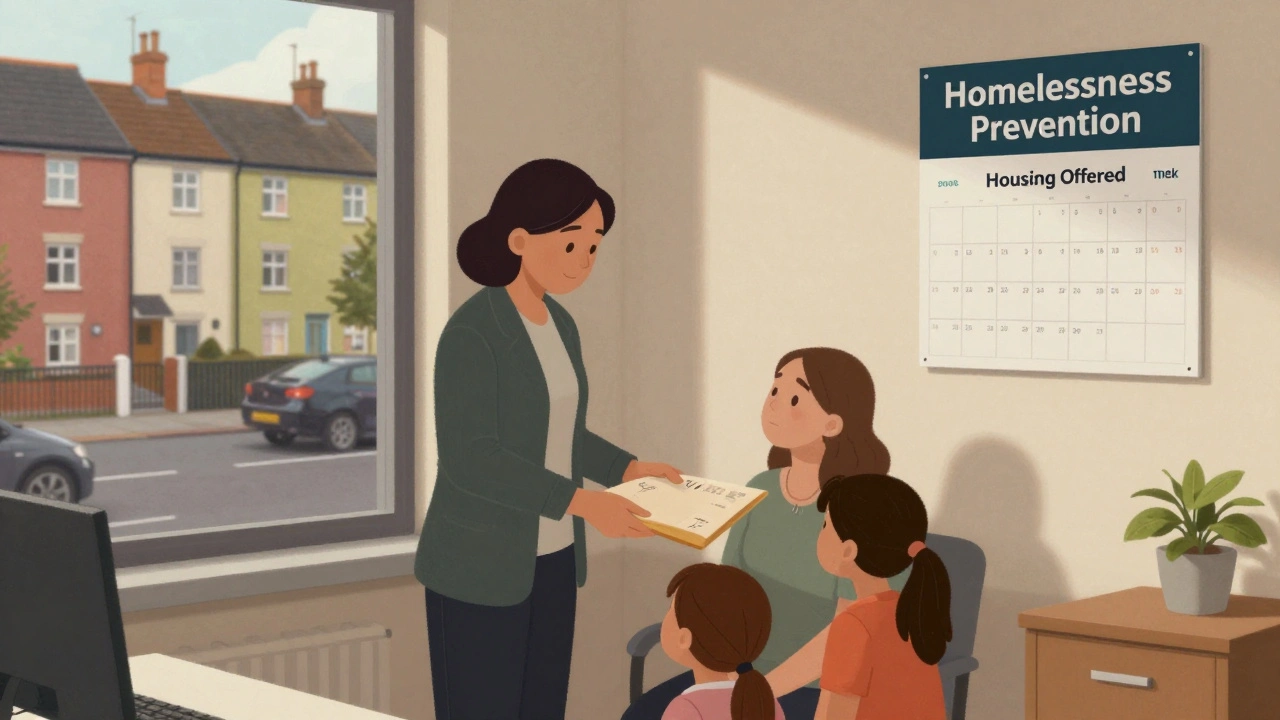
In the United Kingdom, homelessness looks different. The government tracks two types: rough sleepers - people sleeping on the streets - and those in statutory homelessness. In 2023, the UK counted about 2,700 people sleeping rough on any given night. That’s less than 1% of the U.S. unsheltered count. But here’s the catch: the UK doesn’t count people living in hostels, temporary housing, or couch-surfing with friends. Those people are still homeless - just not counted as such.The UK has a legal duty to help. Under the Homelessness Reduction Act of 2017, local councils must step in before someone becomes homeless. They offer advice, help find housing, and can even pay for temporary accommodation. That’s not just policy - it’s law. And it works. In 2023, over 110,000 households were helped to avoid homelessness before they lost their homes. That’s more than the total number of unsheltered people in the entire U.S.
Why the Difference?
The U.S. treats homelessness as a crisis to manage. The UK treats it as a failure to prevent. That’s why the numbers tell such a stark story.In the U.S., there are 1.2 million shelter beds available nationwide. But demand keeps rising. In New York City alone, over 70,000 people were in shelters on any given night in early 2025. That’s up 40% since 2020. Meanwhile, the U.S. spends only 0.15% of its GDP on housing assistance. The UK spends 0.5%. That’s more than three times as much. And it shows.
Take chronic homelessness - people who’ve been without a home for over a year. In the U.S., there were over 99,500 of them in 2024. In the UK, the number is around 4,000. That’s not because the UK has fewer people with mental illness or addiction - it’s because they’re more likely to get help before they hit the streets.
The Unseen Crisis in Both Countries
But don’t think the UK is out of the woods. There are still tens of thousands of people living in temporary housing, often in poor conditions. Families are stuck in B&Bs for months. Young people are forced to leave care at 18 with no home to go to. The UK’s system is better than the U.S.’s - but it’s stretched thin. Budget cuts since 2010 have reduced local authority funding by over 40%. Some councils can barely afford to answer the phone.In the U.S., the problem is deeper. There’s no legal right to housing. No safety net. If you lose your job, your rent goes up, or your landlord evicts you, you’re on your own. And when you’re homeless, getting a job becomes nearly impossible. No address. No phone. No clean clothes. It’s a trap.
What’s Really Worse?
If you measure homelessness by raw numbers, the U.S. is far worse. But if you measure it by how many people are left to fend for themselves, the difference is even starker.One in three homeless people in the U.S. is unsheltered. In the UK, it’s less than 1%. That’s not a small gap - it’s a chasm. In the U.S., people die on the streets from exposure, violence, and untreated illness. In the UK, people still suffer - but they’re more likely to get a bed, a meal, and a case worker before they hit rock bottom.
The U.S. has more money, more land, and more resources. But it chose not to use them for housing. The UK has less money and a smaller economy. But it chose to protect its people.
What Happens Next?
The U.S. is heading in the wrong direction. Homelessness is rising faster in states like Colorado, West Virginia, and Alabama than anywhere else. The federal government has added billions in funding, but it’s not keeping up. Local governments are overwhelmed. The supply of affordable housing hasn’t grown in decades.In the UK, the government is trying to fix cracks in the system. More funding for local councils. More housing targets. But without reversing years of cuts, the system will keep buckling under pressure.
The truth? Neither country has solved homelessness. But one has chosen to try - and it shows. The U.S. doesn’t just have more homeless people. It has more people who are invisible. Forgotten. Left to survive on their own.
If you want to know which country has worse homelessness - look at the people sleeping on the pavement. In the U.S., they’re everywhere. In the UK, they’re rare. And that’s not luck. It’s policy.
Why is homelessness higher in the U.S. than in the UK?
The U.S. has no legal right to housing, and housing costs have skyrocketed while wages stayed flat. The UK has laws that require local councils to help people before they become homeless, and it spends more per person on housing assistance - over three times as much as the U.S.
Are there more homeless people in the U.S. or the UK?
The U.S. has far more. In 2024, over 770,000 people were homeless on a single night in the U.S. The UK counted about 2,700 people sleeping rough that same year. But the U.S. also has nearly 300,000 more people living unsheltered - meaning they have no roof at all.
Is the UK’s approach better than the U.S.’s?
Yes, in practice. The UK’s legal duty to prevent homelessness means fewer people end up on the streets. The U.S. waits until people are already homeless before offering help - and even then, shelters are full. The UK system isn’t perfect, but it stops more people from falling through the cracks.
Why do so many homeless people in the U.S. live unsheltered?
Shelters are overcrowded, have strict rules, or are unsafe. Many people avoid them because of drug policies, lack of space for pets or partners, or fear of violence. With no legal right to housing, the only option left is the street.
Does the UK count all homeless people?
No. The UK only counts people sleeping rough and those in statutory homelessness - meaning they’ve been accepted by a council for help. People couch-surfing, living in cars, or staying in temporary hostels aren’t always counted, so the real number is likely higher than reported.


About Author
