
What Is a Livable Salary in the UK in 2025?
Livable Salary Calculator
Your Salary Input
Key Standards
- NLW £12.21/hour (Legal minimum)
- RLW £12.60/hour (Outside London) / £13.85 (London)
- MIS £29,500/year (UK) / £33,000 (London)
Your Budget Analysis
Annual Salary
£0,000
Living Standard
£0,000
If you’re working full-time in the UK and wondering if your paycheck covers rent, food, and bills without constant stress, you’re not alone. The legal minimum wage doesn’t tell the whole story - and that’s where the real picture of a livable salary starts.
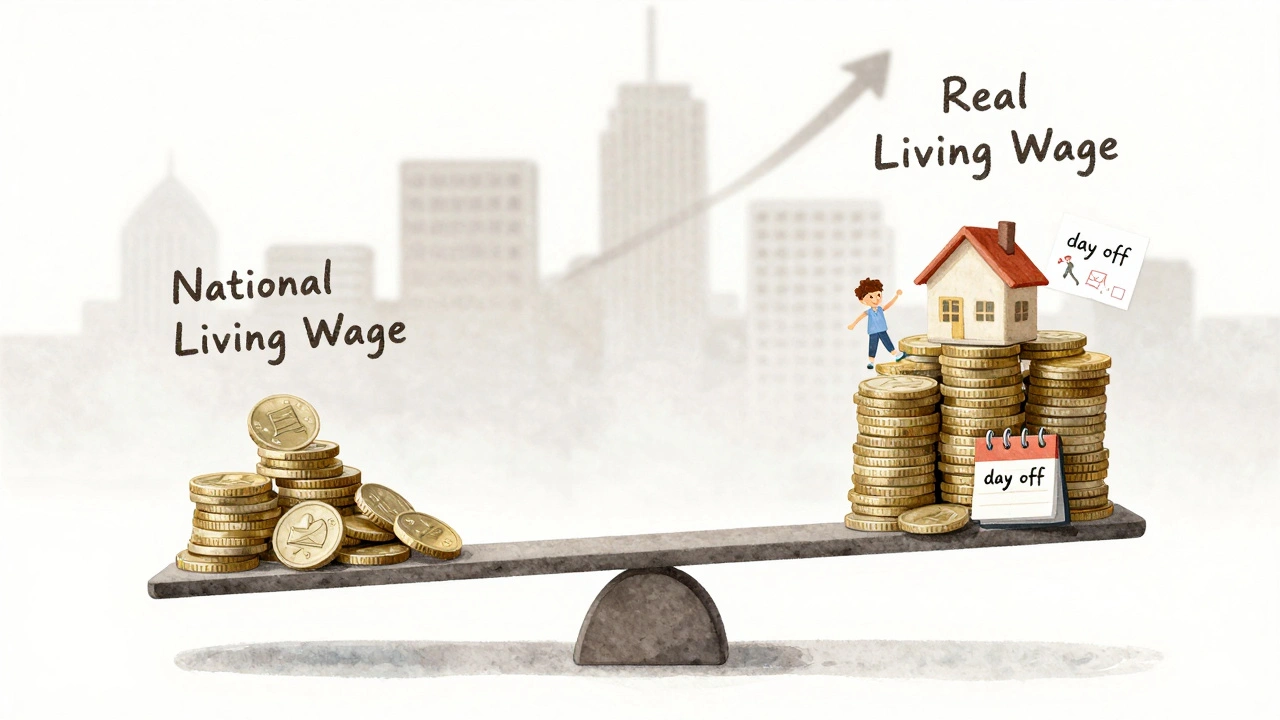
What’s the difference between the National Living Wage and the Real Living Wage?
The UK government sets the National Living Wage (NLW), which is the legal minimum employers must pay workers aged 21 and over. As of April 2025, that’s £12.21 per hour. For a full-time worker (37.5 hours a week), that adds up to £23,812.50 a year before tax.
But here’s the catch: that’s not enough to live on in most places. The Real Living Wage (RLW), set independently by the Living Wage Foundation, is based on what people actually need to get by. It’s not law - it’s a voluntary standard adopted by responsible employers. In 2024/25, the RLW is £12.60 per hour outside London and £13.85 in London. By May 2026, those rates will rise to £13.45 nationally and £14.80 in London.
That means someone earning the RLW in London will make £27,007.50 a year now - and soon over £29,000. That’s nearly £5,200 more than the NLW. For many, that’s the difference between paying the rent and choosing between heating and groceries.
How much do you actually need to live?
The Joseph Rowntree Foundation (JRF) has spent years calculating the Minimum Income Standard - what it really takes to afford a decent life. Their 2024 numbers show:
- £29,500 per year outside London - for one adult, covering rent, food, transport, bills, clothes, and even a small social budget.
- £33,000 per year in London - because housing alone is 58% more expensive than the UK average.
That’s higher than both the current NLW and RLW. Even the RLW in London, at £13.85/hour, still leaves a gap of over £3,000 a year compared to what JRF says you need.
And it’s not just rent. Food prices have stayed high. Public transport fares jumped 7% in 2024. Energy bills, while lower than 2023 peaks, are still 30% above pre-pandemic levels. A single person earning the NLW in Manchester reported being £187 short each month after rent and utilities - just to buy food and get to work.

Who earns below a livable wage?
One in seven UK workers - over 4.9 million people - now work for employers certified to pay the Real Living Wage. That’s up from just 200,000 in 2011. But it also means 15.7% of all jobs - 4.5 million positions - still pay less than the RLW.
Those jobs aren’t random. They’re concentrated in sectors with thin profit margins: retail, hospitality, cleaning, and care work. A cleaner in London earning the RLW through a certified employer says she can now save £50 a week. But a colleague at a non-certified firm earning the NLW says she’s skipping meals to pay her gas bill.
The Office for National Statistics (ONS) found that 2.5% of UK workers - over 800,000 people - are now earning below the low pay threshold of £11.97/hour. That’s a new record. Meanwhile, median hourly pay has hit £17.96. The gap between the top and bottom is growing fast.
Why doesn’t the government just raise the minimum wage?
The Low Pay Commission, which advises the government, says the NLW must balance fairness with economic stability. The 6.7% increase to £12.21 in April 2025 helped 2.2 million workers. But experts like Professor Alan Manning from the LSE warn that wage growth hasn’t kept up with inflation in essentials like housing and food. Since 2021, real wages for low-paid workers have fallen by 4.2% after inflation.
Businesses, especially small ones, are caught in the middle. A 2025 survey by the Institute of Directors found that 62% of employers believe paying the RLW would force them to cut hours or freeze hiring. Retail and hospitality have average profit margins of just 3.8%. Raising wages without raising prices or cutting staff isn’t easy.
But here’s the twist: companies that do pay the RLW often see benefits. Trustpilot reviews show certified employers have 12% staff turnover - down from 45%. One retail manager said the 4.3% payroll increase paid for itself in reduced recruitment costs and better customer service.
What does this mean for you?
If you’re earning the NLW and living outside London, you’re likely struggling. £23,812 a year doesn’t stretch far. Rent for a one-bedroom flat in Birmingham or Leeds averages £950/month. Add £200 for food, £100 for transport, £150 for bills - you’re already at £1,400. That’s £16,800 a year. You’ve got £7,000 left for everything else: clothes, phone, insurance, car repairs, holidays, emergencies.
That’s not livable. That’s surviving.
If you’re in London, the numbers get worse. A one-bedroom flat can cost £1,800/month. At the NLW, you’d be £700 short every month just to cover basics. Even the RLW at £13.85/hour barely covers it - and you still can’t afford to save.
There’s no magic number. But if you want to live without constant financial anxiety, you need at least £29,500 outside London. In London, aim for £33,000. That’s the real benchmark.
What can you do?
Check if your employer is a certified Living Wage Employer. You can search the Living Wage Foundation’s public directory - it lists over 12,000 employers, including universities, hospitals, local councils, and even some big retailers like John Lewis and Burberry.
If you’re not paid the RLW, ask. Some employers don’t know they can apply for the Living Wage Business Fund - a £150 million government-backed program that helps small businesses cover wage increases without raising prices.
And if you’re job hunting, don’t just look at the salary. Look at the employer. Is it on the Living Wage list? Do employees talk about feeling respected? Those things matter more than a slightly higher number on a job ad.
Wages aren’t just numbers on a payslip. They’re about dignity. They’re about whether you can afford to take your kid to the cinema, or replace a broken boiler, or take a day off when you’re sick without losing rent money.
The UK’s minimum wage keeps rising. But the cost of living is rising faster. The Real Living Wage isn’t a luxury. It’s the bare minimum for a life that’s not just possible - but bearable.
Is £12.21 an hour enough to live on in the UK?
No, £12.21 per hour - the National Living Wage - is not enough to live on in most parts of the UK. At 37.5 hours a week, that’s £23,812.50 a year before tax. After rent, utilities, food, and transport, most people earning this rate are left with little to no money for emergencies, clothing, or even social activities. The Real Living Wage, which reflects actual living costs, is £12.60 nationally and £13.85 in London.
What salary do you need to live comfortably in London?
To live comfortably in London, you need at least £33,000 per year before tax. That’s based on the Joseph Rowntree Foundation’s Minimum Income Standard, which covers rent for a one-bedroom flat, food, transport, bills, essentials, and a small buffer for unexpected costs. Even the Real Living Wage of £13.85/hour (£27,007/year) falls short by over £6,000 annually. Many Londoners rely on second jobs or family support to make ends meet.
How is the Real Living Wage calculated?
The Real Living Wage is calculated by the Living Wage Foundation using the Minimum Income Standard (MIS), developed by the Resolution Foundation. It’s based on what households say they need to afford a basic but acceptable standard of living, including housing, food, transport, utilities, childcare, and social participation. The figures come from surveys of thousands of people across the UK and are updated annually. It’s not based on inflation or median wages - it’s based on real needs.
Do employers have to pay the Real Living Wage?
No, the Real Living Wage is voluntary. Employers choose to pay it and can apply to become certified by the Living Wage Foundation. Over 12,000 UK employers have done so, including many public sector bodies, universities, and some large retailers. But most employers, especially in retail and hospitality, still pay only the legal minimum - the National Living Wage.
Why is the Real Living Wage higher in London?
Housing costs in London are 58% higher than the UK average, according to the Greater London Authority. Rent, utilities, and even basic groceries cost more. The Real Living Wage reflects these regional differences. A worker earning £13.85/hour in London is still struggling - but without that extra £1.24/hour, they’d be even worse off. The rate is adjusted to match local living costs, not just national averages.
What’s the future of the UK’s wage standards?
The National Living Wage is projected to rise to £12.71 by April 2026. The Real Living Wage will rise to £13.45 nationally and £14.80 in London by May 2026. The gap between them will widen further. Experts predict over 5 million workers - nearly 17% of the workforce - will still earn below the Real Living Wage by 2026. Without policy changes, in-work poverty will keep growing, even as median wages rise.



About Author
