
What Is London's Nickname? The Real Story Behind 'The Big Smoke' and Other Names
London isn’t just a city-it’s a character. Walk its streets, and you’ll hear it called many things. But if you ask someone what London’s nickname is, most will say The Big Smoke. That’s not just a throwaway phrase. It’s a legacy carved by coal, steam, and history.
Why 'The Big Smoke'? It’s Not Just About Pollution
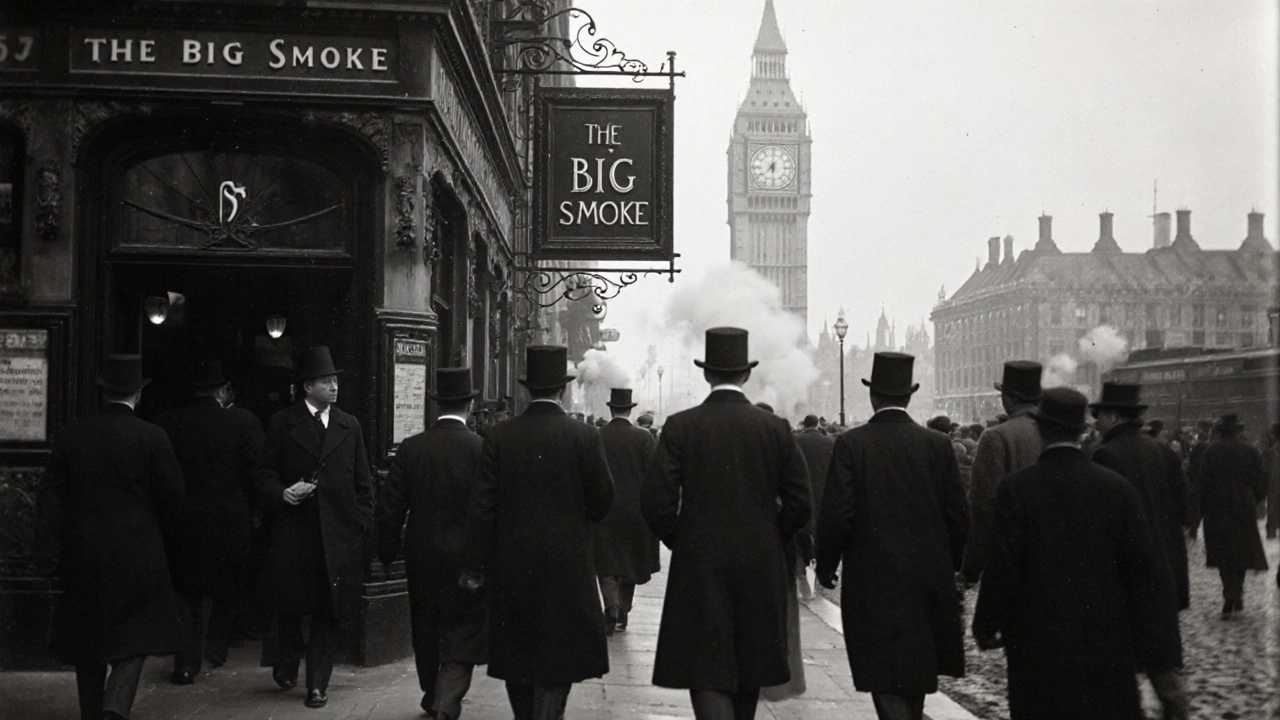
The nickname 'The Big Smoke' didn’t start as a joke. In the 1800s, London burned more coal than any other city on Earth. Factories, homes, and trains all fed the same black clouds. By the 1850s, the air was so thick with soot that people called it 'pea-soupers'-fog so dense you couldn’t see your hand in front of your face.
Charles Dickens wrote about it in Bleak House: 'It was a foggy day in London. The fog was so thick, the lamps were lit in the middle of the day.' That wasn’t poetic license. It was daily life. The smoke wasn’t just an inconvenience-it was a cultural marker. People didn’t just live with it; they described their world through it.
Even after the Clean Air Act of 1956 cracked down on coal burning, the name stuck. It became shorthand for London’s grit, its industrial soul. Today, you’ll hear it in songs, documentaries, and even in the names of pubs. It’s not a complaint anymore-it’s a badge.
Other Names London Has Carried Over Time
London has worn many hats. 'The Smoke' is the shorter version of 'The Big Smoke,' but it’s not the only one.
- The Square Mile-refers to the City of London, the financial heart where the Bank of England sits. It’s only 1.12 square miles, but it handles 3% of the world’s GDP. That’s why traders and bankers still call it 'The Square Mile'-it’s not about size, it’s about power.
- Metropolis-used in the 19th century to describe London as the center of the British Empire. At its peak, London ruled over a quarter of the planet’s population. Writers like H.G. Wells used 'Metropolis' to capture its scale and strangeness.
- The Great Wen-a term coined by reformer William Cobbett in 1829. 'Wen' means a benign growth. Cobbett hated how London swallowed up villages and farmland. He called it a 'cancerous growth' on the countryside. The name didn’t catch on with the public, but it’s still used by urban historians to talk about unchecked expansion.
- Londinium-the Roman name, dating back to 43 AD. You’ll see it in museums and on old maps. It’s not a nickname in the modern sense, but it’s the original identity.
Some names fade. Others stick. 'The Big Smoke' won because it wasn’t just descriptive-it was emotional. It carried the weight of struggle, survival, and transformation.
When Did 'The Big Smoke' Become Official?
It never was official. London doesn’t have an official nickname like some cities do. New York has 'The Big Apple,' and Chicago has 'The Windy City'-both backed by decades of marketing. London’s name grew organically, from street talk to literature to film.
The first recorded use of 'The Big Smoke' was in 1842, in a British magazine called The Athenaeum. But it didn’t explode into popular use until the 1920s and 30s, when jazz musicians and American journalists started using it. By the time the Beatles sang about 'London' in the 1960s, 'The Big Smoke' was already part of the global lexicon.
Even today, you’ll find it in headlines: 'The Big Smoke braces for strikes,' or 'The Big Smoke’s skyline is changing.' It’s not just a relic-it’s a living label.
How Londoners Really Feel About the Nickname
Ask a Londoner what they call their city, and you’ll get a shrug. Most just say 'London.' But ask them about 'The Big Smoke,' and their face lights up.
'It’s kind of proud, isn’t it?' said Maria, a taxi driver from Peckham. 'We didn’t ask for the smoke. But we kept going. That’s what the name means to me-resilience.'
Younger generations don’t use it as much. They say 'Lond' or 'The L.' But older folks still say 'The Big Smoke' with a smirk, like they’re sharing a secret. Tourists hear it in documentaries and repeat it. It’s become a cultural shorthand-like saying 'The City' to mean Wall Street.
Even the London Underground uses it. One of the station announcements on the Northern Line says: 'Welcome to London, The Big Smoke.' It’s not marketing. It’s tradition.
Why Other Cities Don’t Have This Kind of Nickname
Paris is 'The City of Light.' Tokyo is 'The Capital.' But those are poetic. London’s nickname is raw. It’s not about beauty-it’s about burden.
Other industrial cities had smoke too. Manchester, Pittsburgh, Chicago-they all had their smog. But none of them turned it into a lasting identity. Why? Because London’s smoke wasn’t just pollution. It was empire. It was poverty. It was invention. It was the sound of a city that never slept.
London didn’t clean up its air and forget its past. It kept the name. That’s rare. Most cities rebrand. London chose to remember.
What You’ll Hear Today-And What It Means
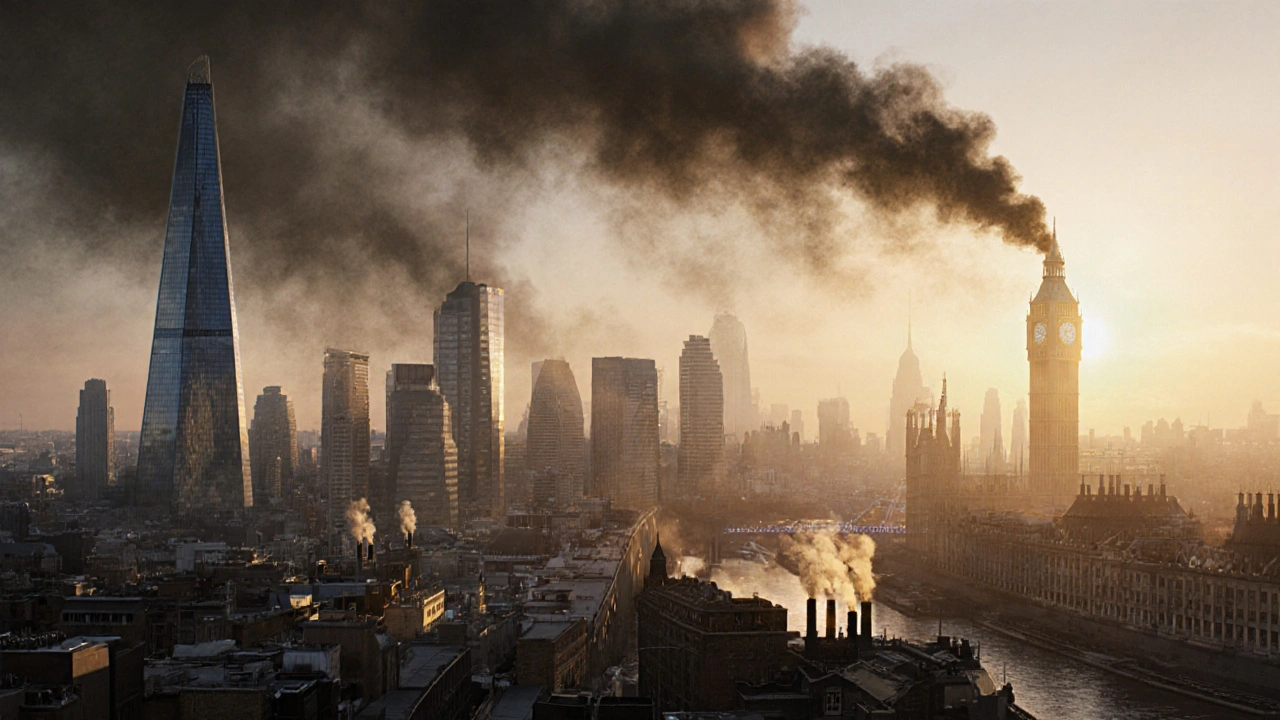
Walk into a pub in Camden, and someone might say, 'It’s proper thick in The Big Smoke today.' They’re not talking about weather. They’re talking about crowds, noise, energy. The smoke is gone. But the feeling? Still there.
Modern London is cleaner. The air quality is better than it’s been since 1880. But the city still feels heavy. It’s crowded. It’s loud. It’s expensive. It’s alive in a way that wears you out-and pulls you back.
'The Big Smoke' isn’t about the past. It’s about the rhythm. The pulse. The unspoken truth that London doesn’t just exist-it pushes.
What’s Next for London’s Nickname?
Some say it’s outdated. Climate activists argue it glorifies pollution. Others say it’s the only name that captures London’s soul.
There’s no new nickname rising to replace it. No 'The Green Metropolis' or 'The Digital City' has stuck. Why? Because none of them carry the same texture. 'The Big Smoke' doesn’t just describe a place-it describes a feeling. A history. A fight.
As long as London keeps changing-and it always does-'The Big Smoke' will stay. Not because it’s pretty. But because it’s true.
Why is London called The Big Smoke?
London earned the nickname 'The Big Smoke' during the 1800s when coal burning filled the air with thick, black smog. Factories, trains, and homes all burned coal, creating dense fog known as 'pea-soupers.' Even after cleaner air laws in the 1950s, the name stuck as a symbol of the city’s industrial grit and resilience.
Is 'The Big Smoke' still used today?
Yes. While modern London has cleaner air, 'The Big Smoke' is still used in media, music, and everyday speech. It’s not about pollution anymore-it’s a cultural shorthand for London’s energy, chaos, and enduring character. You’ll hear it in news headlines, pub conversations, and even Underground announcements.
What other nicknames does London have?
London has several other nicknames: 'The Square Mile' for its financial district, 'Metropolis' from its imperial past, 'The Great Wen' (a 19th-century critique of its sprawl), and 'Londinium' as its ancient Roman name. But none have the lasting cultural weight of 'The Big Smoke.'
Did London ever have an official nickname?
No. Unlike New York or Chicago, London never officially adopted a nickname. 'The Big Smoke' grew from popular use-through literature, music, and daily speech-not government or marketing. That’s why it feels more authentic.
Is 'The Big Smoke' considered offensive?
Not generally. While some environmentalists might argue it romanticizes pollution, most Londoners see it as a point of pride. It reflects the city’s history of survival and adaptation. It’s not a joke-it’s a memory.


About Author
