What Is the Number 1 Social Media in the World? Facebook’s Dominance in 2026
Social Media User Comparison Calculator
Compare Social Media Platforms
See how Facebook compares to other platforms in user base and demographics
Key Statistics
Why This Matters
Facebook's 3.07 billion users represent nearly 38% of the global population. No other platform comes close to its scale.
Facebook's Uniqueness
Unlike TikTok's video focus or Instagram's visuals, Facebook connects through communities and groups. 1.8 billion users engage with Facebook Groups monthly, providing vital community support and business connections.
Demographic Advantage
With 62% of users aged 25-54, Facebook remains the primary platform for reaching the highest-spending demographic. This explains why 89% of small businesses using Facebook Ads report positive returns.
Comparison Results
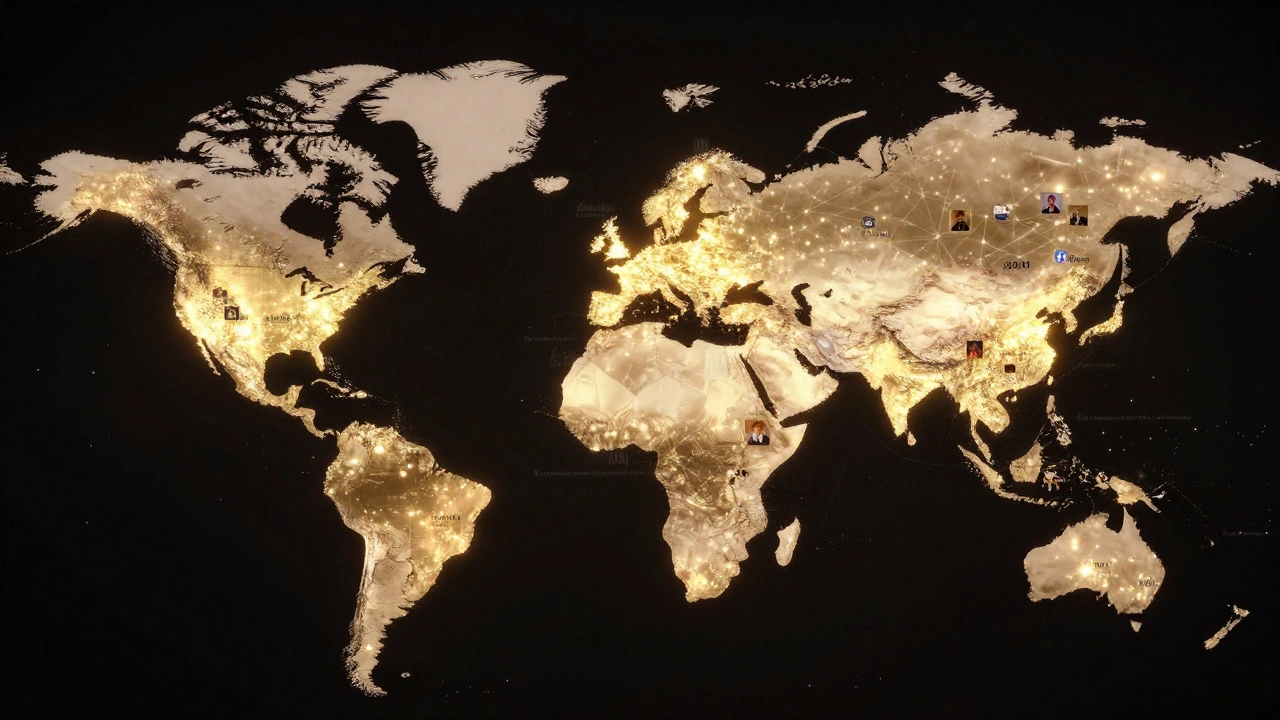
When you ask what the number 1 social media in the world is, the answer isn’t close. Facebook still holds the top spot-with 3.07 billion monthly active users as of early 2026. That’s more than the entire population of Europe and North America combined. It’s not just big. It’s the only platform that’s crossed the three-billion-user threshold.
Why Facebook Still Leads by a Huge Margin
Facebook isn’t just ahead. It’s in a league of its own. YouTube comes second with 2.5 billion users. WhatsApp and Instagram each sit at 2 billion. TikTok, the fastest-growing platform, has 1.58 billion. None of them come close to Facebook’s scale. Even when you add up all the other platforms, Facebook still accounts for nearly 27% of all social media users globally. The reason isn’t just history. It’s depth. Facebook isn’t just a feed. It’s a living network of communities, businesses, and services. Over 1.8 billion people interact with Facebook Groups every month. More than 200 million small businesses use Facebook to reach customers. In places like India and Brazil, it’s where people pay bills, find jobs, and organize protests. In rural areas with limited internet, Facebook Lite runs on low-end phones and keeps people connected. Its infrastructure handles 4 million posts per minute. 350 million new photos are uploaded daily. Half a trillion ad impressions are served every day. That’s not just scale-it’s engineering on a level no other platform has matched.Who Uses Facebook-and Who Doesn’t
Facebook’s user base isn’t young. It’s middle-aged. About 62% of its users are between 25 and 54. That’s where its strength lies. Parents use it to stay in touch with family. Local businesses rely on it for ads. Community groups organize food drives and neighborhood watches on Facebook. In the U.S., 76% of adults aged 35-54 use it regularly. But here’s the flip side: teens are leaving. Only 32% of U.S. teens use Facebook regularly, according to Pew Research. Compare that to TikTok, where 67% of teens are active. Younger users want fast, short videos, not long updates from high school friends they haven’t seen in years. TikTok’s algorithm hooks them with endless, personalized clips. Facebook’s feed feels slow, cluttered, and full of ads. That’s why Facebook’s growth has stalled. It’s up just 1.2% year-over-year. TikTok is growing at 14.7%. The gap is narrowing in engagement, even if not in total users.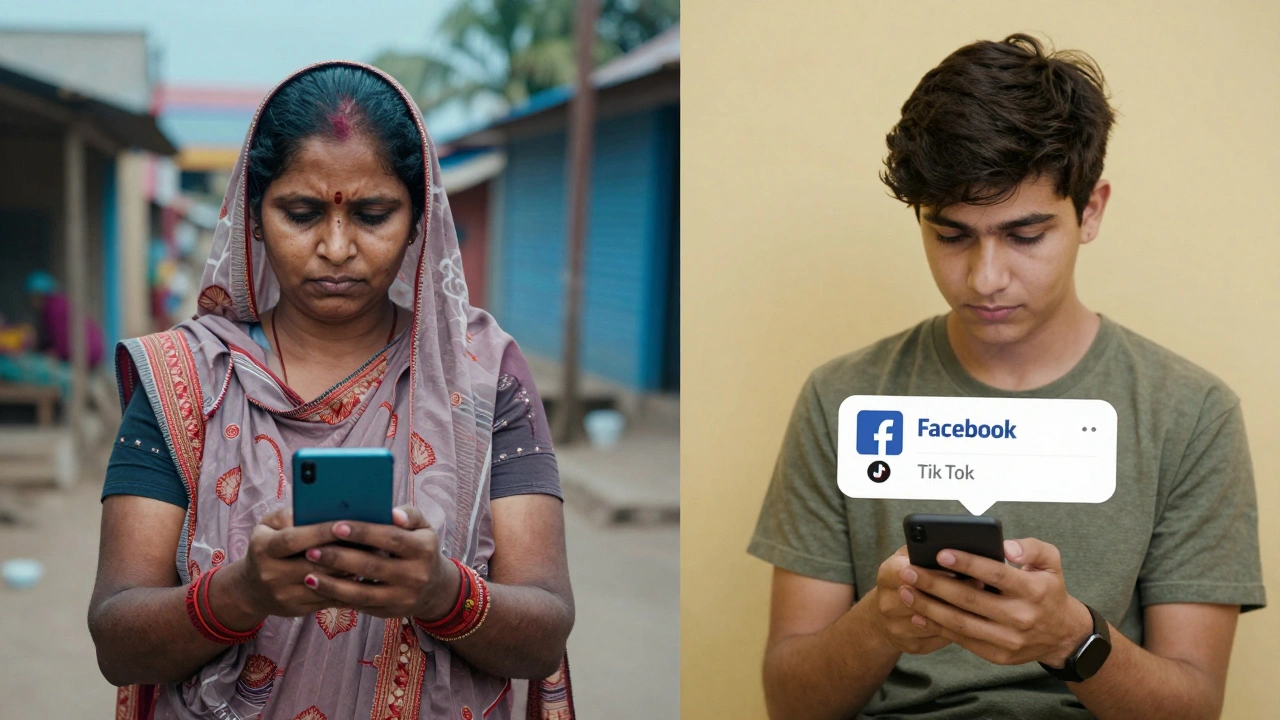
What Makes Facebook Different From TikTok or Instagram
TikTok wins on entertainment. Instagram wins on visuals. WhatsApp wins on messaging. But Facebook wins on connection. Think about it. Can you find your childhood friend on TikTok? Probably not. On Instagram? Only if you follow them. On WhatsApp? Only if you have their number. On Facebook? You search their name, and there they are-maybe with a photo from their wedding, a post about their new job, or a group chat about their kid’s soccer team. Facebook’s groups are its secret weapon. There are over 100 million active groups. Some are huge-like “Parenting in New Zealand” with 1.2 million members. Others are tiny-like “Vintage Typewriter Collectors of Wellington.” These aren’t just communities. They’re lifelines. People find mental health support, job leads, and local help through them. Businesses know this. 89% of small businesses using Facebook Ads say they get a positive return. Even though ad costs rose 22% in 2025, businesses still spend billions because Facebook’s targeting is unmatched. You can reach people who like hiking, own dogs, live in Auckland, and are interested in organic food-all in one ad.The Problems Facebook Can’t Ignore
Big numbers don’t mean big satisfaction. On Trustpilot, Facebook has a 3.8 out of 5 rating. That sounds good, but look at the reviews. The most common complaints? Privacy. Ads. Algorithms. People feel like Facebook is watching them. A 2025 survey found 78% of negative reviews mention data collection. Even though Meta added end-to-end encryption to Messenger in 2023, users still worry about how their likes, shares, and clicks are used. Then there’s the feed. Since the 2024 algorithm update, many users say their feeds are full of irrelevant content-clickbait, recycled memes, or ads disguised as posts. “I haven’t seen a photo from my sister in months,” one Reddit user wrote in January 2026. “Just sponsored posts and strangers’ opinions.” And the ads? They’re everywhere. A typical feed might show 3 posts from friends, then 5 ads, then 2 more posts. That’s why Facebook’s daily engagement rate-68.7%-is lower than TikTok’s 81%.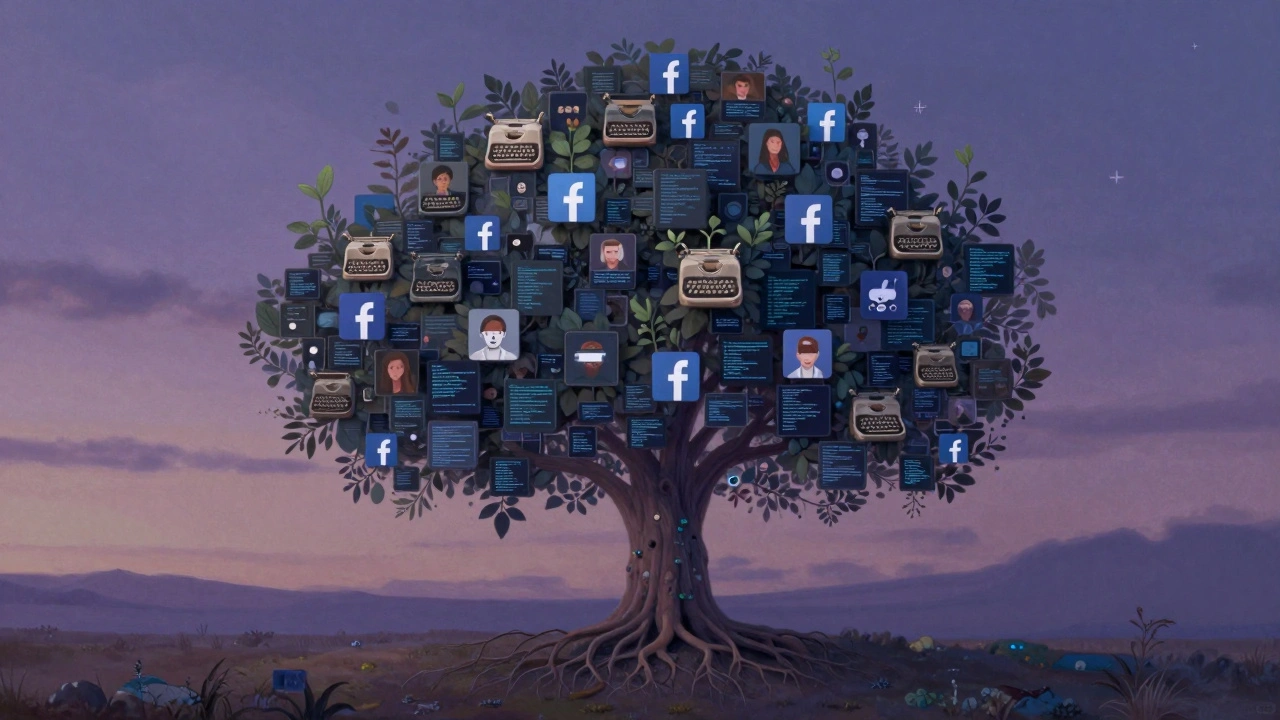
What’s Next for Facebook in 2026?
Facebook isn’t standing still. It’s betting big on AI. In January 2026, Meta rolled out MetaAI, a built-in assistant that answers questions, summarizes posts, and even helps write replies. It’s already handling 120 million queries a day. It’s also tying Facebook closer to its VR platform, Horizon Worlds. Now, people using VR headsets can share their virtual experiences directly to their Facebook feed. It’s still niche-only 15 million monthly users-but it’s a sign of where Meta is headed. Regulation is another challenge. Since January 1, 2026, the EU’s Digital Markets Act forces Facebook to let users message people on WhatsApp or Instagram without leaving the app. That’s a huge shift. It means Facebook can’t lock users into its own ecosystem anymore. For now, Facebook’s size keeps it on top. But its future depends on whether it can fix its appeal to younger users, reduce ad fatigue, and prove it can be more than just a digital bulletin board.Is Facebook Really the Number 1? Yes-but for How Long?
By every measure of user count, Facebook is still the number 1 social media platform in the world. No other app comes close. It’s the glue holding together families, communities, and small businesses across continents. But numbers don’t tell the whole story. Engagement is falling. Young users are drifting away. Competitors are innovating faster. Facebook’s dominance is secure for now-but it’s not guaranteed forever. If you’re asking which platform to use, it depends on your goal. Want to reach parents, small business owners, or local groups? Facebook is still your best bet. Want to go viral with short videos? TikTok wins. Want to share photos with friends? Instagram. Want to chat privately? WhatsApp. Facebook isn’t just a platform anymore. It’s a part of the global infrastructure. And right now, even with its flaws, it’s still the largest social network on earth.Is Facebook still the most used social media platform in 2026?
Yes. As of early 2026, Facebook has 3.07 billion monthly active users, making it the largest social media platform in the world by far. YouTube is second with 2.5 billion, and TikTok is third with 1.58 billion. No other platform comes close in total user count.
Why do people say Facebook is losing popularity?
Facebook is losing popularity among teens and young adults. Only 32% of U.S. teens use it regularly, compared to 67% on TikTok. Younger users prefer fast, video-first platforms with algorithm-driven content. Facebook’s feed feels outdated to them-full of ads and old posts. Its growth has slowed to just 1.2% yearly, while TikTok grows at over 14%.
Can I still use Facebook in China or North Korea?
No. Facebook is blocked in China, North Korea, and Iran. In China, WeChat dominates with 1.34 billion users. In North Korea, internet access is tightly controlled, and only a small elite have access to any global platforms. Outside these countries, Facebook operates in nearly every nation.
Why do businesses still use Facebook if younger people aren’t on it?
Because the people who spend money are still on Facebook. The largest user group is aged 25-54-the same group that controls most household spending. 89% of small businesses using Facebook Ads report a positive return. Facebook’s targeting tools let businesses reach specific audiences by location, interests, and behavior, which is harder to do on TikTok or Instagram.
What’s the biggest problem with Facebook today?
The biggest problem is user trust. Over 78% of negative reviews mention privacy concerns. People feel watched. The algorithm shows too many ads and irrelevant content. Many users say their feeds feel like a commercial, not a place to connect with friends. Even with encryption and safety tools, the perception of being exploited for profit is hard to shake.


About Author
