Which UK newspapers are right-wing? A 2025 guide to political alignment in British press
When it comes to understanding British politics, you can’t ignore the newspapers. They don’t just report the news-they shape it. And in the UK, a handful of major papers have long been known for their clear right-wing leanings. But not all right-wing papers are the same. Some push hardline conservative views. Others sound more moderate, but still tilt right. And then there’s the confusing part: what readers think a paper stands for doesn’t always match what it actually publishes.
The Daily Mail: Britain’s most right-wing paper
If you want to find the most consistently right-wing newspaper in the UK, start with the Daily Mail. According to YouGov’s May 2025 survey of 1,751 adults, 81% of Britons see the Daily Mail as right-wing in some way. Of those, 44% say it’s very right-wing-the highest rating of any national paper. That’s not just opinion. The Mail has endorsed the Conservative Party in every general election since the 1980s, and its front pages regularly attack immigration, the EU, and progressive social policies. Its online arm, MailOnline, is the most visited news site in the UK, pulling in 21.2 million unique visitors a month. That reach gives it real power.
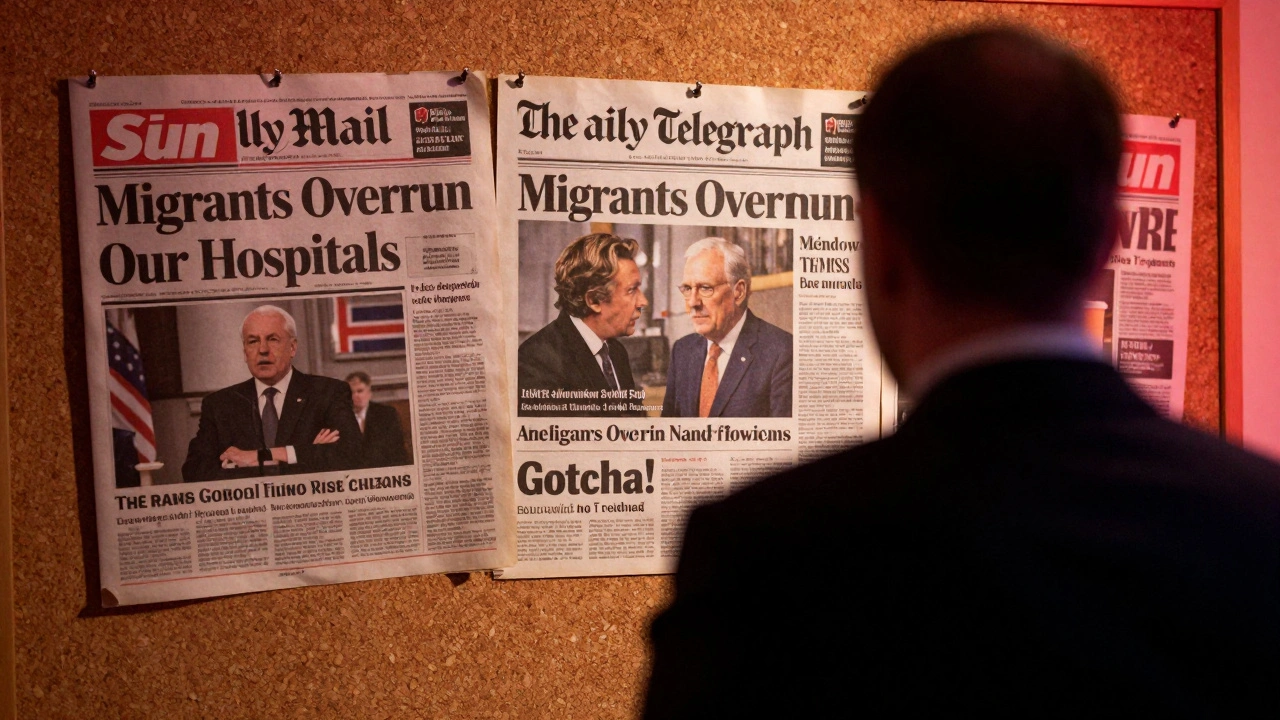
Owned by DMG Media, which also publishes the i and Metro, the Daily Mail’s editorial team has close ties to Conservative Party figures. Former Prime Minister Boris Johnson has been a frequent contributor, and its editorials often mirror the language of hardline Tory MPs. It’s not just politics-the Mail’s tone is also distinct: emotional, urgent, and often alarmist. Headlines like “Migrants Overrun Our Hospitals” or “Labour’s Tax Bombshell” aren’t accidental. They’re designed to provoke.
The Daily Telegraph: The Torygraph
Known in political circles as the “Torygraph,” the Daily Telegraph has endorsed the Conservative Party at every general election since 1945. That’s nearly 80 years of unwavering support. Its editorials are more formal than the Mail’s, often written in the tone of a university don debating economic policy. But make no mistake-it’s still right-wing. The Telegraph pushes lower taxes, deregulation, and a strong national defense. It’s the paper that Conservative MPs read to see how their ideas are being framed in the media.
What’s changed recently? In November 2025, it was announced that the Telegraph Media Group would be acquired by DMG Media, the same company that owns the Daily Mail. This move signals a major consolidation of right-wing media power. The Telegraph had been for sale since its previous owners, the Barclay brothers, were forced out in 2023 after accumulating unsustainable debt. Now, under DMG’s control, the two papers could merge editorial strategies, creating a single dominant voice for the British right.
The Sun: A paper with a split identity
The Sun is the UK’s best-selling tabloid, with a circulation of over 1.3 million in 2025. But its political identity is messy. Owned by Rupert Murdoch’s News UK, it became a staunch Conservative supporter after Murdoch bought it in 1969 and relaunched it as a pro-Thatcher paper. It famously backed Margaret Thatcher in the 1980s with headlines like “Gotcha!” after the Falklands War.
Here’s the odd part: YouGov’s 2025 survey found that 23% of people who identify as left-wing think The Sun is left-wing. That’s a huge misperception. The Sun still backs the Conservatives, still attacks Labour’s left flank, and still pushes anti-immigration narratives. But its tone is populist, not intellectual. It’s the paper you see on the train with screaming headlines about celebrities, football, and “wokeness.” That confusion might be intentional. It lets readers who don’t care about policy feel like they’re reading something rebellious, without realizing how deeply conservative its agenda really is.
The Times: The quiet right-winger
If you’re looking for a right-wing paper that doesn’t scream, The Times is it. Also owned by News UK, it’s often called “the least right-wing of the right-wing papers.” YouGov’s data shows 28% of people see it as “slightly right of centre,” and another 28% as “fairly right-wing.” That’s much lower than the Mail or Telegraph. The Times still supports Conservative economic policies, opposes blanket climate regulations, and tends to be skeptical of big government. But it also publishes long-form investigative journalism, serious book reviews, and international reporting that feels more neutral.
It’s the paper for Conservative voters who want to feel smart, not angry. It doesn’t push conspiracy theories. It doesn’t use clickbait. But its editorial board still leans right. And because it’s a broadsheet with a reputation for credibility, its right-wing views carry more weight in political circles than the Sun’s screaming headlines ever could.
The Sunday Times and Sunday Telegraph
The Sunday editions of these papers are just as right-wing, but they often feel more polished. The Sunday Times, with a 2024 circulation of 248,288, is the UK’s largest-selling broadsheet on Sundays. It’s known for deep investigative reporting-like its exposés on corporate corruption or political scandals. But its political stance hasn’t changed. It supports free markets, lower taxes, and a strong military. It’s the Sunday paper that Conservative ministers read before cabinet meetings.
The Sunday Telegraph is its ideological twin. Also owned by Telegraph Media Group, it carries the same editorial line as the daily paper, but with more space for opinion pieces from think tanks, retired generals, and business leaders. It’s the go-to for readers who want their conservatism served with a side of intellectualism.
The Evening Standard: London’s right-leaning free paper
It’s free. It’s in every Tube station. And it’s run by George Osborne, the former Conservative chancellor. The Evening Standard doesn’t have the national reach of the Mail or Telegraph, but it’s the most influential paper in London. Since Alexander Lebedev bought it in 2009 and switched to free distribution, its circulation doubled. Under Osborne’s editorship since 2017, its tone has shifted sharply right. It pushes pro-business policies, opposes rent controls, and supports London’s Conservative mayors. It’s not as aggressive as the Mail, but it’s still clearly aligned with the right. If you want to know how London’s elite think, this is the paper to read.
Who’s not right-wing? The others
Not all big UK papers are right-wing. The Guardian is widely seen as Britain’s most left-wing paper, with 16% of people calling it “very left-wing.” The Independent, which stopped printing in 2016, is still perceived as centrist, with 37% of people saying it’s “in the political centre.” The Daily Mirror is left-wing, and the Daily Express is right-wing-but it’s shrinking fast. Its circulation dropped 29% from 2023 to 2024.
Ownership matters. Just three companies control nearly 90% of the UK’s national newspaper circulation: DMG Media (Daily Mail), News UK (The Sun, The Times), and Reach PLC (Mirror, Express). The fact that the Telegraph is now joining DMG Media means right-wing media is becoming even more concentrated. That’s not just a business move-it’s a political one.
Why does this matter?
These papers don’t just reflect public opinion-they shape it. A 2024 Ofcom report found that 63% of Daily Mail readers are over 55, and most vote Conservative. That’s a powerful demographic. And with MailOnline outpacing The Guardian in web traffic, the right-wing message is winning online too.
People often think newspapers are neutral. But the data shows otherwise. Right-wing papers dominate in reach, influence, and political alignment. And now, with the Telegraph merging into the Daily Mail’s empire, that dominance is only growing. If you want to understand where British politics is headed, look at the front pages-not just the headlines, but who owns them, who reads them, and what they’re trying to make you believe.
Is The Times really right-wing if it’s so moderate?
Yes. While The Times is less aggressive than the Daily Mail or The Sun, its editorial board consistently supports Conservative economic policies, opposes high taxes, and questions large-scale climate regulations. It doesn’t push conspiracy theories, but it still frames issues in a way that favors right-leaning solutions. It’s the quiet right-winger-the one you don’t notice until you realize it’s the only paper your boss reads.
Why do some people think The Sun is left-wing?
Because of its tone. The Sun uses sensational headlines, celebrity gossip, and populist language that can feel rebellious or anti-establishment. Left-leaning readers sometimes mistake that style for left-wing politics. But its endorsements, editorials, and coverage of immigration, welfare, and Brexit are firmly pro-Conservative. It’s a case of style confusing substance.
Are right-wing newspapers losing readers?
Print circulation is falling across the board. The Telegraph’s print numbers dropped 23% in 2024. The Daily Express lost nearly a third of its readers in a year. But their online presence is growing. MailOnline is the most visited news site in the UK, beating even The Guardian. Right-wing papers have adapted by shifting focus to digital, where they reach younger audiences through social media and algorithm-driven content.
Does ownership affect a paper’s politics?
Absolutely. Rupert Murdoch turned The Sun from a centre-left paper into a Conservative powerhouse after buying it in 1969. George Osborne, a former Tory chancellor, now edits the Evening Standard. The Telegraph’s new owner, DMG Media, has spent decades pushing right-wing narratives. When the same family or corporation owns multiple papers, their political views become the standard-not the exception.
What about GB News? Is it right-wing too?
GB News isn’t a newspaper-it’s a TV channel. But it’s worth mentioning because it’s become the new voice of the British right. Launched in 2021, it’s more extreme than any newspaper, with hosts who openly attack the BBC and promote conspiracy theories. It’s not in the same category as The Times or Mail, but it’s part of the same ecosystem. The same people who read the Daily Mail often watch GB News. The line between print and broadcast right-wing media is blurring.
What’s next for UK right-wing media?
The merger between the Telegraph and Daily Mail isn’t an accident. It’s a survival strategy. Print revenue is collapsing. Younger readers aren’t buying papers. So the right-wing media giants are consolidating-pooling resources, sharing content, and dominating digital platforms. In five years, we might see just two or three major right-wing outlets controlling most of the conservative narrative in Britain.
That means less diversity in opinion. Fewer voices challenging the mainstream right. And more influence over elections, policy debates, and public attitudes. If you care about how politics is shaped in the UK, you need to understand who owns the newspapers-and what they’re trying to sell you.


About Author
