What Is the Oldest City in England? The Truth Behind the Claims
When you hear "oldest city in England," your mind might jump to London. But London wasn’t even the first. The real answer isn’t simple-it’s layered, debated, and full of surprising twists. The truth depends on how you define "city." Is it about the earliest settlement? The longest continuous habitation? Or the first place to get a cathedral and official city status? Each answer points to a different place.
Colchester: The First Roman City
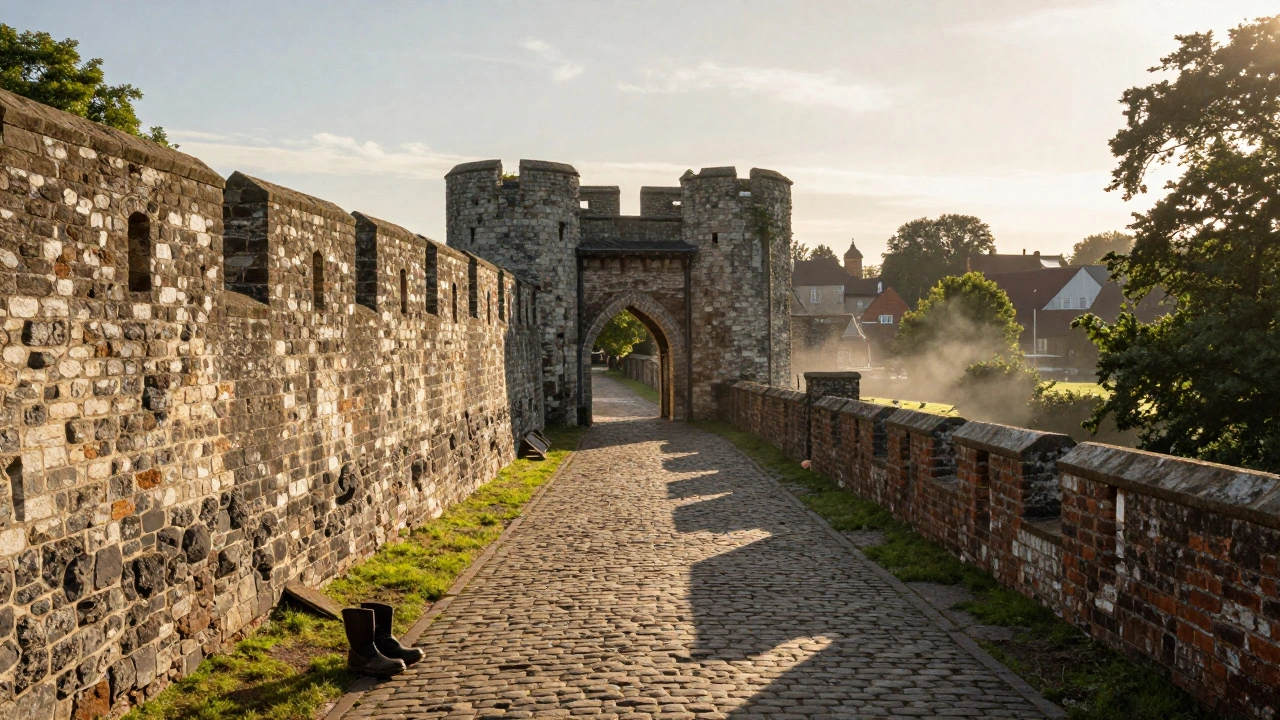
Colchester, in Essex, is the oldest recorded town in Britain. The Romans founded it in 43 CE as Camulodunum after Emperor Claudius invaded and took control. By 49 CE, it became a colonia-a settlement for retired Roman soldiers. That made it the first provincial capital of Roman Britain, mentioned in Pliny the Elder’s writings from 77 CE. This isn’t just local legend. Archaeologists have found Britain’s oldest Roman town walls, built between 61 and 80 CE. They’re still standing in places, up to six meters high. The Balkerne Gate, the largest surviving Roman gateway in the country, dates back to 75-100 CE. There’s also the largest Roman theatre in Britain and the only Roman chariot circus ever found in the UK.
Colchester wasn’t just a military outpost. It became a thriving urban center. Over 17,000 Roman artifacts have been dug up there, including 2,300 coins spanning the entire Roman occupation. The town never fully emptied after the Romans left. It stayed a busy Saxon and medieval borough. But here’s the catch: Colchester didn’t become an official city until 2022-over 1,900 years after it was founded. Queen Elizabeth II granted it city status as part of her Platinum Jubilee. That delay doesn’t erase its history, but it does muddy the waters when people ask for the "oldest city."
Canterbury: The First Cathedral City
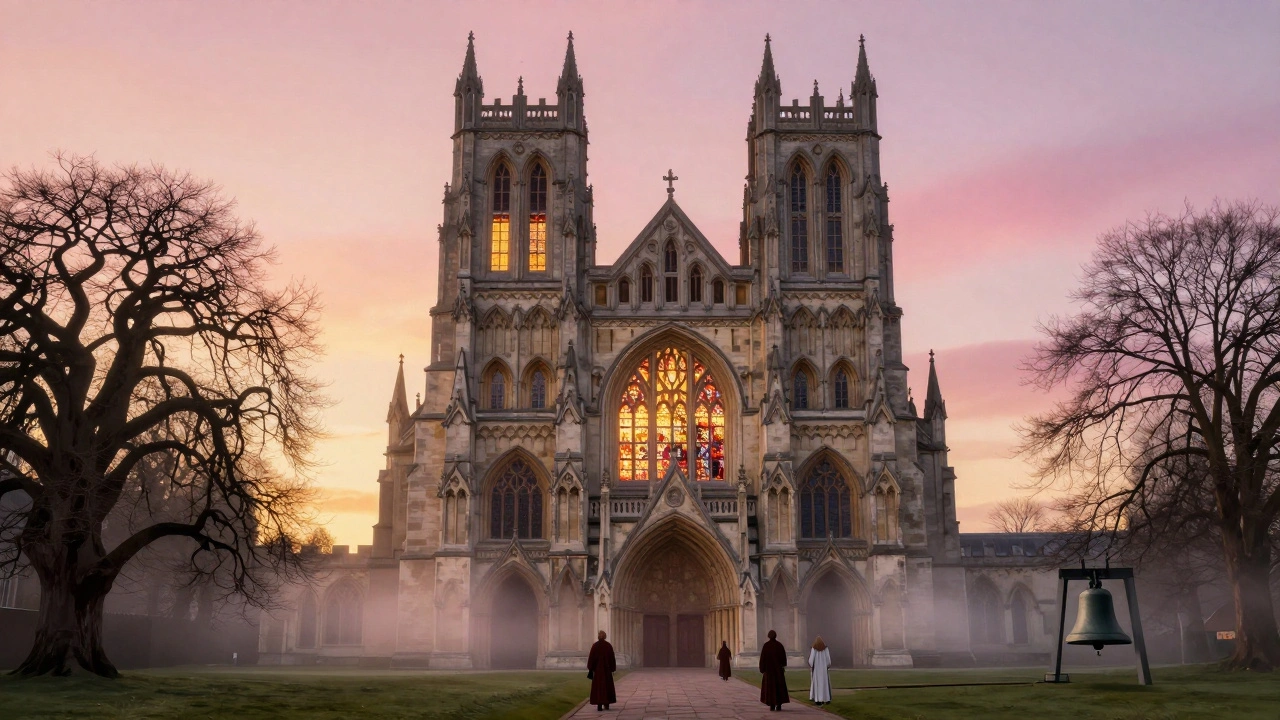
If you define "city" by the presence of a cathedral, then Canterbury wins. In 597 CE, St. Augustine arrived and established the first Christian cathedral in England. That single act gave Canterbury the status of a city under the rules that emerged after Henry VIII broke from Rome in 1534. Before that, "city" wasn’t a legal term-it was more about size and importance. But after the Reformation, having a cathedral meant you were a city. Canterbury had it first. And it kept it.
Canterbury’s roots go back even further. The Romans called it Durovernum Cantiacorum and built a town there around 43 CE-same time as Colchester. But unlike Colchester, it never became a colonia. It was a smaller administrative center. Still, its religious role after 597 CE gave it a lasting identity. Today, Canterbury Cathedral is a UNESCO World Heritage Site and still the seat of the Archbishop of Canterbury. For many, that makes it the true oldest city-not because it’s the oldest settlement, but because it was the first to hold the formal title.
Ipswich: The Oldest English-Founded Town
What if you’re looking for the oldest town in England that was built by the English-not the Romans or Saxons who arrived later? That’s where Ipswich comes in. Locals call it Gippeswic, and archaeologists have confirmed it was founded around 600-650 CE. Excavations at Street Farm uncovered 416 early Anglo-Saxon graves, all dated to that period. That’s the earliest solid evidence of a town built by the English-speaking population after the Romans left.
Ipswich didn’t inherit a Roman town. It wasn’t built on top of one. It was a new start-a trading port on the River Orwell. By 650 CE, it was already connected to trade routes with Francia and Scandinavia. Textile remains show cloth imported from Europe. Coins from the continent show it was a commercial hub. And it never stopped being a town. No major collapse. No abandonment. Just continuous urban life from the 7th century to today.
That’s why some historians call Ipswich England’s oldest continuously functioning English town. It’s not the oldest settlement. It’s not the first Roman city. But it’s the first place where English-speaking people created a lasting urban community from scratch.
Abingdon: The Longest Continuous Settlement
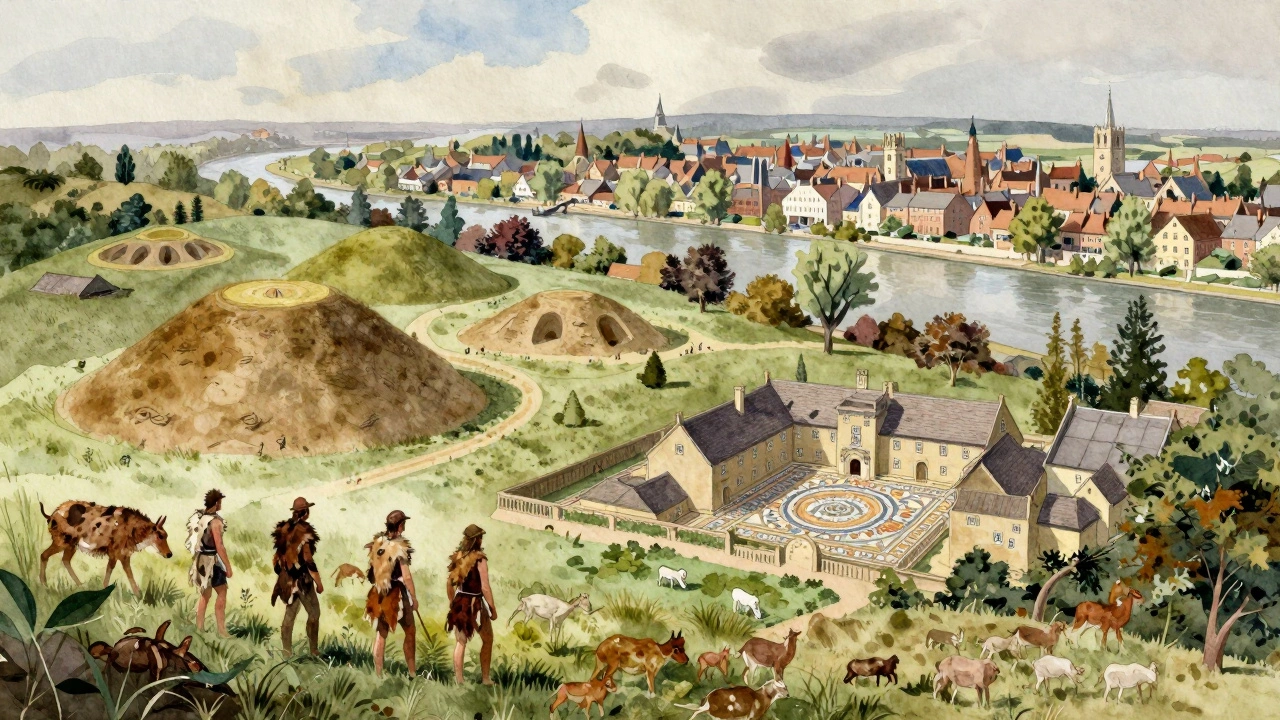
Abingdon, in Oxfordshire, doesn’t have a cathedral. It never had Roman city status. But it has something even rarer: unbroken human presence for over 12,000 years. Archaeological digs have found tools from the Mesolithic Age-10,000 BC. Then came Bronze Age burial mounds, Roman villas with mosaics, and Saxon halls. King Alfred the Great gave the land to his son in 880 CE. The Domesday Book recorded it in 1086.
Its Roman phase was huge. One excavation found a 33-hectare defensive enclosure, the largest in southern England at the time. The town may have held up to 30,000 people during its peak. But unlike Colchester, Abingdon never became a formal Roman colonia. It didn’t get the same level of official documentation. Still, the evidence is clear: people lived here, in the same spot, from the end of the last Ice Age right up to the modern day.
Historic England calls Abingdon the site of the "longest continuous human settlement" in England. It’s not a city by the cathedral rule. But if you’re measuring by sheer time, not status, it wins.
Thatcham: The Ancient Roots
Thatcham, in Berkshire, pushes the timeline even further back. Excavations in 2018 found tools and hearths from the Mesolithic period-between 10,000 and 4,000 BC. That’s older than Stonehenge. People lived there before farming even began in Britain. They hunted deer, fished the rivers, and moved seasonally. Later, Romans built roads nearby. Saxons settled in the area. It appears in the Domesday Book.
But Thatcham never became a town, let alone a city. It stayed a village. So while it holds the record for the oldest known human settlement in England, it doesn’t qualify as a city. It’s a reminder that "oldest" depends on what you’re measuring.
Why the Confusion?
The debate isn’t just about facts-it’s about definitions. Before the 16th century, "city" wasn’t a legal term. It meant a large, important place. After Henry VIII dissolved the monasteries, he made cathedral presence the official requirement for city status. That’s when Canterbury, Winchester, and Durham became cities overnight.
Colchester had the Roman infrastructure. Ipswich had the unbroken English continuity. Abingdon had the 12,000-year timeline. Canterbury had the cathedral. Each has a legitimate claim.
Modern historians agree: Colchester is the oldest documented urban settlement with Roman administrative structure. Ipswich is the oldest continuously functioning English town. Abingdon is the oldest site with continuous human habitation. Canterbury is the oldest city by formal, post-Reformation definition.
So who wins? It depends on your question. If you want the oldest place with Roman city status? Colchester. The oldest town built by the English? Ipswich. The oldest place where people never left? Abingdon. The oldest by cathedral status? Canterbury.
What About London?
Londinium was founded in 47 CE-just a few years after Colchester. It became a major Roman port. But after the Romans left, London’s population dropped sharply. It wasn’t until the 9th century that it regained its importance. The first mayoral charter came in 1189. So while London is now the capital, it wasn’t the first. Its early history was interrupted. That’s why it doesn’t top any of the lists.
Final Answer: It Depends
There’s no single winner. The oldest city in England doesn’t exist in one place-it’s split across four towns, each holding a different crown.
- Oldest Roman town and first provincial capital: Colchester
- Oldest city by cathedral status: Canterbury
- Oldest continuously functioning English town: Ipswich
- Oldest site with continuous human settlement: Abingdon
Colchester got its city status in 2022, finally catching up to its history. But the real story isn’t about who got the title last-it’s about how deep England’s roots go. From Mesolithic hunters in Thatcham to Roman veterans in Colchester, from Saxon traders in Ipswich to monks in Canterbury-each place tells a different part of the same story.
If you visit just one, go to Colchester. Walk the Roman walls. See the Balkerne Gate. Stand where the first Roman governor ruled. Then head to Canterbury and feel the weight of centuries of prayer. You’ll understand why there’s no single answer-and why that’s what makes it so fascinating.
Is Colchester officially the oldest city in England?
Colchester is the oldest recorded town in Britain, founded by the Romans in 43 CE. But it didn’t receive official city status until 2022. So while it’s the oldest urban settlement, it’s not the oldest by formal cathedral-based city status, which belongs to Canterbury.
Why is Canterbury considered the oldest city?
Canterbury became England’s first cathedral city in 597 CE when St. Augustine established the first Christian cathedral. After Henry VIII’s Reformation, having a cathedral became the legal requirement for city status. That’s why Canterbury is officially recognized as the oldest city under that definition.
Is Ipswich older than London?
Yes, in terms of continuous English settlement. Ipswich was founded around 600-650 CE as a trading port by the English-speaking population. London, while founded by the Romans in 47 CE, saw its population decline after the Romans left and didn’t regain its urban status until the 9th century.
Does Abingdon have any Roman ruins?
Yes. Archaeologists found a massive 33-hectare Roman defensive enclosure beneath the town center. There were also over 50 mosaics and two Roman theatres, one of the largest in Britain at the time. Abingdon was a major Roman settlement, even if it never became a colonia like Colchester.
What makes Thatcham special?
Thatcham has the oldest evidence of human settlement in England, dating back to 10,000 BC. Mesolithic hunters lived there before agriculture existed. But it never grew into a town or city, so it doesn’t compete for the "oldest city" title-it holds the record for the oldest continuous human presence on a single site.



About Author
