Are Newspapers Dying in the UK? The Real Story in 2025
UK Newspaper Circulation Impact Calculator
Input Parameters
Financial Impact Analysis
The UK newspaper industry is facing a severe revenue crisis. According to the 2025 report:
- Print circulation dropped 57% from 55M to 23.5M in 11 years
- Regional papers now sell under 5,000 copies daily
- Trust in news fell to 28% of the population
- Digital ads now cover only 38% of print revenue
Revenue Gap
£3.4 billion gap between print and digital revenue
Readership Impact
78% of readers 65+ still read print, but only 12% of 18-24 year olds
Future Outlook
Without change, 75% of local papers could vanish by 2030
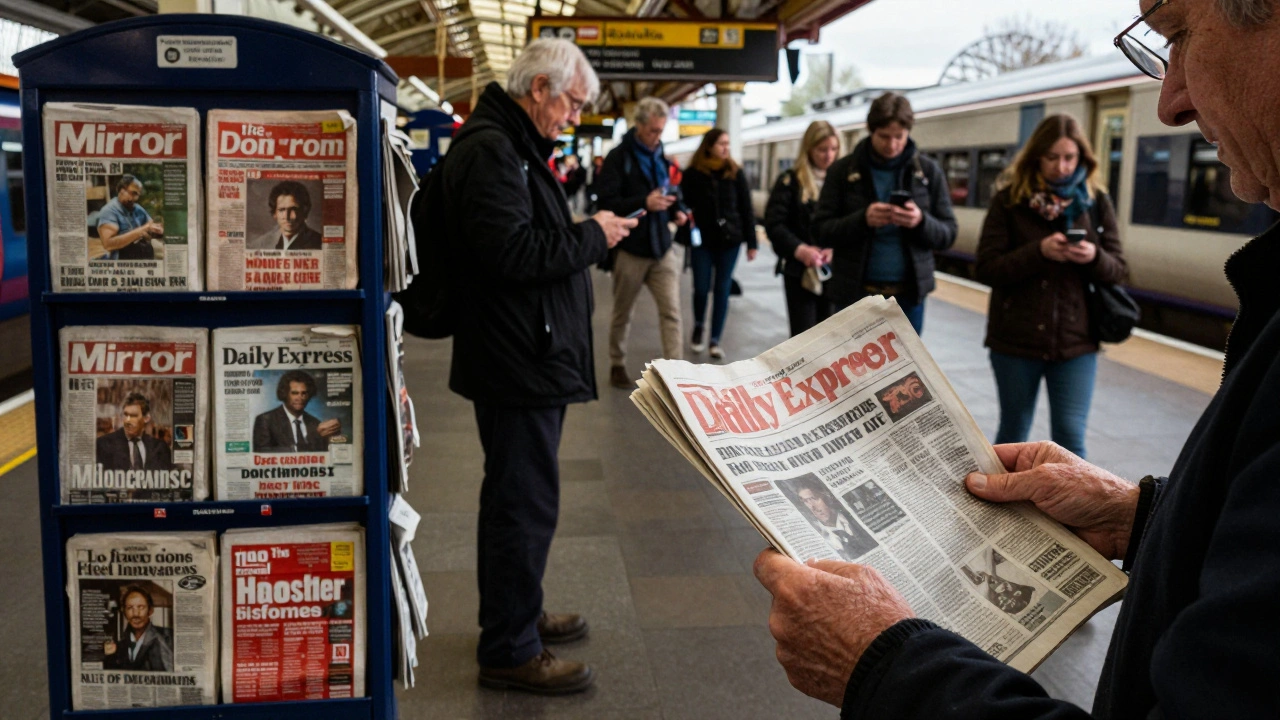
By 2025, if you walk into a UK train station, you’ll still see newspaper racks-but they’re half empty. The UK newspapers that once filled breakfast tables and commuter bags are fading fast. This isn’t just a slow decline. It’s a collapse. And it’s not because people stopped caring about news. It’s because the way we get it changed-and the old model couldn’t keep up.
Print Circulation Has Plummeted
In 2014, UK national newspapers sold 55 million copies a week. By October 2025, that number had dropped to 23.5 million. That’s a 57% fall in just over a decade. The numbers don’t lie. The Daily Star now sells just 112,000 copies a day, down 30.8% from the year before. The Daily Express is down to 97,319. The Daily Mirror, once a household name, now sells under half a million. Even the Sunday papers aren’t safe: the Observer lost 40% of its weekly circulation between 2022 and 2024.
Regional papers are in worse shape. Of the 36 local dailies audited, 22 now sell fewer than 5,000 copies each day. The Paisley Daily Express? Just 743 copies. That’s less than the population of a small village. And it’s not just print. Digital replicas-those online versions that mimic the paper layout-have also dropped by 2% year-on-year. People aren’t reading them. They’re scrolling.
Who’s Left Standing?
Three companies now control 90% of all national newspaper circulation in the UK. That’s up from 70% in 2014. Reach PLC owns the Daily Mirror, Daily Express, and Sunday People. News UK runs The Sun. DMG Media publishes the Daily Mail and Mail on Sunday. Together, they dominate. But even they’re bleeding.
Reach PLC alone closed 13 regional online news brands in November 2023. They used to own 240 local outlets. Now, many are gone. The ones that remain-like the Belfast-based Irish News and the Press & Journal in Aberdeen-are barely hanging on, selling under 20,000 copies daily. These aren’t flashy national titles. They’re the last links to local councils, school events, and community sports. And they’re vanishing.
Why the Crash?
It’s not one thing. It’s a perfect storm.
First, advertising revenue collapsed. In 2014, newspapers made £6.2 billion. By 2025, that was down to £2.8 billion. Digital ads were supposed to fill the gap. They didn’t. Even though digital now makes up 57% of newspaper revenue, it’s only bringing in 38% of what print used to earn. That’s a structural hole no one fixed.
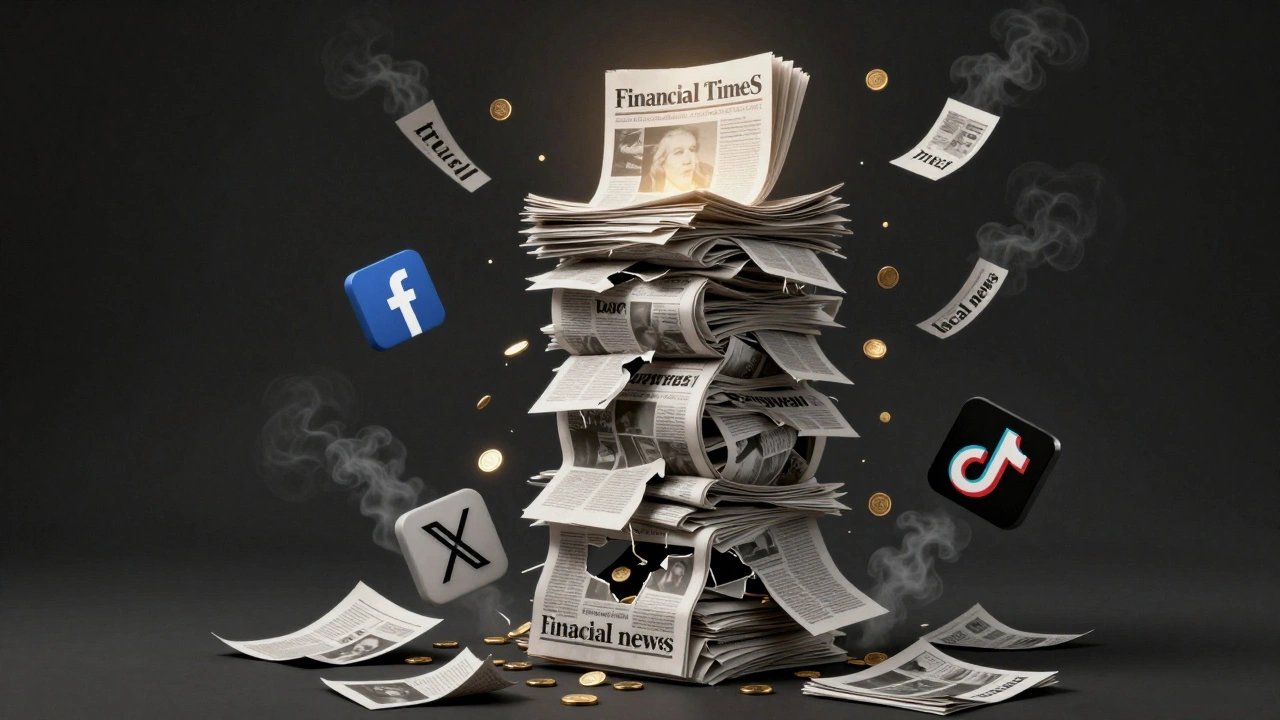
Second, social media stole the spotlight. In 2025, 43% of newspaper advertising revenue came from Facebook, X, and Google. But those platforms don’t pay for journalism. They just take attention. And they pay pennies for clicks.
Third, trust in media hit a record low: just 28% of Britons say they trust news outlets. When people think the news is biased or clickbait, they stop reading. The Daily Express gets 2.1 out of 5 stars on Trustpilot. Sixty-eight percent of reviews say it’s sensationalist. Meanwhile, the Financial Times scores 4.2. Why? Because it doesn’t yell. It explains.
Who Still Reads Print?
It’s not the young. Only 12% of people aged 18-24 read a physical newspaper weekly. Most haven’t bought one in years. They get headlines from Twitter, TikTok, or their phone’s news app. But among those 65 and older? 78% still read print at least once a week.
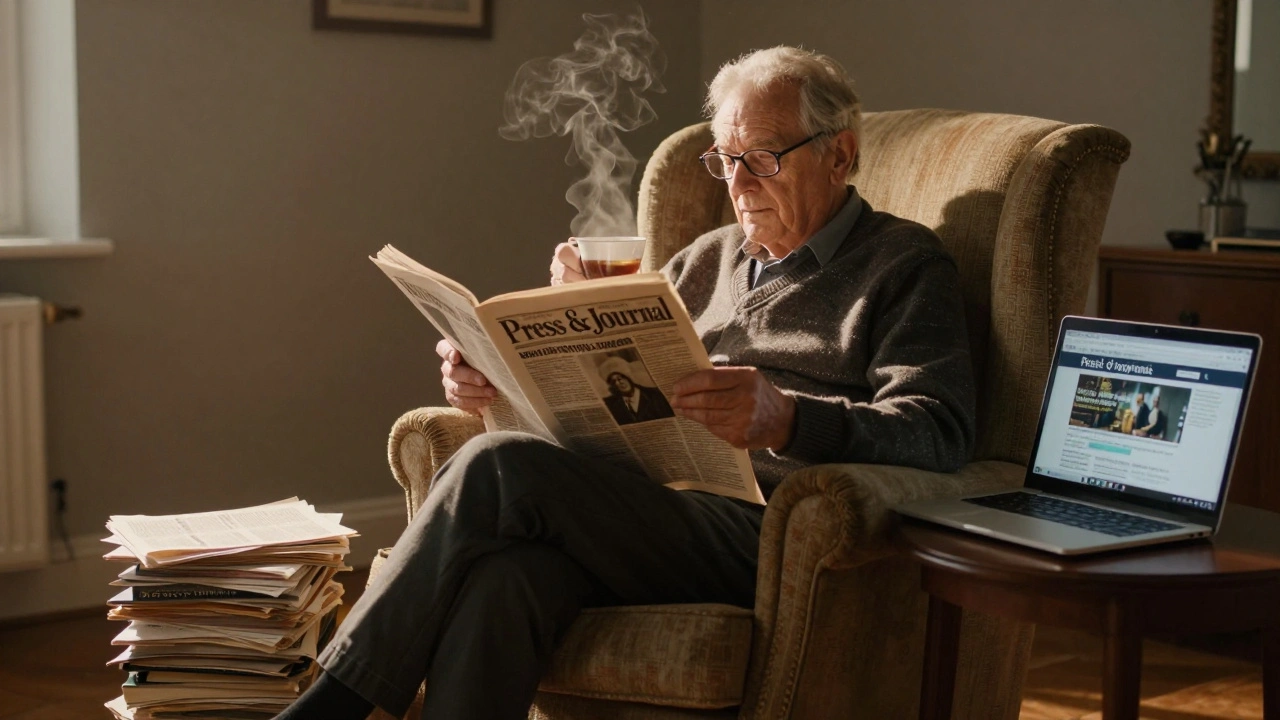
On Reddit, people over 55 say they miss the ritual. The smell of ink. The quiet morning read. The local sports results you can’t find on a feed. One user, u/ScotNewsFan, said his local paper, the Press & Journal, still covers community events better than any website. That’s not nostalgia. That’s real value.
And here’s the twist: a small group is paying more for print. The 2025 UK Media Consumption Report found a 3.2% rise in premium print subscriptions-mostly for investigative journalism. People who care about deep reporting are willing to pay £3 a week for a physical copy. It’s not mass appeal. But it’s survival.
The Digital Shift Isn’t Enough
Yes, The Guardian and The Times have digital editions. Yes, you can read them on your phone. But here’s the problem: paywalls.
Two-thirds of UK adults say they struggle to access paywalled content. You click a link. You hit a wall. You give up. Libraries help-32% now offer free digital access-but that’s not a business model. It’s a lifeline.
And the experience? It’s messy. The Guardian’s app is easy to use. Rated 1.2 out of 5 for difficulty. The Times Digital? 3.8. That’s a steep learning curve for older readers. The 2025 UK Media Literacy Survey found 48% of people over 65 struggle with digital newspaper platforms. That’s nearly half the people who still want to read.
What’s Left?
The Observer was bought by Tortoise Media in 2024. They didn’t just slap a digital version on the site. They built a membership model. 12,000 people now pay to support slow, thoughtful journalism. That’s tiny compared to the old circulation numbers. But it’s sustainable.
The Financial Times is cutting its print edition to three days a week starting January 2026. The Guardian says it’ll keep printing until 2030. Both know print won’t pay for itself anymore. But they also know it still matters-for credibility, for loyalty, for the few who still want it.
Meanwhile, new players are popping up. Small, independent outlets like Mill Media are covering hyper-local news in towns that lost their papers. They’re not rich. They’re not big. But they’re there. And they’re often the only source left for school closures, council meetings, or local crime.
The Future: Niche or Nothing
The traditional newspaper-daily, mass-market, printed on cheap paper, sold on street corners-is dead. That’s not a guess. It’s a fact.
But news isn’t dead. People still want to know what’s happening. The question is: how will they get it?
The answer isn’t one model. It’s many. Some will pay for digital subscriptions. Some will rely on public funding. Others will get news from community podcasts or WhatsApp groups. The big publishers? They’ll shrink. They’ll focus on quality, not quantity. They’ll become brands for a loyal few, not tools for the masses.
By 2030, the Media Reform Coalition predicts 75% of remaining local newspapers could vanish. That’s not just business. That’s democracy. When local news dies, so does accountability. No one checks the council budget. No one asks why the playground closed. No one remembers the high school team that won last year.
So are newspapers dying? Yes. But the real question isn’t about ink or paper. It’s about who will tell the stories no algorithm will ever care about.
Are UK newspapers completely gone?
No. While print circulation has collapsed, newspapers still exist-just in much smaller numbers. Major titles like The Guardian, The Times, and the Daily Mail still publish print editions, though many have reduced frequency. Regional papers are mostly gone, but a few, like the Press & Journal and Irish News, still sell under 20,000 copies daily. Digital editions are alive, but they don’t replace the revenue or reach of print.
Why are regional newspapers closing faster than national ones?
Regional papers rely on local advertising-small businesses, car dealerships, community events. When those businesses moved online or shut down, the revenue vanished. National papers have bigger brands, global advertisers, and more digital traffic. Regional papers also had fewer resources to invest in digital transformation. With no cash, no staff, and no readers, they had no choice but to close.
Is digital news making up for lost print sales?
Not really. Digital now makes up 57% of newspaper revenue, but it’s only generating 38% of what print used to earn. Ads on social media pay pennies. Paywalls turn away readers. And most digital readers don’t pay. The result? A structural deficit. Digital hasn’t saved newspapers-it’s just delayed the fall.
Who still buys print newspapers today?
Mostly people over 55, especially those who grew up with daily papers. They value the ritual, the focus, and the local coverage. A small but growing group of younger readers-mostly professionals and journalists-are also paying for premium print editions of outlets like The Financial Times or The Observer. They’re not buying for convenience. They’re buying for depth.
Can newspapers survive without print?
Some can, but only if they change. The Financial Times and The Guardian are surviving because they focus on high-quality journalism, not volume. Tortoise Media’s membership model proves people will pay for thoughtful reporting. But most publishers can’t afford to rebuild. Without public funding, community support, or bold digital innovation, the remaining papers will keep shrinking-or disappear.



About Author
