Google News UK: How It Works, Who Benefits, and What You Need to Know
Personalized News Feed Simulator
See how Google News UK curates your news based on your location and interests. This simulation demonstrates the algorithmic personalization described in the article.
Your Personalized Feed
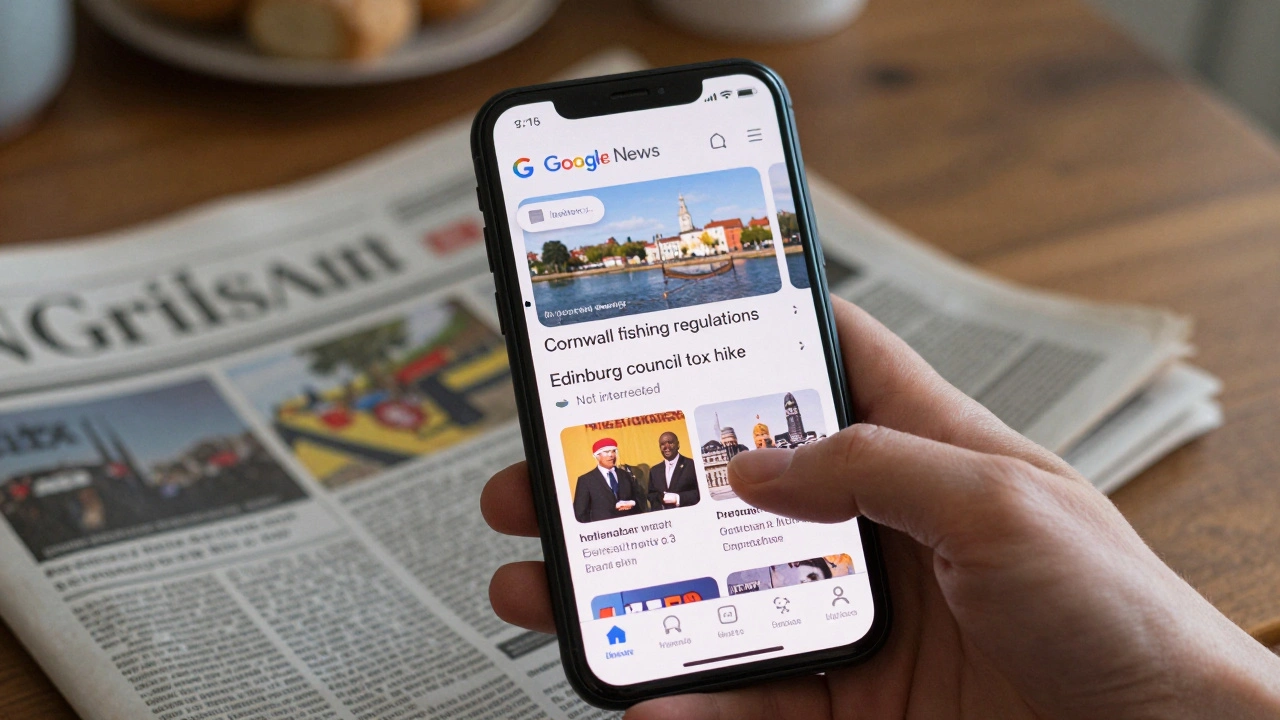
When you open Google News on your phone in the UK, you’re not just checking headlines-you’re tapping into a system that’s reshaping how news survives in the digital age. It’s not just a feed of articles. It’s a lifeline for local newspapers, a traffic engine for big publishers, and a source of frustration for users who can’t figure out how to block political ads. And if you’re wondering why your local council’s budget meeting suddenly appears in your feed while national politics feels buried, there’s a reason for that.
How Google News UK Actually Works
Google News UK isn’t one thing. It’s three systems working together: the Google News app, Google News Showcase, and the broader traffic from Google Search. The app pulls in headlines from over 330 UK publishers as of December 2024, including giants like The Guardian and Daily Mail, and tiny local papers like the North Devon Gazette. What makes it different from Apple News or Flipboard? It’s built on Google’s search engine, which 92% of UK users rely on for finding information. That means if you search for “Manchester transport strike,” Google News surfaces stories from local outlets you might never have heard of-because the algorithm knows you’re in Manchester.
Behind the scenes, Google uses machine learning to personalize your feed. You can set your location by postcode, and the app adjusts what shows up. If you live in Cornwall, you’ll see more about fishing regulations and coastal erosion. If you’re in Edinburgh, you’ll get updates on council tax hikes and Scottish Parliament debates. The “Your Briefing” section updates hourly, pulling from top stories, trending topics, and your past clicks. It’s not perfect-some users report the algorithm gets stuck on sensational headlines after a few Brexit clicks-but it’s designed to keep you scrolling.
Then there’s Google News Showcase. This is where Google actually pays publishers-not for clicks, but for curated content packages. Think of it like a digital newsstand where Google pays for a month’s worth of front pages, special reports, and investigative pieces. By 2024, 330 UK outlets were part of this program, 90% of them local. The Grantham Journal, a small paper in Lincolnshire, reported a 30% revenue boost from Showcase partnerships. That’s not enough to replace lost ad dollars, but it kept their printers running.
Who’s Getting Paid-and Who’s Not
Google claims its news ecosystem drives over £500 million in annual traffic value to UK publishers. That sounds huge. But here’s the catch: most of that money doesn’t go to the publishers. It goes to Google’s ad revenue engine. The £500 million is an estimate of what publishers would have paid to get that traffic through ads. In reality, Google News Showcase pays out an estimated £45-55 million a year directly to UK newsrooms. That’s about 0.9% of the UK news industry’s total £6 billion annual revenue.
Big publishers like The Telegraph and The Financial Times benefit from the traffic. But their real win is in reader revenue. Google’s Reader Revenue Manager tool, built with UK publishers, cuts the time to launch a paywall from 12 weeks to under 3. That’s huge for papers trying to get people to pay for content. The Guardian gets 35% of its digital traffic from Google, but only 2% of those visitors become subscribers. That’s the gap: lots of eyes, few wallets.
Smaller papers? They’re caught in a bind. 82% of local publishers using Showcase say they’re too dependent on Google. If Google changes its algorithm tomorrow, their traffic could vanish overnight. The average cost to set up Google News tools? £8,500. Many small outlets had to hire freelance developers just to meet Google’s technical requirements-like adding structured data markup to every article. Without that, Google doesn’t show their stories at all.
Why the UK Government Is Watching Closely
The UK isn’t letting Google run this show alone. In 2023, the government passed the Online Safety Act, which classifies Google News as a “category A” platform-meaning it has legal duties to protect users from harmful content, just like social media giants. That’s a big deal. Facebook and TikTok were already under this rule. Now Google has to monitor headlines for misinformation, hate speech, and even harmful conspiracy theories.
But the real pressure is financial. The UK’s Digital Markets, Competition and Consumers Bill, expected to pass in mid-2025, could force Google to share more revenue with publishers. It’s modeled after Australia’s News Media Bargaining Code, which has paid Australian outlets over AUD $200 million since 2021. The UK’s Competition and Markets Authority already found that 73% of local publishers would struggle to survive without Google’s traffic. That’s not just a market failure-it’s a democracy issue.
Some experts argue Google’s contribution is too small. Economist Benedict Evans called it “a necessary but insufficient solution.” He points out that Google’s £1 billion global investment in news since 2021 translates to just £18 million in UK funding over three years. That’s barely enough to keep a few hundred local papers alive. Meanwhile, the UK’s news industry lost over £1 billion in revenue since 2010.
What Users Actually Think
On the App Store, Google News has a 4.6 out of 5 rating from over 226,000 reviews. People love the local news integration. One user, “LondonReader2023,” wrote: “I can track both national politics and my borough council decisions in one feed.” That’s the real value-connecting people to the stories that affect their daily lives.
But the complaints are loud, too. Reddit threads like “Google News UK: Lifeline or Leech?” have over 1,200 upvotes. Users complain about the same thing: the three-dot menu to block topics is tiny and hard to tap. One user, $ugar$hane89, said: “Even if you meant to block a topic, you usually end up opening the article.” That’s not a design flaw-it’s a usability failure.
Trustpilot reviews average 3.8 out of 5. People feel manipulated. “After following Brexit for six months, the algorithm still pushes me sensationalist headlines,” wrote one user in October 2023. Google’s system learns from clicks, not intent. If you click on “MPs caught in scandal,” it assumes you want more scandal. It doesn’t know you’re trying to understand policy.
What’s Next for Google News UK
Google’s 2025 roadmap includes two big moves. First, deeper integration with Welsh-language publishers. Twelve new outlets have joined, and Google is testing AI translation to help English speakers access Welsh news. Second, they’re testing a new model: sharing revenue from subscriptions. If someone clicks a story on Google News, signs up for a paywall, and becomes a subscriber, Google might take a 15% cut-just like Spotify does with its “Discovery Mode.” That’s a game-changer. It would mean Google starts sharing in the real money, not just traffic.
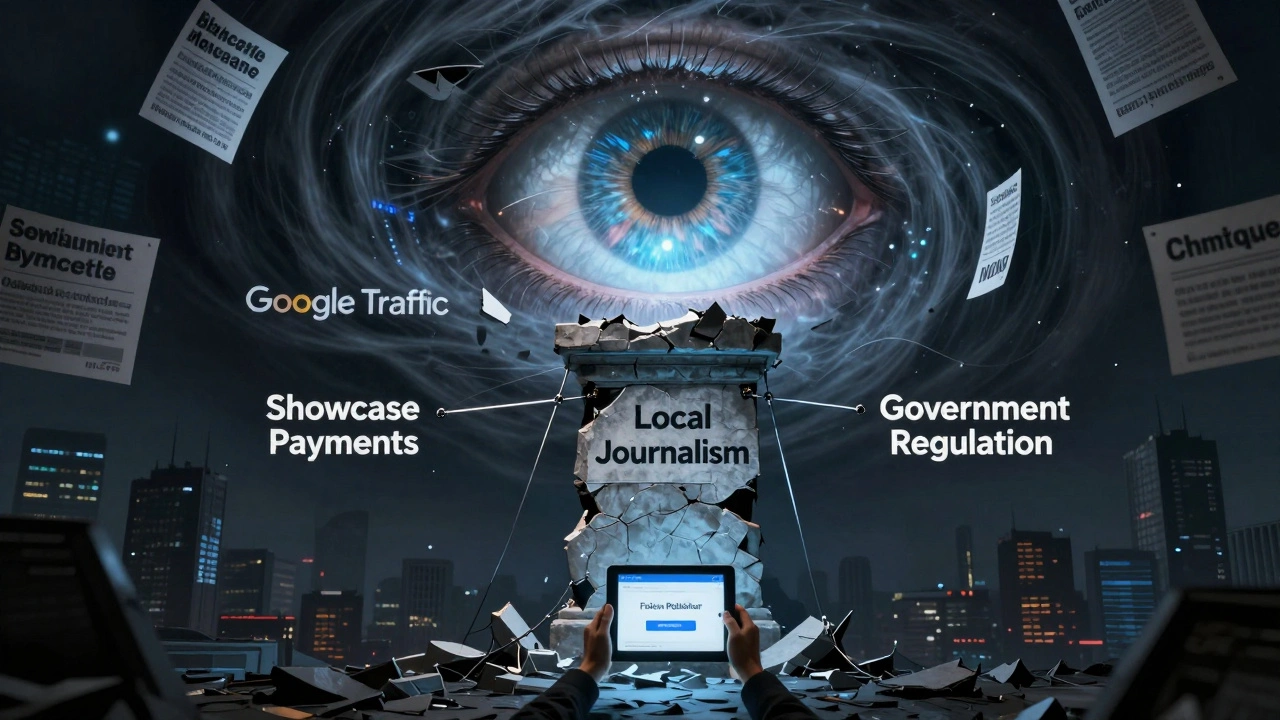
But the biggest uncertainty is regulation. If the UK’s new Digital Markets Bill passes as expected, Google could be forced to pay publishers based on how much traffic they drive-not just through Showcase, but across all Google properties. That could mean billions more flowing to newsrooms. Or it could mean Google pulls back entirely.
For now, Google News UK remains the most powerful news gateway in the country. It reaches 87% of UK news consumers weekly. It keeps small papers alive. It surfaces stories no one else covers. But it’s also a fragile ecosystem-one that depends on Google’s goodwill, user behavior, and government decisions.
How to Use Google News UK Better
If you want to get more out of Google News, here’s what actually works:
- Set your location-Go to Settings > Your Location and enter your postcode. This unlocks hyperlocal stories.
- Block topics-Tap the three dots on any article, then “Not interested.” Do this for three headlines you hate, and the algorithm adjusts.
- Follow publishers-Search for your favorite local paper in the app and tap “Follow.” You’ll see their stories first.
- Check the “For You” tab daily-It updates every few hours. Don’t just open it once.
- Use it to find hidden stories-If you hear about a community issue on Facebook, search it in Google News. You’ll often find the original local report.
It’s not a perfect tool. But in a world where 40% of UK local newspapers have closed since 2010, Google News is one of the few things keeping the conversation alive.
Is Google News UK free to use?
Yes, the Google News app and website are completely free to use. You don’t need to pay or sign up. But behind the scenes, Google pays some publishers for curated content through its News Showcase program. You’re not paying for the service-you’re benefiting from it.
Why can’t I find my local newspaper on Google News?
Your local paper might not be part of Google News Showcase yet. Only 330 UK publishers are currently partnered with Google. Many small outlets don’t have the technical resources to meet Google’s requirements, like adding structured data markup or API integration. You can ask your local paper to join-Google offers free training through its News Publisher Academy.
Does Google News UK show biased news?
The algorithm doesn’t have political bias-it has behavioral bias. If you click on sensational headlines, it shows you more of them. It doesn’t know if you’re researching or just angry. To reduce this, block topics you dislike and follow trusted publishers. The more you shape your feed, the less biased it becomes.
How does Google News compare to Apple News in the UK?
Google News reaches 68% of UK adults who use digital news, while Apple News reaches just 12%. Google’s edge comes from its search engine dominance-it pulls in users who are already looking for news. Apple News is cleaner and simpler, but it doesn’t drive traffic to publishers the way Google does. If you want to support local journalism, Google News is the better tool.
Can I trust the headlines on Google News?
Google doesn’t create the headlines-it aggregates them. The quality depends on the publisher. The Guardian and BBC are reliable. Some tabloids and unknown blogs are not. Look for the publisher’s name under each headline. If you don’t recognize it, check the source. Google’s Top Stories feature is usually accurate for breaking news, but always verify with multiple outlets.
Will Google News UK disappear if Google changes its strategy?
It’s unlikely to vanish completely. Google has too much to lose-both in public perception and regulatory risk. But the level of support could shrink. If the UK government forces Google to pay more to publishers, it might reduce free traffic. If regulation becomes too heavy, Google could pull out of News Showcase. For now, it’s here to stay-but it’s not guaranteed.


About Author
