
How Do Newspapers Make Money in 2025?
Newspaper Revenue Calculator
How Do Newspapers Make Money in 2025?
This calculator shows how different revenue streams contribute to a newspaper's income. Input values based on your local newspaper to see how they add up.
Enter Revenue Streams
Revenue Breakdown
For decades, newspapers made money the same way: sell papers to readers and sell ads to local businesses. It was simple, reliable, and profitable. But that model collapsed faster than most expected. By 2025, print circulation is still the biggest single revenue stream for newspapers - but it’s shrinking. Meanwhile, digital ads, subscriptions, events, and even grants are stepping in to fill the gap. So how do newspapers actually make money today? It’s not one thing. It’s a patchwork of strategies, and the ones surviving are the ones that stopped waiting for print to come back.
Print Advertising Is Still There - But It’s a Shadow of Its Former Self
Back in 2000, print ads paid the bills. Car dealerships, furniture stores, and local restaurants would buy full-page spreads because that’s where people looked for deals. In 2022, print advertising still made up 52% of total newspaper ad revenue. That sounds like a lot - until you realize that total ad revenue has dropped by more than 60% since its peak. A newspaper that once sold $500,000 in print ads a year might now sell $150,000. And those ads? They’re smaller. Fewer colors. Often just a tiny box with a phone number.
Big chains like Gannett still rely on this, but they’re bleeding money. Smaller papers have gotten smarter. Instead of selling blanket ad packages, they now offer targeted bundles: a full-page ad in the Friday edition, plus a featured listing on their website, plus a social media post. It’s not as much money, but it’s more valuable to the advertiser. And it’s the only way they can compete with Facebook Marketplace and Google Local Services.
Digital Advertising Is the New Engine - But It’s Not Enough
Now, nearly half of all newspaper ad revenue comes from digital. That’s up from just 17% in 2011. You see banners on their websites. Pop-ups. Sponsored content that says “Brought to you by.” Programmatic ads that auto-place based on what you clicked yesterday. It’s not glamorous, but it’s automated and scalable.
Here’s the catch: digital ad rates are tiny. A newspaper with 50,000 monthly visitors might make $1,500 a month from ads. That’s barely enough to cover one reporter’s salary. Big players like The New York Times and News Corp make more because they have millions of users and can charge premium rates. But for a local paper in Iowa or New Zealand? Digital ads pay the bills for maybe three months a year. The rest? They’re counting on other sources.
Digital Subscriptions Are the Lifeline
This is where the real shift happened. The New York Times didn’t survive by selling more newspapers. They survived by selling digital access. In 2025, they have over 10 million digital subscribers. That’s more than the entire U.S. print circulation of every newspaper combined.
Local papers are trying the same thing. They’re not asking for $30 a month. They’re asking for $5. Or $10. Or even free - if you sign up for their weekly newsletter. Some offer tiered access: free articles, $3 for full access, $15 for exclusive local reports. The goal isn’t to replace print sales. It’s to build a loyal audience that keeps coming back - and pays for it.
But here’s the problem: audience traffic is falling. The top 50 U.S. daily newspapers lost 20% of their digital visitors in 2022 alone. People aren’t going to news sites like they used to. They get headlines from Instagram. TikTok. WhatsApp. So newspapers are investing in newsletters, push alerts, and even audio summaries. If you can’t get them to the website, bring the news to them.
Events Are Becoming a Major Revenue Source
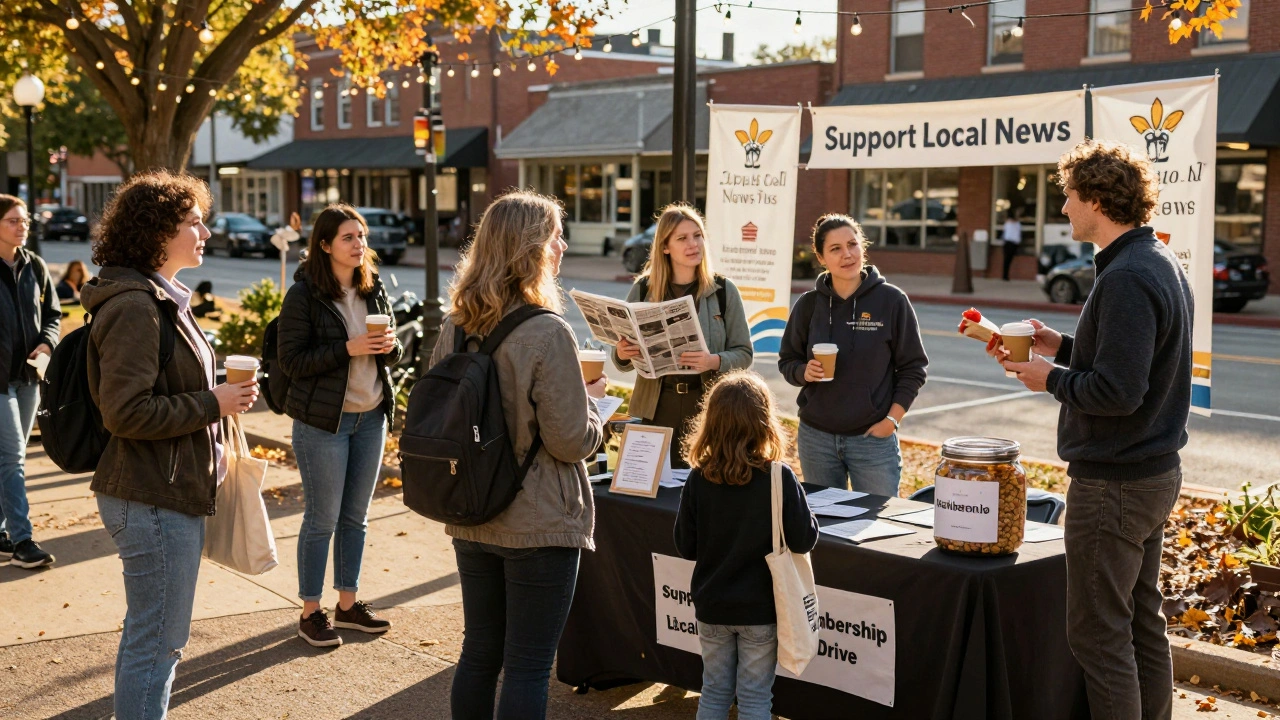
Remember when your town had a farmers market or a high school play? Now, the local newspaper is organizing it. In 2025, 29% of publishers say events are a significant revenue stream. It’s not just charity galas. It’s food festivals, author talks, town hall forums, and even trivia nights.
A small paper in Oregon made $80,000 last year from a single “Local Heroes” event - a night where residents nominated their neighbors for community awards. Tickets sold out. Local businesses sponsored tables. The paper got exposure, the community got engaged, and the paper made money without selling ads. It’s not about selling tickets. It’s about building trust. When people feel connected to the paper, they’re more likely to subscribe. Or donate. Or buy a coffee at the event booth.
Grants and Non-Profit Models Are Gaining Ground
Some newspapers stopped trying to be businesses. They became nonprofits. The Guardian in the UK, the Philadelphia Inquirer in the U.S., and even smaller papers in Wisconsin and Minnesota have made the switch. They’re funded by donations, foundations, and government grants.
In 2024, some local papers received grants between $15,000 and $100,000. One paper in rural New Mexico got $250,000 from a media innovation fund to launch a Spanish-language reporting team. These aren’t handouts. They’re investments in public information. The grants come with strings - you have to prove you’re serving underserved communities, you have to be transparent about funding - but they keep the lights on.
It’s not for everyone. Nonprofit status means you can’t chase profits. But for papers that lost 70% of their ad revenue, it’s better than shutting down.
Membership and Community Support Are the Quiet Winners
More than 13% of publishers now say membership programs are important - up from just 5% in 2024. What does that mean? It means readers can pay $50 a year to be a “member.” In return, they get early access to stories, invitations to editor Q&As, a printed annual report, or even a tote bag with the paper’s logo.
It’s not about the money. It’s about identity. People who pay to be members feel like they’re part of something. They defend the paper on social media. They tell their friends. They show up at events. One paper in Vermont found that members were 8x more likely to renew their subscription than non-members.
It’s the closest thing to the old days - when your neighbor bought your paper because they knew the reporter, trusted the editor, and believed in local news.

Business Services and Other Odd Revenue Streams
Some papers are becoming mini-agencies. They print flyers for local businesses. They design logos. They run social media accounts for small towns. One paper in Maine started offering “local SEO audits” for restaurants - helping them show up on Google Maps. They charge $200 a pop. It’s not journalism. But it pays the rent.
Others sell data. They package up anonymized reader demographics and sell them to local chambers of commerce. Or they host job boards. Or they rent out their printing press to small publishers. One paper in Ohio makes more money printing church bulletins than it does selling its own newspaper.
It’s not glamorous. But when your main revenue streams are collapsing, you take what you can get.
Who’s Winning? Who’s Losing?
The New York Times and News Corp are thriving. They’ve got scale, brand power, and deep pockets. They’re investing in AI tools to personalize content, hiring data scientists to track reader behavior, and expanding into podcasts and video.
Gannett, the biggest U.S. chain, is losing money. Why? They still think they can run 200 local papers like one big machine. They cut too many reporters. They automated too much. Readers noticed. Traffic dropped. Ad revenue cratered.
The winners now? The small ones. The ones run by locals who grew up in the town. The ones that stopped pretending they’re The Washington Post. They focus on one thing: covering what no one else will. The school board meeting. The new zoning law. The high school football game. The obituary of the town’s oldest resident.
And people pay for that. Not because it’s fancy. But because it’s real.
The Future Isn’t Print. It’s Purpose.
Newspapers aren’t dying because people stopped caring about news. They’re dying because they stopped caring about their readers. The ones surviving now are the ones that stopped selling ads and started building relationships. They’re not just reporting the news. They’re part of the community.
Whether it’s through a $5 subscription, a $100 grant, a community dinner, or a membership card - the new model is simple: give people a reason to care. And if they care, they’ll pay.
Do newspapers still make money from selling physical copies?
Yes, but not like before. Print circulation is still the largest single revenue source for many newspapers, but it’s declined sharply. In 2022, print circulation brought in $11.6 billion in the U.S. - down from over $20 billion a decade earlier. Most papers now charge $1-$2 per copy, and sales are mostly to loyal older readers. The real value isn’t in the sale - it’s in driving subscriptions and digital traffic.
Why are digital ads not enough for newspapers?
Digital ads pay pennies per view. A newspaper with 50,000 monthly visitors might earn only $1,500 a month from ads - not enough to cover staff costs. Big publishers like The New York Times can charge more because they have millions of users. Local papers can’t compete with Google or Facebook for ad dollars. So they’re turning to subscriptions, events, and grants instead.
Can local newspapers survive without advertising?
Yes - and many already have. Papers like The Guardian and the Philadelphia Inquirer operate as nonprofits, funded by donations and grants. Smaller papers survive through membership programs, community events, and business services like printing flyers or managing local websites. The key isn’t advertising - it’s building trust and proving value to the community.
How do newspapers get grant funding?
Many newspapers apply for grants from media foundations, state economic development offices, or nonprofit organizations focused on journalism. Grants often require proof that the paper serves an underserved community - like rural areas or non-English speakers. In 2024, some local papers received grants between $15,000 and $100,000. The application process is competitive, but the payoff can be life-saving for struggling papers.
Are newspaper subscriptions worth it for readers?
If you care about local issues - school budgets, city council decisions, crime reports, or high school sports - then yes. National outlets cover big stories, but they miss the details that affect your daily life. A $5 monthly subscription supports reporters who show up to town hall meetings, follow up on public records, and hold local leaders accountable. You’re not just paying for news. You’re paying for democracy.
Newsrooms today aren’t what they were 20 years ago. There are fewer reporters. Fewer presses. Fewer headlines on the front page. But the ones that remain are sharper, leaner, and more connected to their communities than ever. They don’t just report the news. They help build it.


About Author
