What Is the Breaking News in the UK? Prince Harry Trial, Tory Defections, and Regional Inequality
Regional Resource Allocation Calculator
Location Factors
Result Analysis
Enter location data above to see your estimated service response time.
Prince Harry’s High Court Case Begins in London
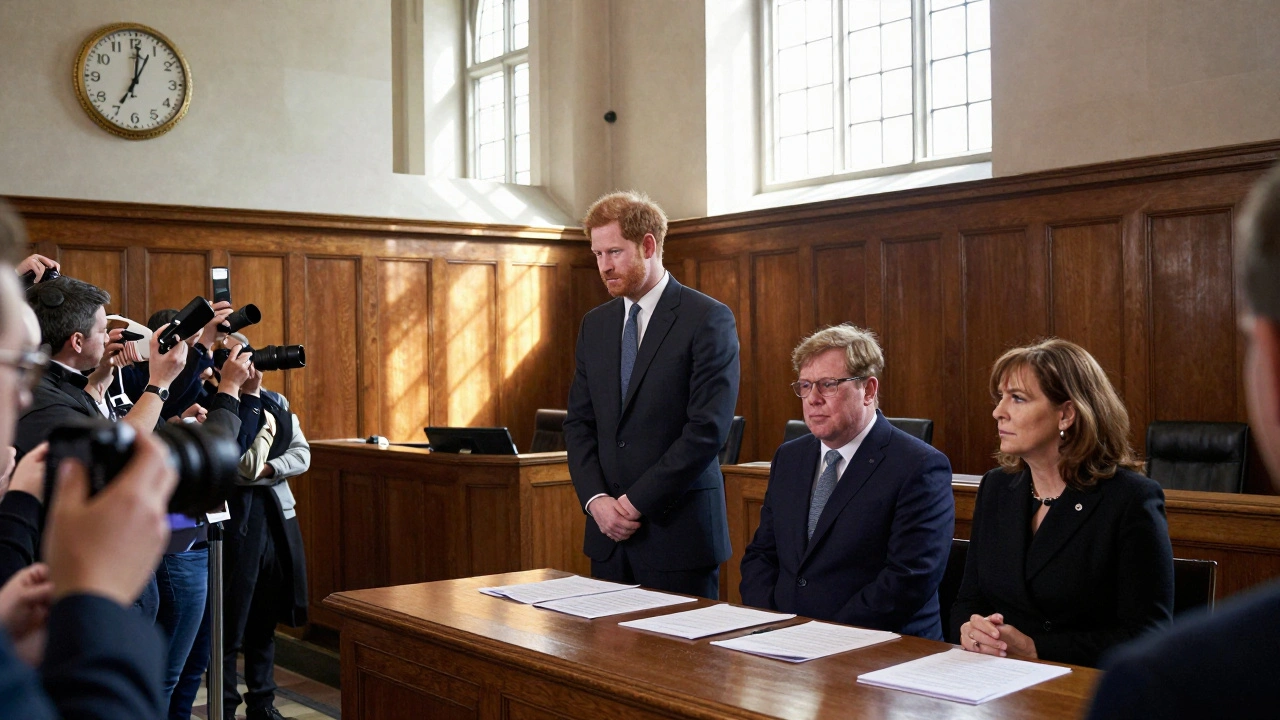
On January 21, 2026, Prince Harry walked into London’s High Court alongside Elton John and Elizabeth Hurley to begin a landmark privacy lawsuit against the publishers of the Daily Mail. The case, one of the most high-profile legal battles in modern British history, accuses the newspaper of hiring private investigators to plant listening devices in cars and homes. Six claimants total are involved, including former Liberal Democrat politician Sir Simon Hughes, who claims the paper bribed police to access private communications. Harry is set to give testimony on January 22, making this the first time a senior royal has directly confronted a major UK media outlet in court over surveillance.
The allegations aren’t just about invasion of privacy-they point to a pattern. One claimant described how investigators followed family members for months, even recording private conversations in garden sheds. The court has already seen internal emails suggesting the paper paid for tips from off-duty officers. If proven, this could force major changes in how UK tabloids operate and possibly lead to criminal charges against individuals.
Conservative Party Cracks Open as Senior MPs Defect to Reform UK
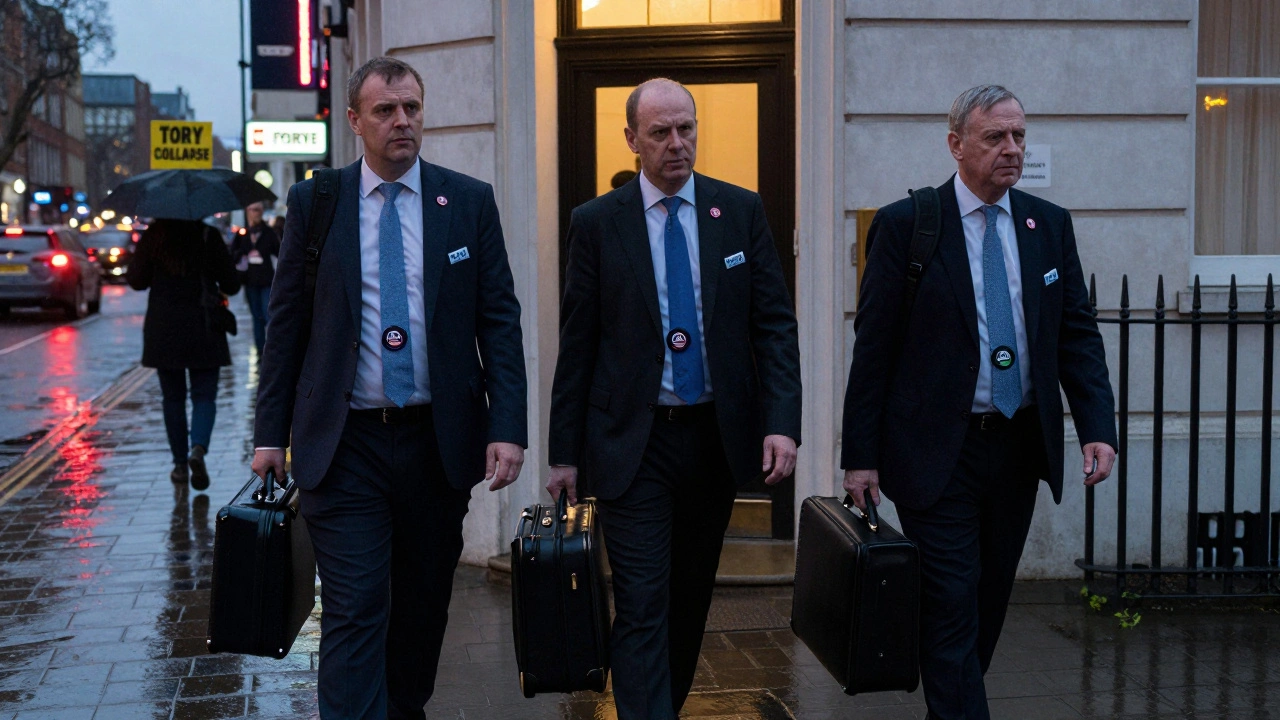
In a stunning political shift, three senior Conservative MPs have left the party in just one week, all joining Reform UK. Andrew Rosindell, MP for Romford, became the third defection on January 18, following Robert Genrich, a shadow cabinet member. This isn’t just about numbers-it’s about credibility. Just days before, Conservative leadership claimed with "100% confidence" that no shadow cabinet members would leave. Now, that promise is in tatters.
The timing was telling: all three announced their moves on a Sunday night, with little fanfare. Labour responded with quiet satisfaction, with one senior figure calling it "the stench of the dying Tory party now engulfs Reform." Internal Tory sources, however, are split. Some privately say "good riddance," while others fear the defections will trigger a domino effect. Analysts warn this could accelerate the party’s collapse in key marginal seats ahead of the next election, especially in areas where Reform UK is gaining traction among disaffected working-class voters.
Police Restructuring Sparks Outrage Across England
Across England, communities are reeling from proposed police force mergers described as "not seen in a generation." In Pontefract, West Yorkshire, residents are divided. One woman told reporters, "We ain’t got enough police to start with," while another said, "Stronger police force. Uh cut the crime down." The plan would merge four forces in the region into one, aiming to fight modern crime like cyber fraud and organized gangs.
But the problem isn’t just structure-it’s resources. Smaller towns fear they’ll lose local officers, while urban centers worry about being overburdened. The government says the changes will save £400 million annually, but local councils point out that crime response times in rural areas could jump from 12 minutes to over 30. The Home Office has promised a review, but no timeline has been given. For now, communities are left wondering if they’ll be safer-or left behind.
North-South Divide: Cleanup Delayed in Wigan While Oxfordshire Gets Millions
In Bicker Shaw, Wigan, a toxic dump has sat untouched for over a year. Residents say the site, filled with industrial waste and burning debris, is a health hazard. Nearby, in Kidlington, Oxfordshire, a similar site was cleaned up within weeks after officials found it posed a risk to the A34 highway and local power lines.
"How does that make you feel that down in Oxfordshire within weeks there’s millions available? And what are we on here? A year and a half?" asked one Wigan resident during a local council meeting. The Environment Agency admitted the Kidlington site had "rapidly escalating fire risks"-a justification for the swift response. But in Wigan, despite similar hazards, funding hasn’t materialized. The government says it’s reviewing regional allocation, but no action has been taken. The disparity has become a symbol of deeper inequality: where you live still determines how much care you get.
UK and EU Unite Against Trump’s Trade Policies
On January 20, Prime Minister Rishi Sunak held a direct call with European Council President António Costa to coordinate a joint response to new U.S. tariffs announced by the Trump administration. The UK and EU agreed to impose retaliatory duties on American goods like whiskey, machinery, and electronics. This marks a rare moment of alignment between London and Brussels since Brexit.
The move is risky. UK exporters fear retaliation against British cars and pharmaceuticals. But officials say the alternative-doing nothing-would cost the economy £2.3 billion in lost trade by the end of 2026. The government has set up a £500 million support fund for affected businesses, but many small firms say it’s too little, too late. Meanwhile, the EU has pledged to fast-track trade talks with the UK on digital services and green tech, signaling a deeper partnership is forming.

ETA System Goes Live in February 2026
Starting February 25, 2026, visitors from visa-waiver countries-including the U.S., Canada, Australia, and Japan-will need an Electronic Travel Authorisation (ETA) to enter the UK. Without it, they won’t be allowed to board planes, trains, or ferries. The system, rolled out in phases since late 2025, requires a simple online application, a £10 fee, and a biometric check.
Over 10 million travelers are expected to apply before the deadline. The Home Office says it’s designed to block criminals and overstayers, but critics warn it could delay tourists and harm tourism revenue. Airlines are already training staff, and some airports have added dedicated ETA help desks. Still, confusion remains. Many travelers think it’s just a formality-until they’re turned away at check-in.
Spain’s Train Crashes Spark UK Safety Review
Two deadly train crashes in Spain-one near Madrid on January 18, killing at least 10 and injuring over 100, and another in Barcelona two days later-have prompted the UK’s Office of Rail and Road to launch an emergency review of signaling systems on Britain’s aging rail network. While the UK’s infrastructure is more modern, many lines still use 1970s-era safety protocols.
Transport Secretary Louise Brown has ordered inspections on all routes with manual signaling, especially in rural areas. The first results are due by March. No immediate changes are planned, but pressure is mounting. Rail unions are calling for full automation by 2028. The public, still wary after the 2023 South Western Railway incident, is watching closely.


About Author
