Do people still read newspapers in the UK? The truth about print and digital trends in 2026
UK Newspaper Readership Calculator
How Age Affects Newspaper Reading
Based on 2026 UK data: 41% of people over 65 read print newspapers weekly while only 28% of 31-49 year olds do. Younger audiences (under 30) prefer digital consumption.
Example: Enter 41 to see the baseline 2026 data for over-65 readers
Current trend: Print readership declines 3.2% annually among under-30s
Based on 2025 Attest Media Report data
Projected Readership
Revenue Impact: For every 1% increase in print readership among over-65s, digital revenue grows 1.8% due to reduced print costs.
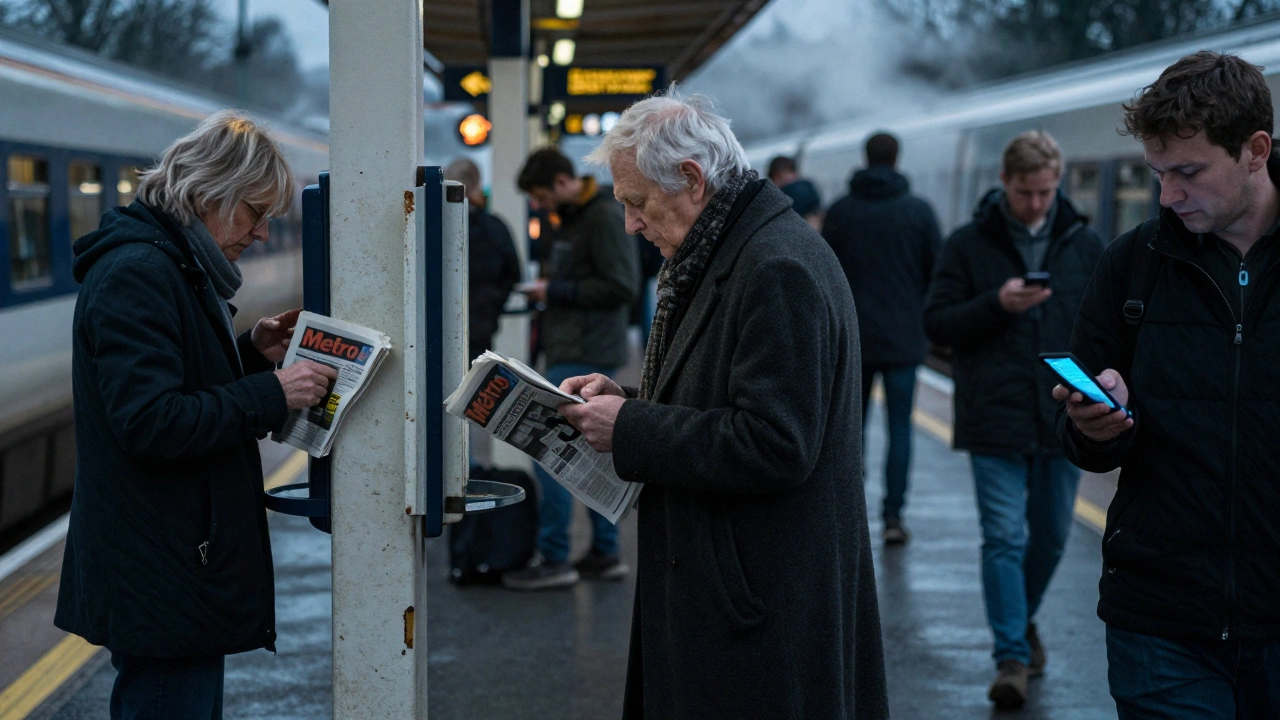
When you walk into a UK train station in 2026, you’ll still see Metro newspapers stacked in racks-but the person picking one up is more likely to be over 60 than under 30. The question isn’t whether newspapers are dead in the UK. It’s who still reads them, how, and why.
Print newspapers aren’t gone-but they’re shrinking fast
People still buy print newspapers in the UK, but not like they used to. In the 1950s, over 8 million copies of daily papers were sold every day. Today, that number is under 5 million. The Guardian, The Times, and The Sun still print physical copies, but their sales are a fraction of what they were. The Sunday Times leads among paid broadsheets with around 1.5 million copies per week. The Sun, a tabloid, sells about 1.03 million print copies daily. Metro, the free paper handed out at stations, still circulates 1.2 million copies, making it the most widely distributed print newspaper in the country.
But here’s the catch: those numbers haven’t grown in over a decade. The Attest UK Media Consumption Report 2025 found that only 28% of people aged 31-49 read a printed paper at least once a week. That group hasn’t increased in size since 2018. Meanwhile, people over 65 are the most loyal print readers-41% of them still pick up a paper weekly. For younger people, print isn’t just outdated-it’s irrelevant.
Digital is where the real audience is
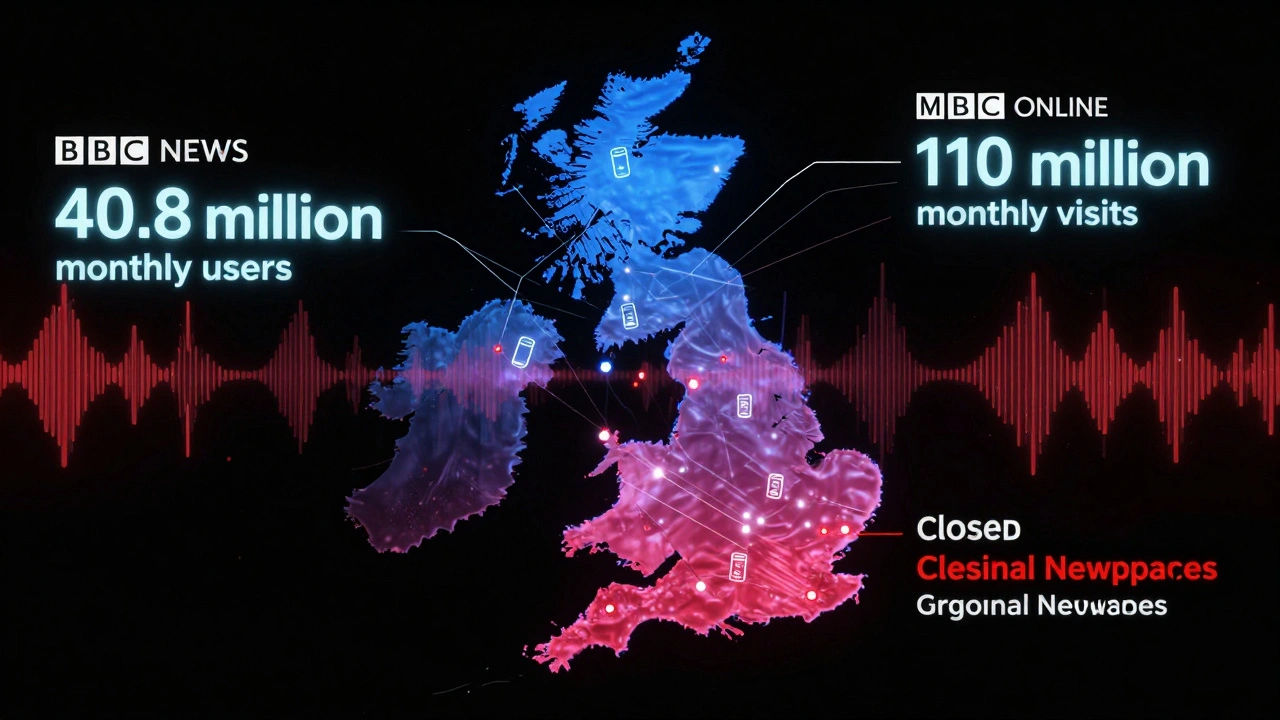
If you want to know who’s actually reading UK news today, look at the numbers online. BBC News reaches 40.8 million people every month. The Guardian and The Sun each hit over 22 million monthly users. Mail Online, the digital arm of the Daily Mail, pulls in 110 million website visits per month-more than the entire population of the UK.
That’s not a typo. Mail Online gets more visits in a month than all UK print newspapers combined. The Guardian’s digital revenue jumped 20% in 2025, hitting well over £100 million. That’s more than the total revenue from all print sales of The Times, The Telegraph, and The Financial Times put together.
Younger audiences-especially those under 30-are almost entirely digital. According to YouGov, 79% of 18-30-year-olds consume news online at least once a month. But here’s the twist: only 17% of them pay for a subscription. They rely on free sites like Mail Online, BBC News, and The Guardian’s free articles. That’s why publishers are stuck between two models: paywalls for quality journalism and ads for mass reach.
Who owns the news-and why it matters
It’s not just about who reads newspapers. It’s about who controls them. Three companies-DMG Media, News UK, and Reach-now control 90% of all national newspaper circulation in the UK. That’s up from 70% just five years ago. The Guardian is one of the few major national papers still independently owned, which is why its membership model (where readers pay monthly) has become a rare success story.
Other publishers aren’t so lucky. Local newspapers have collapsed. Over 200 regional papers have shut down since 2015. The Media Reform Coalition calls this level of concentration a threat to democracy. When one company owns The Sun, The Times, and dozens of local papers, the same headlines, opinions, and even photos appear across the country. That doesn’t give readers choice-it gives them one voice.
Trust is breaking down
Even people who read news every day don’t trust it. The Mintel 2025 report found that 61% of UK newspaper readers believe headlines often misrepresent the full story. That’s not just about clickbait. It’s about how news is framed.
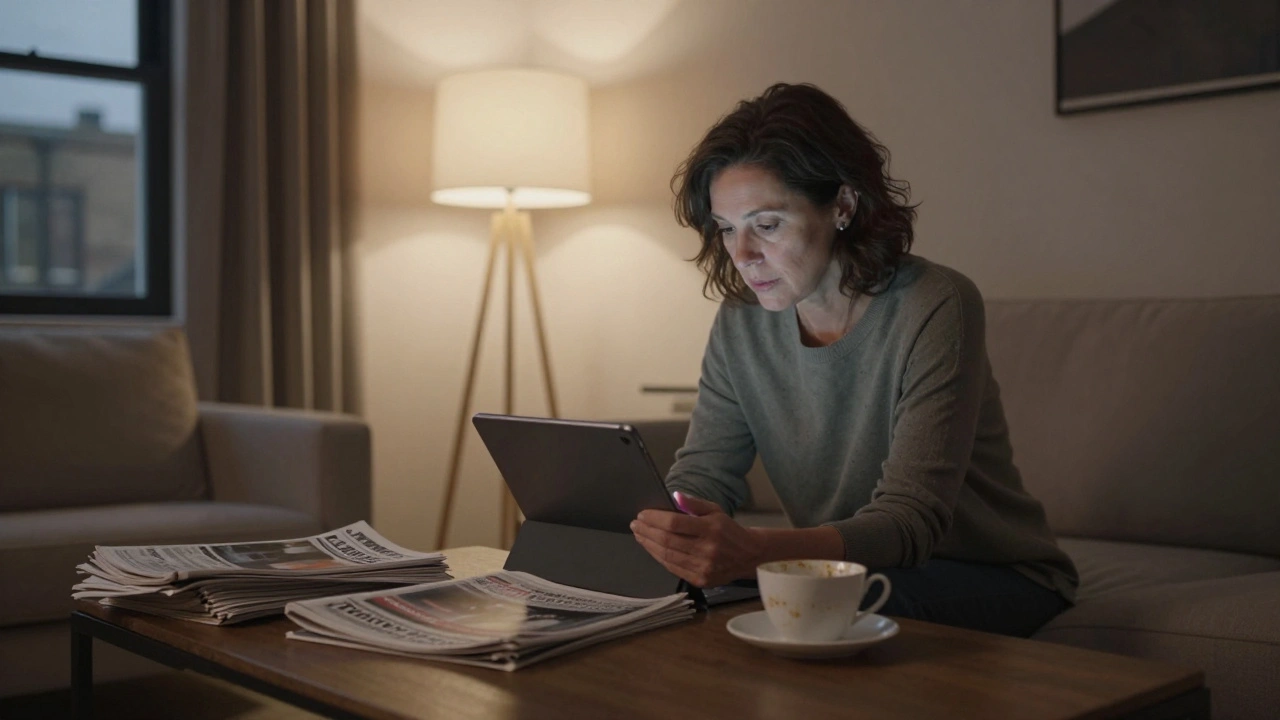
Mail Online’s app has a 3.8/5 rating. Users say they love how fast updates come in-but hate the sensational headlines. The Guardian’s app scores 4.3/5, praised for depth and clarity, but users complain about constant subscription prompts. Reddit threads in r/UKNewspapers are full of people arguing: "I read The Times for the weekend edition, but I get my daily news from BBC." That split-print for depth, digital for speed-is becoming the norm.
Professor David Randall from City, University of London says this fragmentation is dangerous. When everyone gets their news from different sources, there’s no shared understanding of facts. That’s what makes democracy harder to sustain.
The future isn’t print. It’s not even just digital.
By 2027, experts predict only three national print dailies will still be viable without government help. The Financial Times, The Times, and The Guardian are the most likely survivors-because they have loyal, paying audiences. The Sun and Daily Mirror may keep printing, but mostly for nostalgia, not profit.
What’s replacing print? Apps, newsletters, and audio briefings. The Guardian now sends out a daily email summary that over 2 million people open. BBC News has a top-ranked podcast that reaches 1.8 million listeners weekly. Even older readers are switching. One 72-year-old reader told Reuters Institute, "I still get the paper on Sundays, but I listen to the BBC app on my way to the shops. It’s easier."
Technology has made access easier, too. Signing up for a digital paper now takes about 7 minutes. You don’t need to go to a newsagent. You just open your phone. But the real challenge isn’t access-it’s cost. Paywalls are confusing. Some sites let you read three articles free, then lock you out. Others ask for your phone number, your email, your credit card, and your birthday. The Mintel report says 47% of users give up because the paywall is too hard to navigate.
So, do people still read newspapers in the UK?
Yes-but not the way you think.
Print newspapers are now a habit for older generations and a luxury for a few loyal readers. The real newspaper audience is online, scrolling through apps, clicking headlines on their phones, and listening to summaries while commuting. The Guardian and BBC aren’t just surviving-they’re growing, because they’ve adapted.
The ones that won’t make it are the ones clinging to print. The ones that will thrive are the ones who understand that news isn’t about paper anymore. It’s about trust, speed, and clarity. And if you want to know what’s really happening in the UK today, you don’t need a newspaper. You need a smartphone-and a critical eye.


About Author
