
What Salary Do You Need to Live Comfortably in the UK in 2026?
Comfortable Living Salary Calculator
What's Your Situation?
Living comfortably in the UK isn’t about luxury. It’s about not choosing between heating your home and feeding your kids. It’s about having £90 left over at the end of the month without sweating over a broken fridge. And right now, that’s harder than ever.
What Does "Comfortable" Actually Mean?
"Comfortable" doesn’t mean vacations or new cars. According to the Living Wage Foundation and the Resolution Foundation, it means covering rent, bills, food, transport, basic childcare, council tax, and a tiny buffer for emergencies - without dipping into credit cards or skipping meals. The UK government’s National Living Wage (NLW) is £12.71 an hour in 2026. But that’s not enough. The independently calculated Real Living Wage is £13.45 across the UK and £14.80 in London. Why? Because the NLW is political. The Real Living Wage is what people actually need to survive without stress.
London vs. Everywhere Else
If you live in London, your salary needs to be brutal just to keep up. A single adult needs £47,000 a year before tax just to avoid constant financial panic. Why? Rent. A one-bedroom flat averages £2,000 a month. That’s nearly half your take-home pay if you earn £40,000. After tax, you’re left with £2,690 a month. Pay rent, utilities, food, transport, council tax, and suddenly you’ve got £200 left. Maybe. If you’re lucky.
Outside London, it’s still tough - but less impossible. A single person can manage on £28,000 a year. Rent drops to £1,300. Council tax is £1,800 a year. Food and utilities are cheaper. But here’s the catch: wages outside London are lower too. In the Northwest, the average full-time wage is £31,000. Sounds okay? Until you realize a single parent on that salary, after rent, bills, and childcare, has just £90 left for anything unexpected. That’s not comfort. That’s one flat tire away from disaster.
Families Are Getting Crushed
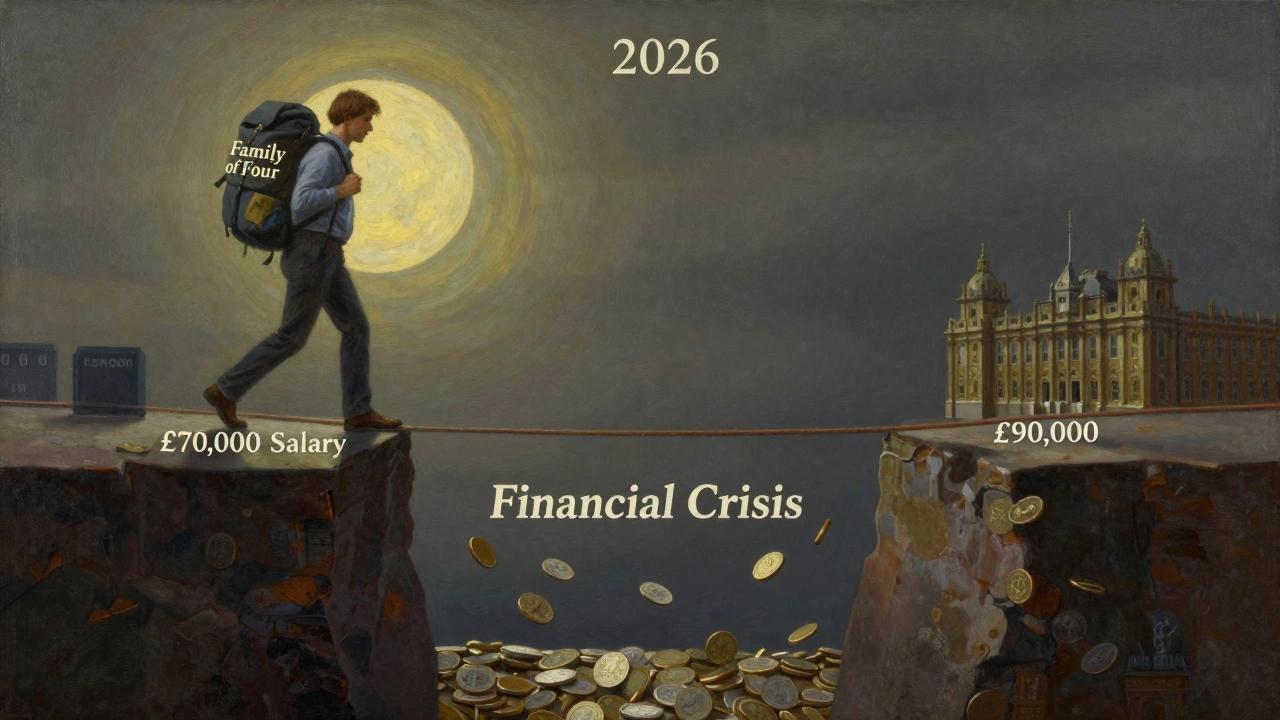
For couples with two kids, the numbers get worse. Outside London, you need £70,000 a year to live comfortably. In London? £90,000. Why? Childcare. In London, two kids cost £1,100 a month. That’s more than rent in most places outside the capital. Add in food (£400/month for the family), transport (£120-£250), and school supplies, and you’re looking at £3,000 a month just to keep the kids fed and cared for. On a £70,000 salary, you’re left with £3,290 after tax. Pay the bills, and you’ve got £500 left. For emergencies, savings, or a dentist visit. That’s not comfort. That’s walking a tightrope.
Why Median Wages Are a Lie
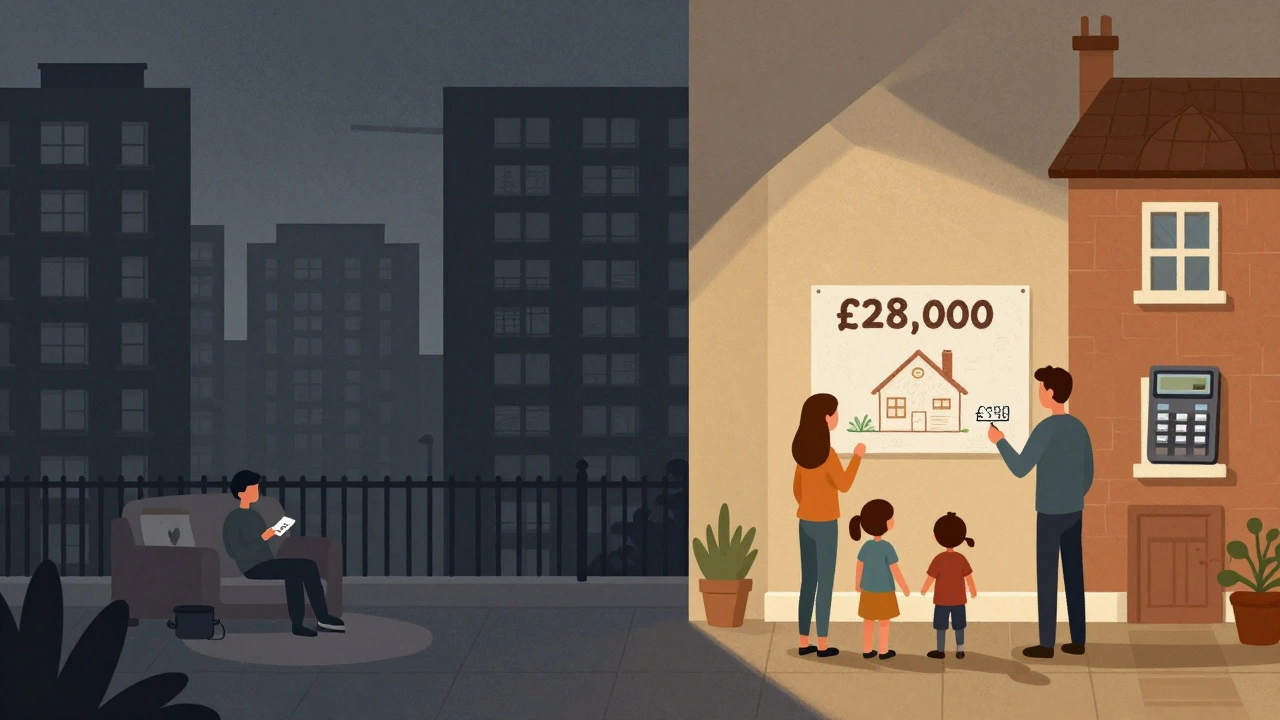
The UK median full-time wage is £37,000-£38,000. Sounds decent, right? But that’s the middle point. Half of people earn less. And even if you’re at the median, you’re still below what you need to live without stress. In London, £38,000 is only 41% of what a family needs. Outside London, it’s 60%. That means most people earning the "average" wage are already living below the comfort line. The Money Advice Service found that 63% of people earning £30,000-£40,000 feel financially stressed. Single parents? 79%. This isn’t about being greedy. It’s about basic survival.
What Your Paycheck Actually Looks Like
Don’t be fooled by gross salaries. Tax and National Insurance eat 20-30% before you see a penny. Here’s what you actually get:
- £40,000 gross = £2,690 take-home per month
- £50,000 gross = £3,290 take-home per month
- £60,000 gross = £3,780 take-home per month
That £60,000 salary sounds like a dream. But if you’re in London and paying £2,100 rent, £250 transport, £150 council tax, £400 food, and £200 childcare, you’re down to £780. That’s for everything else: heating, water, phone, internet, clothes, medicine, savings. No room for a birthday gift. No room for a new pair of shoes. No room for peace of mind.
Why Companies Aren’t Helping
Only 28% of UK employers pay the Real Living Wage, even though 67% of employees say they should. Most companies follow the government’s NLW because it’s cheaper. But that’s not fairness - it’s exploitation. A teacher in Manchester on £34,000 lives in a shared house and still can’t afford to fix her car. A software developer in London on £55,000 has less disposable income than his cousin earning £32,000 in Newcastle. That’s the system. Wages aren’t rising with costs. They’re falling behind.
The Real Cost of Living Breakdown
Let’s look at one real case from Northwest England. A single parent on £31,000 gross (£2,000 take-home monthly):
- Rent: £900
- Council tax: £150
- Energy: £140
- Water: £40
- Utilities (internet, phone): £60
- Food: £400
- Transport: £120
- Children’s needs (school, clothes, activities): £200
Total: £2,010. That leaves £90. For emergencies. For a doctor’s visit. For a broken washing machine. For a birthday cake. That’s not a budget. That’s a countdown to crisis.
What’s Changing in 2026?
The government’s NLW is rising - but too slowly. The Real Living Wage is rising faster. By September 2026, London’s Real Living Wage could hit £15.20/hour. That’s £31,600 a year just to meet the baseline. Meanwhile, inflation for housing and energy is expected to hit 5% a year. That means your rent and bills will keep climbing even if your salary doesn’t. The Bank of England warns that by 2027, 44% of UK households will be living below a "comfortable" level. Right now, it’s 38%. That’s not a trend. That’s a collapse.
So What Can You Do?
If you’re earning less than £35,000 outside London or £55,000 in London, you’re not lazy. You’re not failing. You’re just caught in a system that doesn’t pay enough. The solution isn’t "budget better." It’s systemic. But if you’re stuck right now, here’s what helps:
- Use the Real Living Wage calculator to know your true baseline - not the government’s number.
- Apply for housing benefit, council tax reduction, and childcare subsidies. Many don’t claim what they’re owed.
- Join a food bank. They’re not just for the "homeless." They’re for the working poor.
- Track every pound. Use free apps like Moneyhub or Moneyhub. You’ll see where the leaks are.
- Ask for a raise. If you’re in a union, push for Real Living Wage certification.
There’s no magic fix. But knowing the truth is the first step. The UK doesn’t need more billionaires. It needs enough people to earn enough to live without fear.
Is £30,000 enough to live in the UK?
Only if you’re single, live in a low-cost area like the Northwest, and share housing. Even then, you’ll have little to no buffer for emergencies. Most people earning £30,000 skip meals, cut heating, or use food banks. It’s not sustainable.
What’s the difference between National Living Wage and Real Living Wage?
The National Living Wage is the legal minimum set by the government - £12.71/hour in 2026. The Real Living Wage is calculated by experts based on actual living costs - £13.45/hour outside London, £14.80 in London. The Real Living Wage is what you need to live without stress. The NLW is what employers are legally allowed to pay.
Why is rent so high in London?
London has more jobs, more people, and far less housing. Demand crushes supply. A one-bedroom flat averages £2,000/month. That’s double what it costs in cities like Manchester or Liverpool. Wages haven’t kept up, so rent eats up half your income.
Can you live comfortably on the minimum wage in the UK?
No. Even the National Living Wage of £12.71/hour only brings in £25,000 a year full-time. After tax, that’s under £1,700/month. Rent alone in most areas is £900-£1,300. That leaves almost nothing for food, bills, transport, or emergencies. Living on minimum wage means constant financial anxiety.
How much should a family of four earn in the UK?
Outside London, £70,000 a year is the minimum for comfort. In London, it’s £90,000. That covers rent, childcare, food, transport, council tax, and a small emergency fund. Anything less means constant trade-offs - skipping meals, turning off the heat, or falling behind on bills.
Are wages rising fast enough to keep up with costs?
No. The Real Living Wage has risen 23.4% since 2020. The National Living Wage has only risen 11.1%. Housing and energy costs are rising at 4.5-5.2% a year - faster than wages. The gap between what people earn and what they need is growing, not shrinking.


About Author
