What Was the Capital of England Before London?
England's Changing Capitals Timeline
Explore England's Power Centers Through History
Before London became England's capital, power moved with the king across different cities. This timeline shows how the political center of England evolved over time.
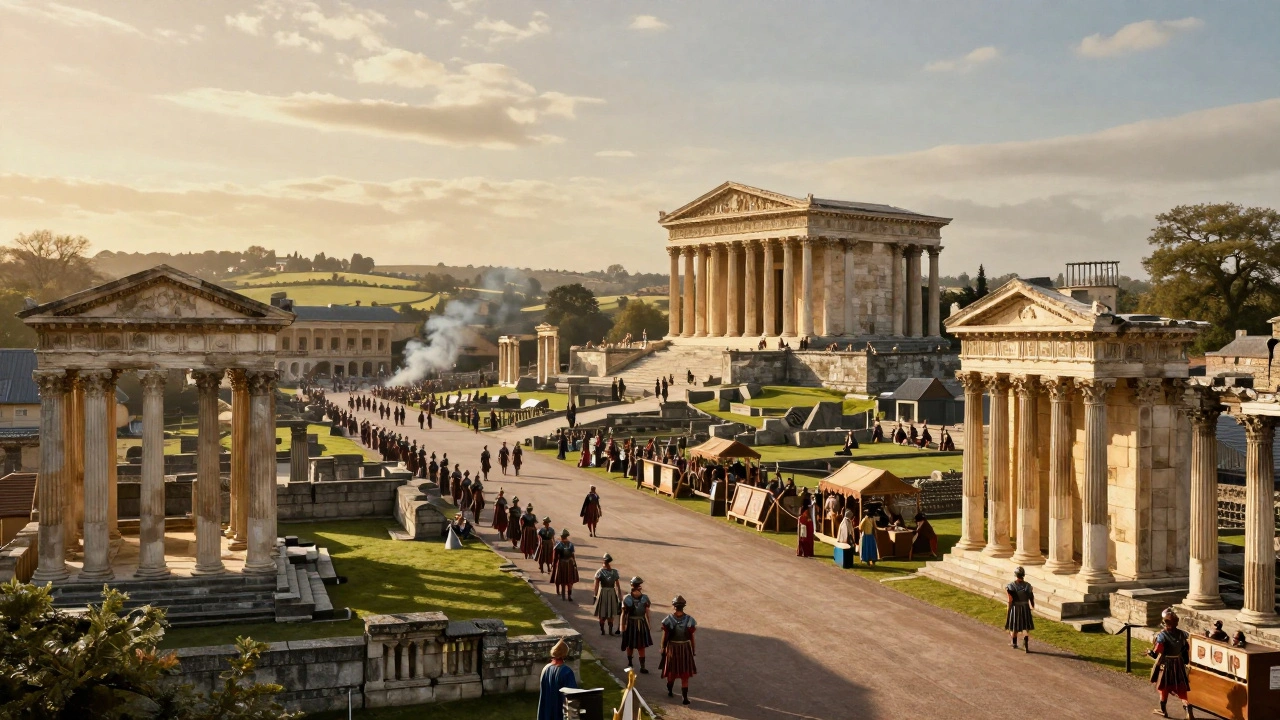
When Emperor Claudius invaded Britain in AD 43, he established Colchester as the first Roman capital of Britain. It was the center of Roman administration with a massive temple to Claudius, walls, and a forum. However, after Boudica's rebellion in AD 60, London gradually replaced it as the provincial capital due to its strategic port location.
Before London became the undisputed capital of England, the country didn’t have one fixed seat of power like we do today. There was no single city where kings lived year-round, signing laws and holding court. Instead, power moved with the king - and his court - across different towns, depending on where the threats were, where the food was, or where the battles had been won.
Colchester: The First Roman Capital
The first place that acted like a capital of what would become England was Colchester, known in Roman times as Camulodunum. When Emperor Claudius invaded Britain in AD 43, he picked Colchester as the center of Roman rule. It wasn’t just a military base - it became the first Roman colony in Britain, meaning it was built to be a model Roman city. The Romans built a massive temple there dedicated to Claudius himself, and by AD 49, it had walls, roads, and a forum. It was the political heart of Roman Britain.
But in AD 60, everything changed. Boudica, queen of the Iceni tribe, led a massive rebellion. Her forces burned Colchester to the ground, killing tens of thousands. The Romans rebuilt, but they never gave it back its top spot. Londinium - what we now call London - had something Colchester didn’t: a deep-water port on the River Thames. Ships could bring grain, soldiers, and taxes straight to London. By AD 100, London had quietly taken over as the provincial capital. Colchester remained important, but it was no longer the center of power.
The Anglo-Saxon Shuffle: No Single Capital
After the Romans left Britain in AD 410, the country split into seven main kingdoms - the Heptarchy. There was no England yet, just competing tribes and kings. Each kingdom had its own center of power, and none of them were permanent.
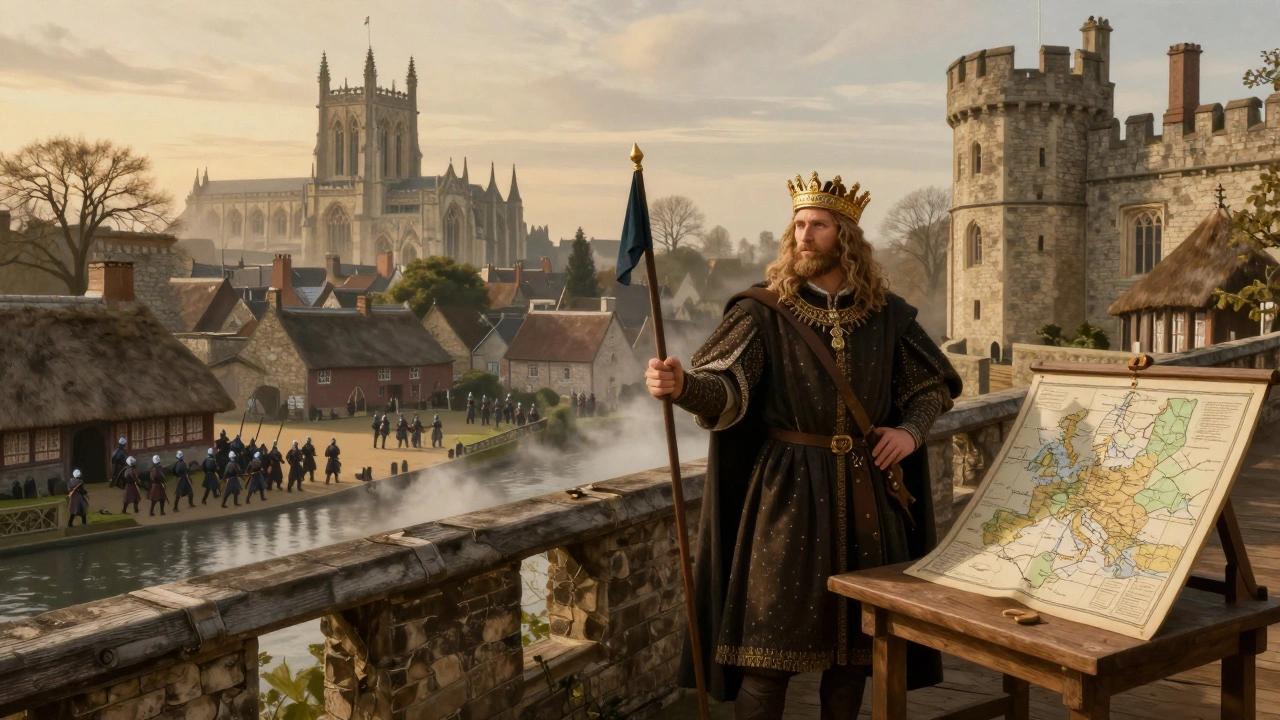
Winchester, then called Wintanceaster, rose as the main seat of the Kingdom of Wessex. King Alfred the Great, who fought off Viking invasions in the late 800s, made it his base. He built a royal palace there, held court there, and even buried his daughter in the city’s cathedral. For a time, Winchester was the closest thing England had to a capital. But even then, Alfred didn’t stay put. He moved between Winchester, Chippenham, and other royal estates depending on the season and the threat.
Other cities played their roles too. Tamworth was the capital of Mercia under King Offa, who built Offa’s Dyke to keep the Welsh out. York was the power center of Northumbria, the northern kingdom that stretched from the Humber to the Firth of Forth. Sherborne was Wessex’s capital before Winchester. Bamburgh, on the northeast coast, ruled over Bernicia. And when the Danes took over in the early 1000s, Cnut, the Danish king, sometimes held court in Northampton - and possibly even Gainsborough - making those towns temporary centers of power.
The key thing to remember? There was no capital. There were capitals - plural. The idea of one fixed capital didn’t exist yet.
London’s Quiet Takeover
London didn’t become capital because of one battle or one decree. It happened slowly, over decades, because it made sense.
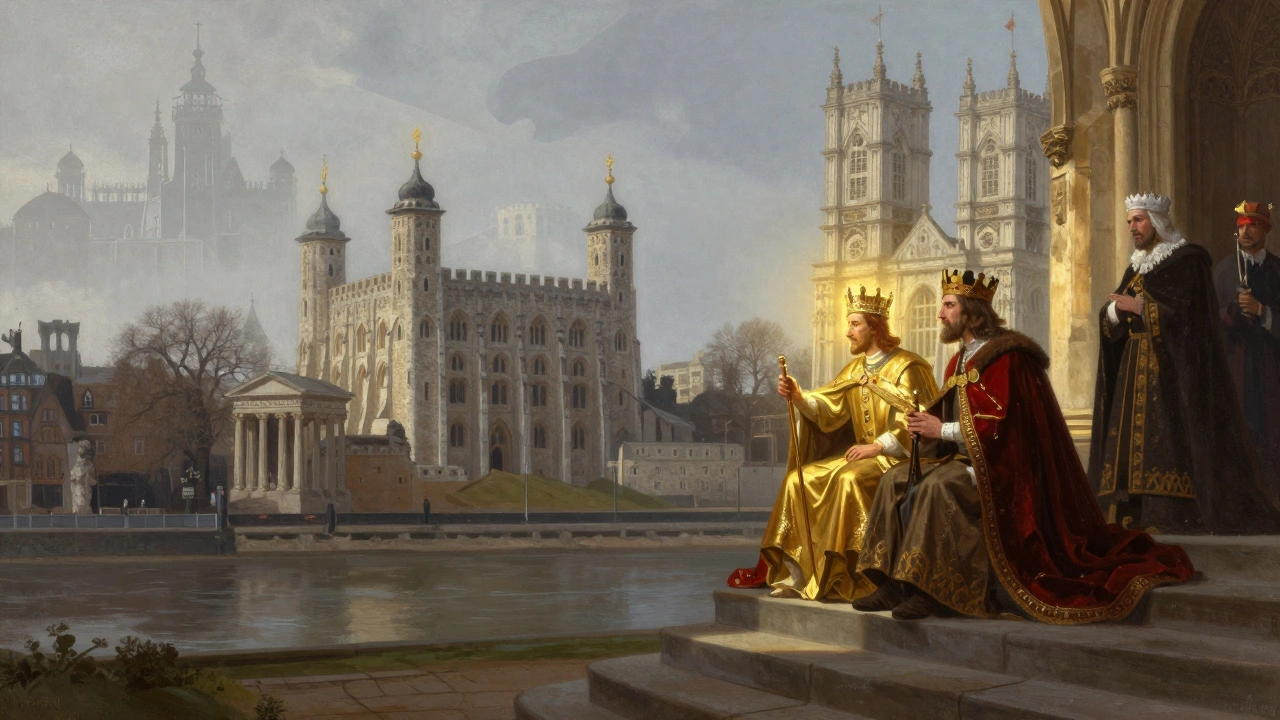
Edward the Confessor, who ruled from 1042 to 1066, started shifting power to London. He built Westminster Abbey and made his palace at Westminster - right next to London. He was crowned there in 1066, just weeks before he died. That act alone signaled a change. The Abbey wasn’t just a church; it was a statement. Royal power was moving to London.
Then came William the Conqueror. He didn’t just take England - he reorganized it. He was crowned in Westminster Abbey on Christmas Day 1066. That wasn’t random. He chose the place Edward had made sacred. He started building the White Tower - the core of the Tower of London - as his fortress and government center. He didn’t need to move his court around anymore. London had the roads, the river, the wealth, and the history.
Winchester didn’t vanish. It stayed important. William built a castle there. The royal treasury was still kept in Winchester for decades. But the money was being spent in London. The laws were being written in London. The king’s court was in London. By the time Henry II became king in 1154, the Pipe Rolls - the kingdom’s financial records - showed all major royal business happening in London. Winchester’s role was fading.
The Final Nail: Magna Carta and Parliament
The turning point wasn’t just about kings or castles. It was about institutions.
In 1215, the barons forced King John to sign the Magna Carta at Runnymede. But where did they meet to enforce it? In London. Where did Parliament begin meeting regularly? At the Palace of Westminster. London became the home of the law, not just the king.
By the late 1200s, the idea of London as England’s capital wasn’t just practical - it was legal. It was institutional. No king after that tried to move the center of government. Even during the English Civil War in the 1640s, when Charles I set up his royal court in Oxford, Parliament stayed in London. And when the war ended, London was still the capital. Oxford was just a temporary refuge.
Why London Won
So why did London beat Winchester, Colchester, and York? It wasn’t luck. It was geography, economy, and timing.
- Location: London sat right where the River Thames narrowed, making it easy to build a bridge and control trade.
- Trade: Merchants from Europe came to London. Taxes flowed in. Money meant power.
- Infrastructure: The Romans left roads, walls, and buildings. Later kings didn’t have to start from scratch.
- Symbolism: Once Westminster Abbey became the coronation site, London became sacred ground.
Winchester was inland. Colchester was too far east. York was too far north. London was in the sweet spot - connected to the sea, the heart of the country, and growing every year.
What About Other Cities?
Some people argue Carlisle, Gainsborough, or even Canterbury were capitals. But they weren’t. Carlisle was a Roman frontier town. Gainsborough might have been a temporary meeting spot for Cnut. Canterbury was the religious center - home to the Archbishop - but not the political one. The king didn’t live there. Laws weren’t passed there. Taxes weren’t collected there.
The only cities with real claims are Colchester (first Roman capital) and Winchester (main Anglo-Saxon center). But neither held the role long enough - or consistently enough - to be called England’s capital before London.
Final Answer
Before London, there was no single capital of England. But if you had to pick the one city that came closest to being the capital before London rose to power, it was Winchester. It was the seat of the most powerful kingdom, Wessex, and the base of Alfred the Great. It held the royal treasury, hosted coronations, and was the center of government for over 200 years.
Before Winchester, during Roman times, it was Colchester. But that was Roman Britain - not England yet.
So the answer depends on what you mean by “England.”
- If you mean the unified kingdom that emerged after 927 AD - then Winchester.
- If you mean the Roman province that covered the same land - then Colchester.
But London didn’t just replace them. It absorbed their legacy - and made itself the only place that mattered.
Was Winchester ever officially called the capital of England?
Winchester was never formally declared the capital in a legal document. But it functioned as the primary seat of government for the Kingdom of Wessex and later for the unified Kingdom of England until the late 11th century. Kings lived there, laws were issued from there, and the royal treasury was kept there. Historians call it the ancient capital because it was the center of power - even if no plaque said so.
Why didn’t York become the capital?
York was the capital of Northumbria, the largest and most powerful Anglo-Saxon kingdom in the north. It had a major cathedral, a royal palace, and was a key trading hub. But it was too far north. When England unified under kings like Athelstan, the center of gravity shifted south. London’s location on the Thames made it easier to control the whole country, especially as trade and administration grew. York remained important, but never the main seat of power.
Did London become capital because of the Norman Conquest?
The Norman Conquest didn’t create London’s capital status - it locked it in. Edward the Confessor had already moved the royal court to Westminster. William the Conqueror chose to be crowned in Westminster Abbey and built his main fortress in London. He didn’t need to start over. He used what was already there: the Abbey, the river, the roads. The Conquest gave London permanence, not its origin.
Was Colchester ever the capital of England?
Colchester was the capital of Roman Britain - not England. England as a nation didn’t exist until the 10th century. Colchester was important as the first Roman administrative center, but it lost that status by AD 100. It was never the capital of an Anglo-Saxon or medieval English kingdom.
What happened to Winchester after London became capital?
Winchester didn’t disappear. It remained a royal city. The castle was used for storing treasure and holding trials. The bishopric stayed powerful. But the king’s court, the treasury, and Parliament moved to London. By the 1170s, the Pipe Rolls - the kingdom’s financial records - were being kept in London, not Winchester. Winchester became a historic city, not a political one.



About Author
