What Is the Oldest Form of Media? The Real Story Behind Human Communication
Media Evolution Comparison Tool
Compare Media Forms
Compare the three main forms of media discussed in the article based on key characteristics that define media.
Oral Tradition
Oldest form Pre-dates writing Relies on memory
Could not outlive the speaker
Cave Paintings
~40,000 years old First permanent records Visual communication
Limited ability to convey complex information
Clay Tablets
~3400 BCE First writing Systematic symbols
Foundation of written media
Media Characteristics Comparison
| Characteristic | Oral Tradition | Cave Paintings | Clay Tablets |
|---|---|---|---|
|
Persistence
How long information lasted
|
No | Yes (100s-1000s years) | Yes (thousands of years) |
|
Accuracy
Precision of information
|
Low | Moderate (visual) | High (words/numbers) |
|
Reproducibility
Ease of copying
|
Low (relies on memory) | Low (hard to replicate) | High (copying possible) |
|
Accessibility
Who could access information
|
High (everyone could hear) | High (publicly visible) | Low (only literate people) |
Why Clay Tablets Were Revolutionary
Clay tablets solved the three core problems of earlier media forms:
- 1. Persistence Could outlive the creator
- 2. Accuracy Could express exact names, numbers, dates
- 3. Reproducibility Could be copied to spread information
The oldest form of media isn’t a newspaper, a radio broadcast, or even a printed book. It’s something far older-something that predates writing, cities, and even agriculture. It’s the sound of a voice telling a story. But if we’re looking for the first medium that could store and pass on information beyond a single lifetime, the answer isn’t so simple.
Oral Tradition: The First Medium
Long before anyone carved symbols into clay, humans shared news, myths, and survival tips by speaking. Oral communication was the original social network. Elders told stories to children. Messengers carried warnings across valleys. Songs encoded history so it wouldn’t be forgotten. This wasn’t just chatting. It was a structured system. In many cultures, trained storytellers memorized entire genealogies, battle accounts, and ritual instructions. They repeated them exactly, generation after generation. The problem? Accuracy faded with distance. A message passed through five people could end up sounding nothing like the original. Without a physical record, knowledge vanished when the speaker died. So while oral tradition is the oldest way humans shared information, it doesn’t qualify as media in the true sense-because it couldn’t outlive the person who created it.Cave Paintings: The First Permanent Record
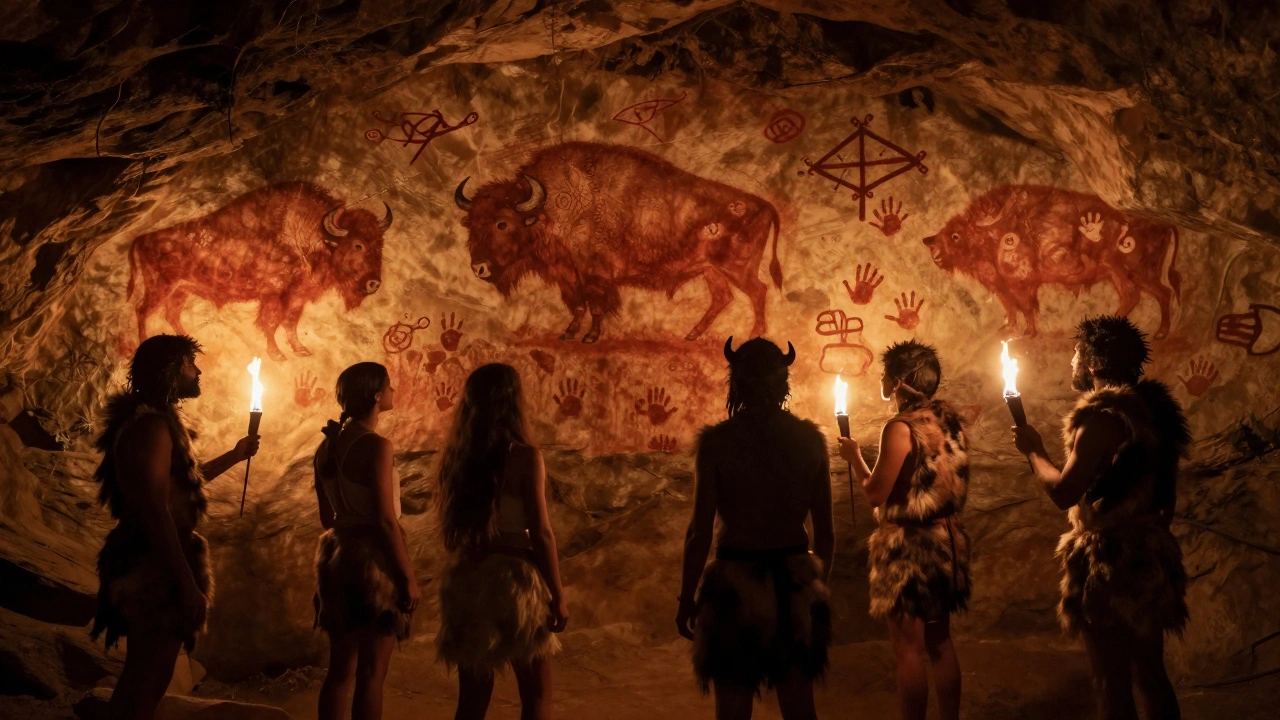
Around 40,000 years ago, people in caves across Europe and Indonesia began painting animals, handprints, and abstract symbols on rock walls. These weren’t just decorations. They were messages meant to last. A bison painted on the wall of Lascaux didn’t just show what animals lived nearby. It might have been a teaching tool for hunters, a spiritual symbol, or a record of a successful hunt. Unlike a spoken story, this image stayed put. Anyone who came later could see it. It didn’t rely on memory. It didn’t need a speaker. Scholars now call these cave paintings an early form of mass media. They were public, visible to many, and designed to endure. But they had limits. They couldn’t convey complex ideas like laws, prices, or dates. You couldn’t write “3 sheep traded for 2 spears” on a wall and expect everyone to understand it the same way. Cave art was visual communication, not written language. It was powerful-but not precise.Clay Tablets: The Birth of Written Media
Around 3400 BCE, in ancient Mesopotamia (modern-day Iraq), something changed. People started pressing wedge-shaped marks into wet clay tablets. These were not pictures. They were symbols that stood for sounds and words. This was writing. The earliest tablets recorded business deals-how much grain was traded, who owed what, when payments were due. Soon, they held laws, prayers, and royal decrees. These weren’t just messages. They were archives. A tablet could be stored, moved, copied, and read years later-even centuries. This was the start of the manuscript age, which lasted for nearly 5,000 years. Writing turned information into something you could own, trade, and accumulate. It didn’t depend on a living voice. It didn’t fade with time. It could be referenced. The oldest known books? Clay tablets. The first library? A room full of them in ancient Sumer. The first news? A tablet listing tax collections or crop yields. This was the moment media became durable. And with durability came power.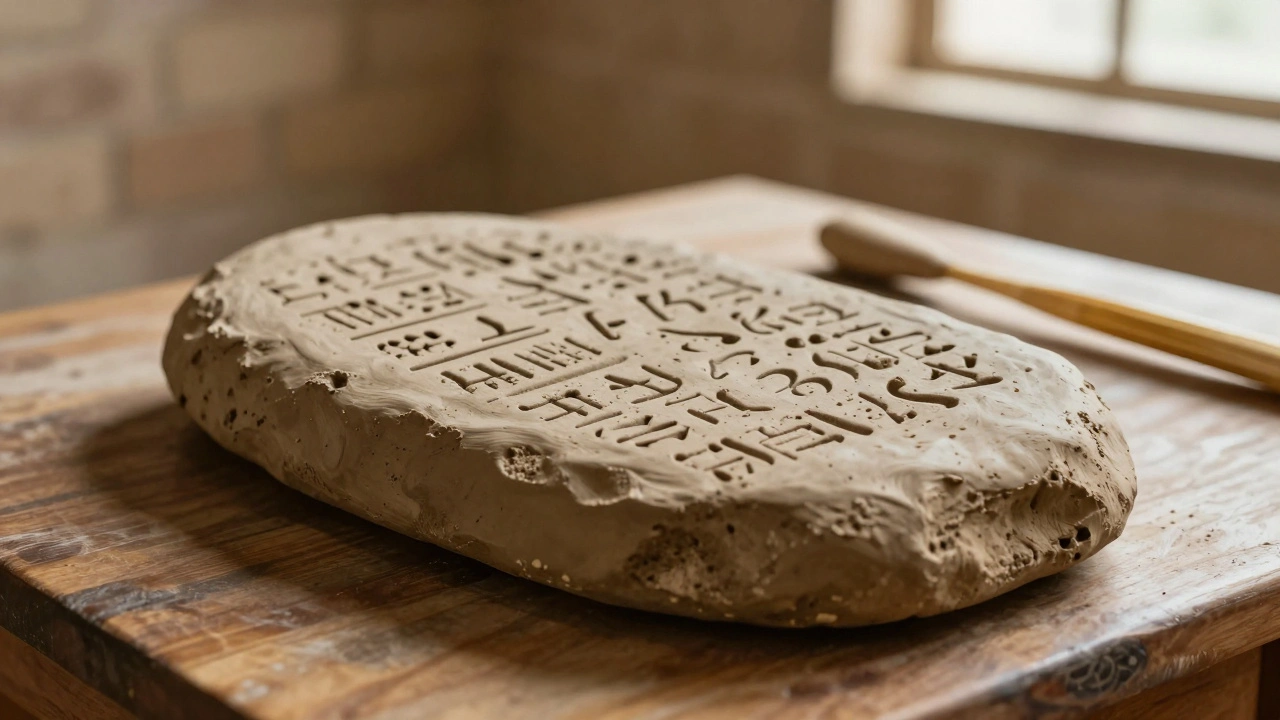
The Acta Diurna: The First News Bulletin
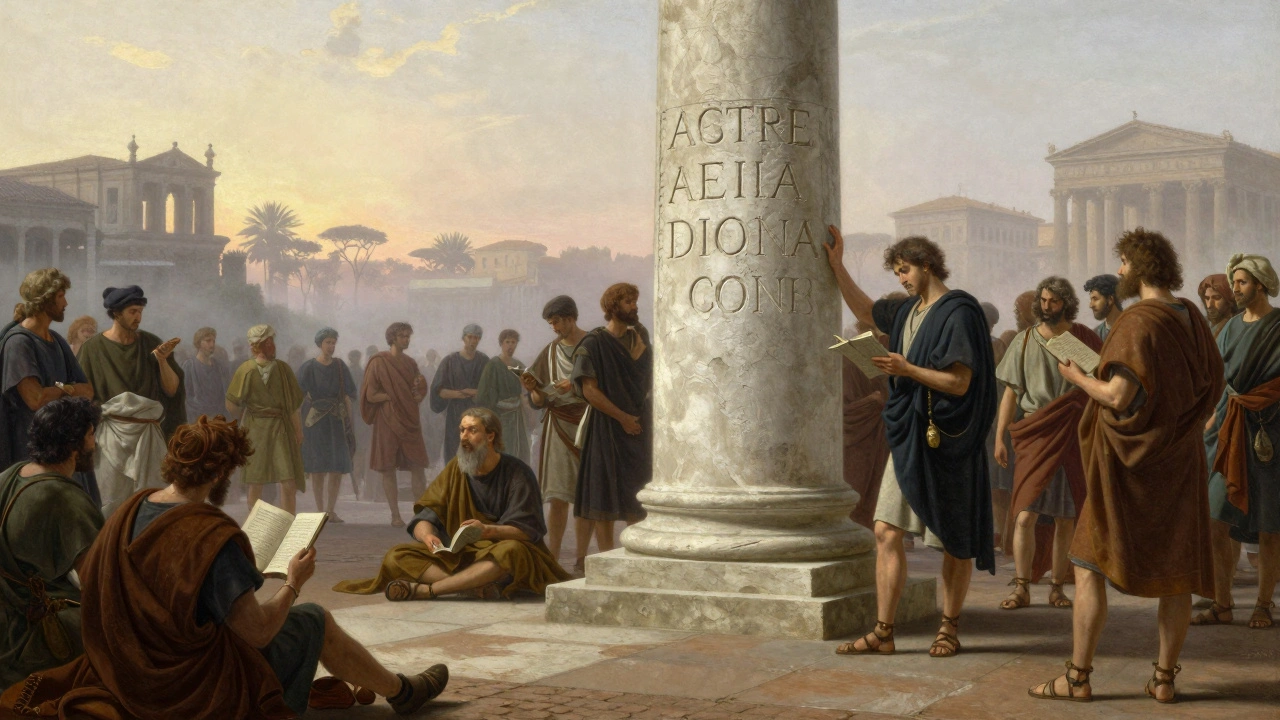
Fast forward to 59 BCE. Rome was a sprawling empire. People needed to know what was happening-not just in their village, but in the capital. The Roman government responded by posting daily updates on whitewashed walls in public squares. These were called the Acta Diurna-“Daily Acts.” They listed births, deaths, marriages, legal rulings, military victories, and even gladiator schedules. Written by official scribes and carved into stone or metal, they were the world’s first regular news service. Citizens gathered to read them. Traders checked them before making deals. Politicians used them to shape public opinion. But here’s the catch: only the literate could read them. Most Romans couldn’t. So priests, teachers, and local leaders would read the Acta Diurna out loud to crowds. The news was public-but still controlled by a small elite. This system proved something important: people didn’t just want information. They wanted it regularly, in a public space, from a trusted source. That’s the same logic behind today’s news apps and TV bulletins.Why Writing Beats Oral and Visual
So why do historians say writing-on clay tablets-is the oldest true form of media? Because it solved the three big problems of earlier forms:- Persistence: Unlike speech, it lasted beyond the speaker.
- Accuracy: Unlike cave art, it could express exact details-names, numbers, dates.
- Reproducibility: Though slow, tablets could be copied. One original could become ten, then a hundred.
The Long Road to Mass Media
Writing didn’t become common overnight. For thousands of years, literacy was rare. Most people still relied on others to read to them. Books were luxury items. A single Bible could cost as much as a house. Then, around 700 CE, people in China started using woodblock printing to copy Buddhist texts. It was slow, but it worked. By the 1440s, Johannes Gutenberg’s printing press in Germany made it possible to produce hundreds of identical books in weeks instead of years. That’s when media truly became mass media. But the roots? They go back to a farmer in Mesopotamia pressing a reed into clay to record how many sacks of barley he owed his neighbor.What We Lose When We Forget the Past
Today, we think of media as apps, videos, and tweets. We assume it’s always been fast, cheap, and easy to share. But media didn’t start that way. It started with patience. With effort. With the quiet act of pressing symbols into clay so someone, someday, would know what happened. The oldest form of media wasn’t invented to entertain. It wasn’t created for clicks. It was born from a basic human need: to make sure what matters doesn’t disappear. That’s why, even in our digital age, we still post photos on walls, write notes to ourselves, and save messages we don’t want to forget. We’re still doing what our ancestors did 5,000 years ago-trying to leave something behind.Is oral storytelling considered media?
Oral storytelling is the oldest method of sharing information, but it’s not classified as media in the technical sense. Media requires a physical or digital medium that can store and transmit information independently of the speaker. Since oral stories vanish when not repeated, they lack the durability and reproducibility that define media. However, oral tradition was the foundation that made written media necessary.
Were cave paintings really media?
Yes, cave paintings are considered an early form of mass media because they were public, permanent, and designed to communicate across time. They weren’t private art-they were placed in visible locations for others to see. But they couldn’t convey complex, abstract, or detailed information like laws or transactions. That’s why writing on clay tablets is seen as the true beginning of media as we define it today.
Why are clay tablets more important than cave art?
Clay tablets introduced writing, which allowed precise, repeatable, and complex information to be stored. While cave art showed images, tablets recorded words-names, numbers, dates, laws, contracts. This made them functional tools for administration, trade, and governance. Writing turned information into something you could reference, verify, and copy. That’s the core function of media.
Did other cultures develop media at the same time?
Yes. Around the same time as Mesopotamia, ancient Egypt developed hieroglyphs on papyrus. In China, early writing appeared on oracle bones around 1200 BCE. In Mesoamerica, the Maya created codices on bark paper. Each culture invented writing independently, showing that the need for durable information storage was universal. But Mesopotamian clay tablets are the earliest confirmed examples, dating back to 3400 BCE.
How did people read news before printing?
Before printing, most people couldn’t read. News from the Acta Diurna or handwritten manuscripts was read aloud by trained individuals-priests, teachers, scribes, or town criers. Public readings turned written media into oral experiences. This created a system where access to information was controlled by those who could read. Literacy wasn’t just a skill-it was a form of power.



About Author
