What Event Changed the World Forever? The Agricultural Revolution That Built Civilization
Population Growth Calculator
How Agriculture Changed Humanity
Calculate the population growth since the Agricultural Revolution and see how farming enabled civilization.
Ask anyone what event changed the world forever, and you’ll get a dozen answers. The atomic bomb? The printing press? Columbus landing in the Americas? Each has its case. But if you trace every thread of modern life - from the food on your plate to the city you live in - you’ll find one root that runs deeper than all the rest: the Agricultural Revolution.
The Quiet Start of Everything
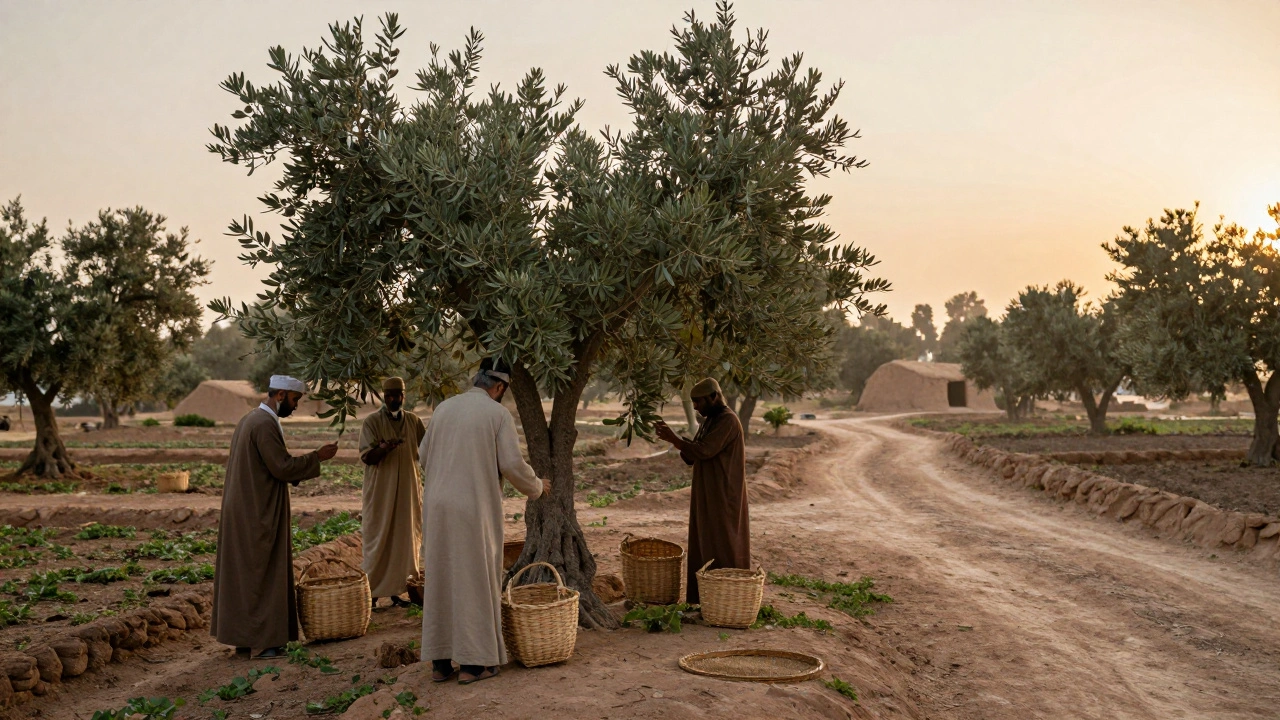
About 12,000 years ago, in the Jordan Valley, people began tending wild fig trees. Not hunting them. Not gathering them. Tending them. This wasn’t a grand declaration. No trumpets blew. No empires rose overnight. It was a slow shift - farmers planting seeds, saving grain, storing surplus. And that small act, repeated across the Fertile Crescent, China, Mesoamerica, and the Andes, started a chain reaction that changed everything. Before agriculture, humans moved constantly. Groups stayed small - maybe 50 to 100 people. Life was tied to seasonal rhythms, animal migrations, and wild plant cycles. Then came the plow, the seed, the field. Suddenly, people could stay put. Food wasn’t just found - it was made. That shift didn’t just change where people lived. It changed what they became.From Nomads to Nations
With stable food supplies, populations exploded. From an estimated 5 million people on Earth before farming, we grew to over 7 billion today. That’s not a typo. That’s 1,400 times more people - all because of grain, tubers, and domesticated animals. Staying in one place meant building homes, then villages, then towns. With more people came specialization. Not everyone needed to hunt. Some could make tools. Others could weave cloth. A few could keep records. And soon, someone had to manage the grain stores, settle disputes, organize labor. That’s how leadership, law, and eventually, government, began. Archaeologists have found skeletons from this time showing clear signs of decline. Average height dropped. Nutritional deficiencies jumped by 50%. Farming was harder than foraging. But the trade-off was worth it - enough people survived to build something bigger. Cities didn’t appear overnight. But by 3500 BCE, Uruk in Mesopotamia had 40,000 residents. That’s more people living in one place than most hunter-gatherer bands had seen in their entire lives. And it was all possible because someone had figured out how to grow more food than they could eat.The Invisible Engine of Modern Life
You don’t think about it, but almost every system in your life traces back to farming. Your grocery store? It exists because we grow 75% of the world’s food from just 12 plant species and 5 animal species. That’s not diversity - that’s vulnerability. And it’s a direct legacy of the first farmers who picked the most productive crops and stuck with them. Your job? Most of us don’t grow our own food anymore. We work in offices, factories, hospitals, tech hubs. That’s possible because farming became so efficient that one farmer can now feed over 150 people. In 1800, you needed nearly half the population just to grow food. Today, it’s less than 2%. Even your phone and internet rely on this. The energy, materials, and labor to build digital infrastructure come from a world built on surplus food. No agriculture? No cities. No cities? No engineers to code your apps. No engineers? No internet.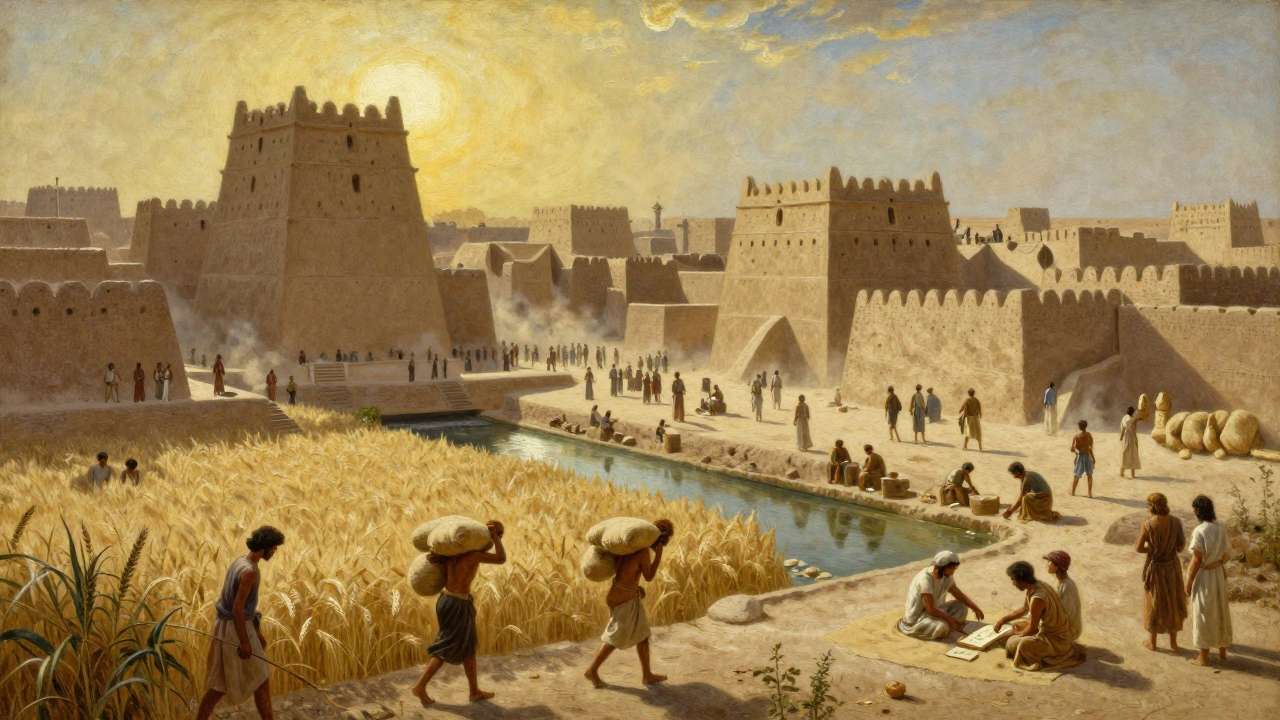
Why Not the Bomb? Or the Printing Press?
Some argue the atomic bomb changed the world by making war unthinkable. Others say the printing press unlocked knowledge and sparked revolutions. Both are powerful. But they built on something already in place. The bomb only mattered because we had cities to destroy, governments to fight, industries to fuel it. The printing press only spread ideas because people could read - and they could read because they had time to learn, thanks to food surpluses that freed them from constant survival. The Industrial Revolution? It needed coal, steam, factories - all made possible by a population large enough to work in them. And that population? Grew because of farming. Even the digital age - with 5.35 billion people online in 2026 - depends on a world where food is so abundant that most of us don’t think about where it comes from. We take it for granted. But that’s only possible because agriculture solved the problem of feeding large groups, reliably, year after year.What We Lost - And What We Still Carry
The cost of this revolution wasn’t small. Hunter-gatherers had more varied diets, more movement, less disease. They worked fewer hours. They were healthier - taller, stronger, less prone to malnutrition. Farming brought disease. Crowded settlements spread smallpox, measles, tuberculosis. Social inequality grew. Land became property. Power became concentrated. Slavery, class systems, and empires followed. And yet - we didn’t go back. Why? Because the trade-off was too valuable. More people. More stability. More possibility. Today, we’re living with the consequences. Climate change threatens the same crops that fed our ancestors. Soil erosion, water scarcity, and monoculture farming are putting our food system at risk. The very system that gave us civilization now threatens to unravel it.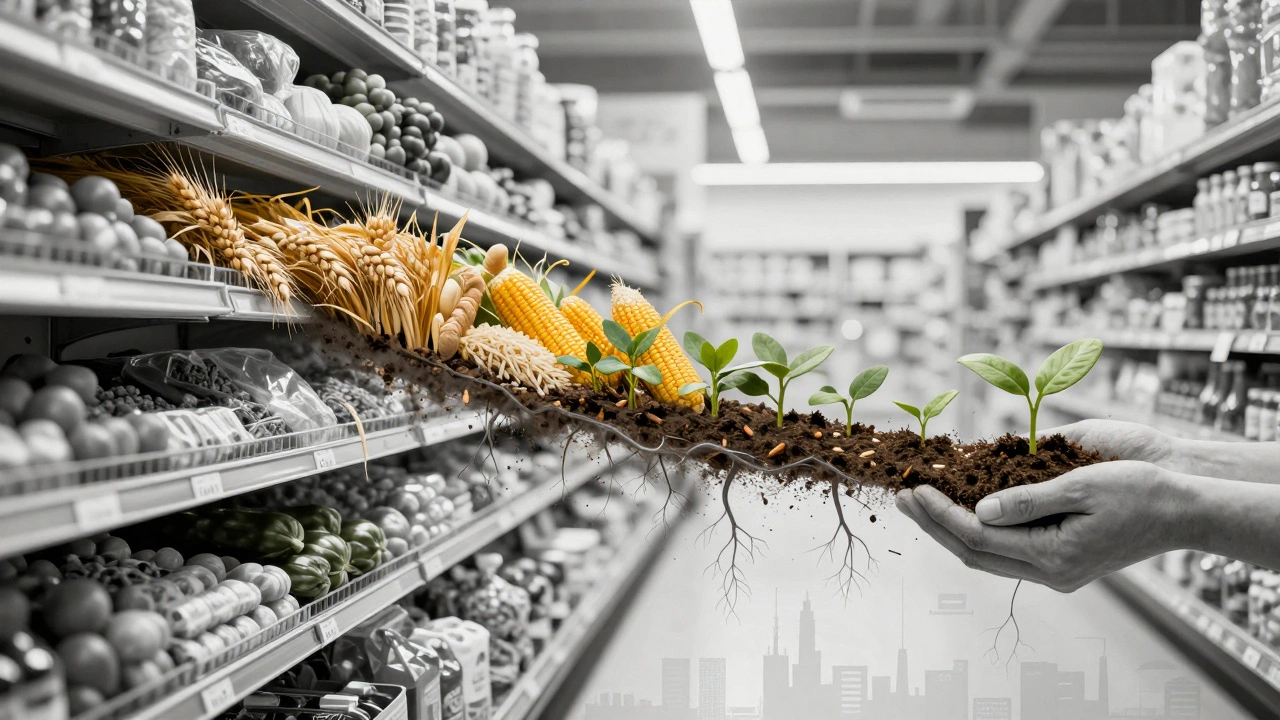
The Real World-Changer
There’s no single moment when the world changed. But if you had to pick one turning point - one event that made all others possible - it’s the moment humans stopped chasing food and started growing it. That decision didn’t just change how we ate. It changed how we lived, how we organized, how we thought. It gave us time to invent writing, to build temples, to write laws, to launch rockets. We think of progress as the next big invention. But the real breakthrough was the quiet, daily act of planting a seed and trusting it would grow. That’s what changed the world forever.Why This Matters Today
When we look at climate change, food shortages, or global inequality, we’re not seeing new problems. We’re seeing the long tail of the Agricultural Revolution. Our modern food system is fragile. It relies on a handful of crops, massive energy inputs, and global supply chains. One drought. One war. One pandemic - and the system stumbles. But we also have the tools to fix it. We know how to breed drought-resistant crops. We can restore soil. We can reduce waste. We can build local food networks. The Agricultural Revolution didn’t just create the world we live in. It gave us the ability to change it again. The question isn’t whether another event will change the world forever. It’s whether we’ll have the wisdom to use the tools we already have - tools built on 12,000 years of farming - to build something better.Was the Agricultural Revolution really the most important event in human history?
Yes, by most historical and anthropological measures. While events like the invention of writing or the atomic bomb had huge impacts, they all depended on agriculture. Without stable food supplies, there would be no cities, no governments, no scientists, and no technology. The Agricultural Revolution enabled population growth from 5 million to over 7 billion people, making every other major development possible. Historians like Chris Beck and Yuval Noah Harari have ranked it as the single most transformative event in human history.
Why didn’t humans farm earlier if it was so beneficial?
Farming wasn’t obviously better at first. Early farmers worked longer hours, ate worse diets, and got sick more often than hunter-gatherers. It took centuries for people to realize that planting seeds could feed more people over time. The shift happened gradually, likely due to climate changes after the last Ice Age and population pressures that made foraging less reliable. The 2024 discovery of 12,000-year-old domesticated figs in Jordan shows the process began earlier than we thought - but it was still slow, experimental, and local.
How did farming lead to inequality and social classes?
When people started storing surplus food, someone had to control it. That control became power. Those who owned land could demand labor, taxes, or tribute. Over time, this led to elites - priests, warriors, rulers - who didn’t farm but lived off the work of others. Archaeological evidence from ancient Mesopotamia and Egypt shows clear differences in burial goods, housing, and diet between classes. The more food you could produce, the more people you could control - and the more complex your society became.
Is the world still shaped by the Agricultural Revolution today?
Absolutely. 75% of global food comes from just 12 plant and 5 animal species - the same crops our ancestors first domesticated. Our cities, economies, and even our governments are built on the idea of surplus food. Modern problems like climate change, food insecurity, and soil depletion are all rooted in how we manage agriculture. Even the internet and digital economy rely on a world where most people don’t need to grow their own food. We’re still living inside the system it created.
What would the world look like if farming never happened?
If agriculture never took hold, human populations would likely remain under 100 million - similar to pre-farming levels. Society would stay small-scale, mobile, and decentralized. There would be no cities, no written languages, no empires, and no industrial technology. We might still have art, music, and tools - but complex systems like law, science, or global trade would be impossible. Humanity would still exist, but it would look nothing like today.


About Author
