What Was London Called Before It Was London?
London Name Timeline
London's Name Evolution
Trace the journey from ancient Londinium to modern London
Key Insight
London's name evolved from Londinium (Roman) through Lundenwic (Anglo-Saxon trading town) to Lundenburh (fortified town), eventually becoming modern "London." The city's layers show how it grew from Roman foundations through Anglo-Saxon traders to medieval fortifications.
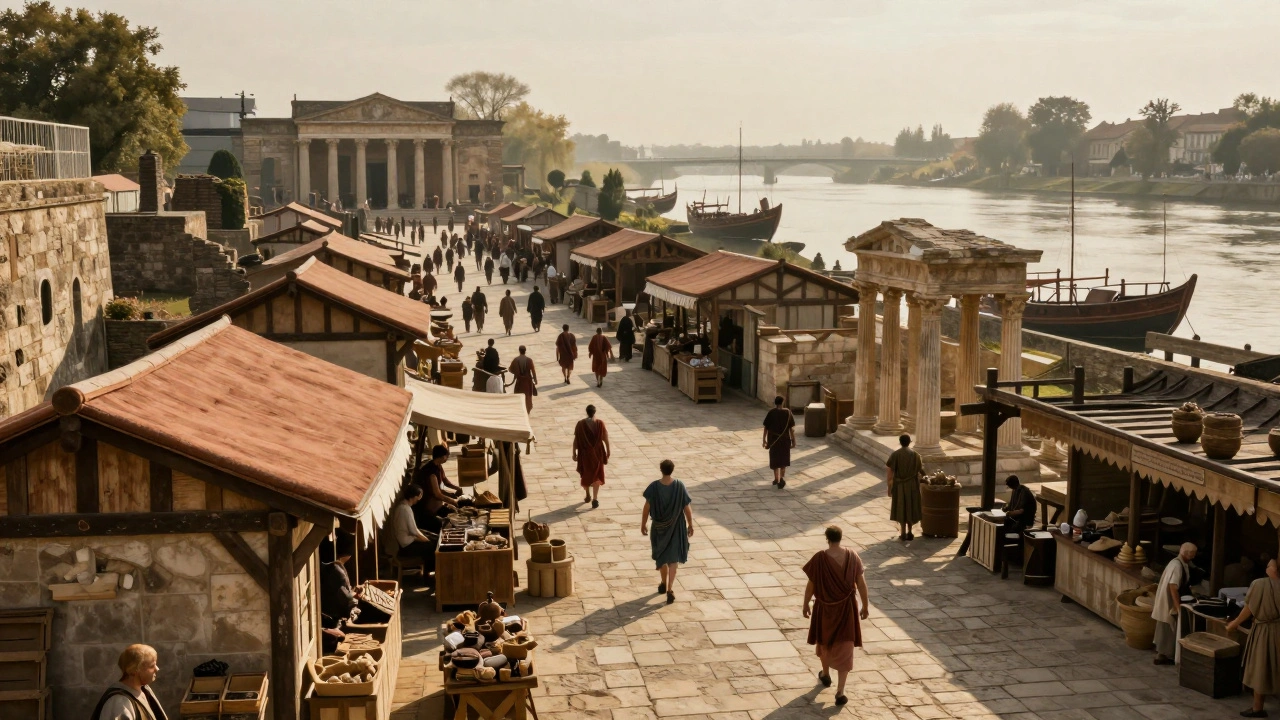
When you think of London, you picture big buses, the Tower Bridge, black cabs, and tea shops. But long before all that, before the skyscrapers and the Underground, there was a Roman trading post on the banks of the Thames. That place? It wasn’t called London. It was called Londinium.
The Roman Beginning: Londinium
Londinium wasn’t just some small village. It was a full-blown Roman city, founded around 43 AD after the invasion of Britain. Archaeologists have dug up streets, baths, a forum, and even a temple to the god Mithras-all pointing to a bustling urban center. By the year 100 AD, Londinium had tens of thousands of people living there. It was the capital of Roman Britain and the main port for goods coming in from the continent.
The earliest written record of the name? A letter found in 2016, written around 65-80 AD. It says: "Londinio Mogontio"-"In London, to Mogontius."
That’s the first time the name appears in writing. And it’s the root of everything that came after. The Romans didn’t invent the name out of thin air. They likely took it from the local Brittonic people who already lived there. But here’s the twist: there’s no solid proof of a major settlement before the Romans. Most experts now agree that Londinium was essentially the first real city on this spot. The idea that London existed as a big tribal center before 43 AD? That’s mostly myth.
After the Romans Left: Lundenwic and Lundenburh
The Romans pulled out of Britain in 410 AD. Londinium fell into ruin. Buildings crumbled. Streets became overgrown. For about 200 years, the area was mostly empty. But people didn’t disappear. They just moved.
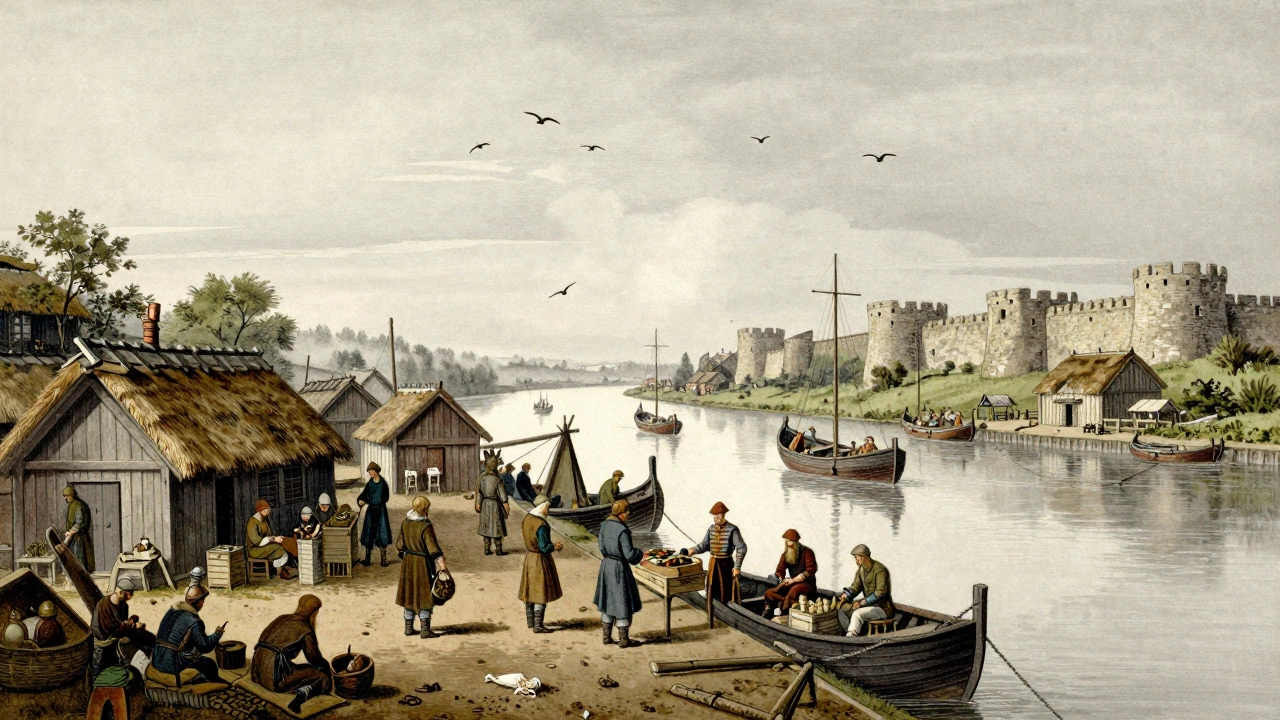
By the 600s, Anglo-Saxon traders set up a new settlement about a mile west of the old Roman walls, near what’s now Covent Garden. They called it Lundenwic-"London trading town." It became a busy port again, with ships coming from Scandinavia and the continent. But it was vulnerable. No walls. No defense.
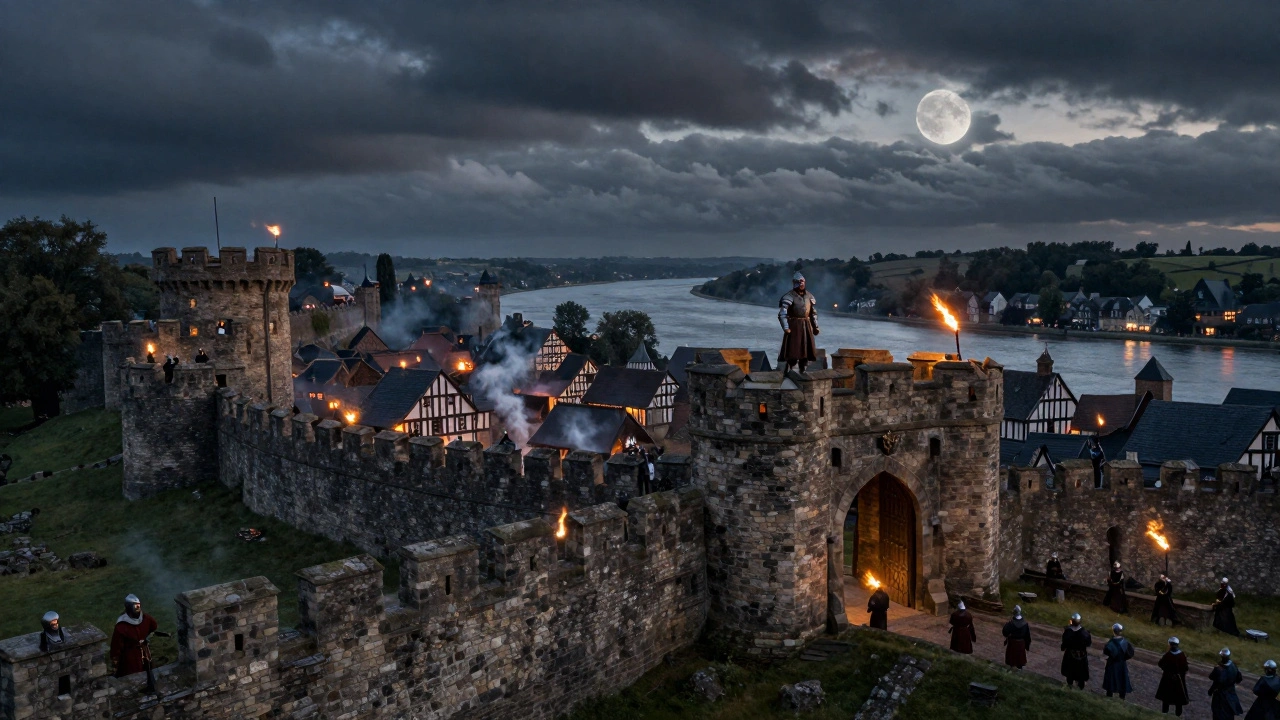
Then came Alfred the Great. In 886 AD, after pushing back Viking invaders, he decided to rebuild London-not where the traders had settled, but right inside the old Roman walls. He fortified it. He made it defensible. He called it Lundenburh-"fortified town of London."
The old trading area, Lundenwic, was abandoned. Over time, it became known as Ealdwic, meaning "old settlement." That’s where the modern neighborhood name Aldwych comes from. So when you walk down Aldwych today, you’re walking over the ruins of the Anglo-Saxon port that came after Londinium.
The Name Game: Why Londinium?
Here’s the big mystery: where did "Londinium" come from? No one knows for sure. Linguists have spent over a century trying to crack it.
One leading theory says it comes from a pre-Celtic river name. The Thames used to be wider and harder to cross near London. Some scholars think the original name might have been something like *Plowonida, meaning "river too wide to ford." Over time, it became *Londonjon in Brittonic, then Londinium in Latin. This theory is backed by Richard Coates, a top expert on ancient British names, and it’s the most accepted today.
Other ideas? Sure. Some say it comes from a Celtic word for "wild"-lond. Others think it was named after a local chieftain. Then there’s Geoffrey of Monmouth, a medieval writer who claimed London was founded by a king named Lud, who renamed it "Kaer-Lud." That’s the story behind "Ludgate." But modern scholars dismiss it. No evidence. Just good storytelling.
The truth? We probably won’t ever know for sure. No written records from before the Romans. No inscriptions. Just guesses based on sounds, patterns, and a little bit of luck.
From Lundenburh to London
After Alfred, the name shifted slowly. Norman scribes wrote it as Lundin, Londoun, Lunden. By the 1200s, it was "London." The spelling settled. The pronunciation shifted. But the core stayed.
And even though the city grew, the name kept its Roman roots. Londinium didn’t vanish-it evolved. Every time someone says "London," they’re saying a word that’s been spoken for nearly 2,000 years.
Other Names? Sure. But They’re Nicknames
People have given London many nicknames over the centuries. "The Big Smoke"? That’s from the coal fires and industrial smog that choked the city in the 1800s and 1900s. The Great Smog of 1952 killed thousands. That’s where the name stuck.
"The Square Mile"? That’s the City of London-the financial district, still surrounded by its original Roman walls. "The Met"? Short for metropolitan. "The Smoke"? Same as Big Smoke.
But none of these are old names for the city. They’re descriptions. The real old names? Londinium. Lundenwic. Lundenburh.
Why Does It Matter?
Knowing the old names isn’t just trivia. It’s about understanding how cities grow. Londinium was built by invaders. Lundenwic was built by traders. Lundenburh was built by warriors. Each layer added something new. The Romans gave it structure. The Anglo-Saxons gave it life. Alfred gave it survival.
Even today, you can see the layers. Walk down the Strand. You’re on a Roman road. Step into the Museum of London. You’re standing on the site of a Roman basilica. Look at Aldwych. It’s named after a forgotten town.
London didn’t start as one thing. It grew from many. And its name? It’s a fossil of that history-layered, uncertain, but still alive.


About Author
