What Are You If You're Not a Republican or Democrat? Understanding Non-Partisan Voters in America
Voter Registration & Voting Options Calculator
More than 43% of American voters say they don’t identify with either the Republican or Democratic party. But if you’re not a Republican or Democrat, what are you? The answer isn’t simple. It depends on where you live, how you register to vote, and whether you care more about ideology or access to the ballot.
You’re Not Alone - But You’re Not Officially Recognized Either
In 2025, Gallup found that nearly half of U.S. adults call themselves independent. Yet only about 22.7% of registered voters are officially listed as unaffiliated. Why the gap? Because most people who say they’re independent still register with a major party - not because they believe in it, but because they have to.
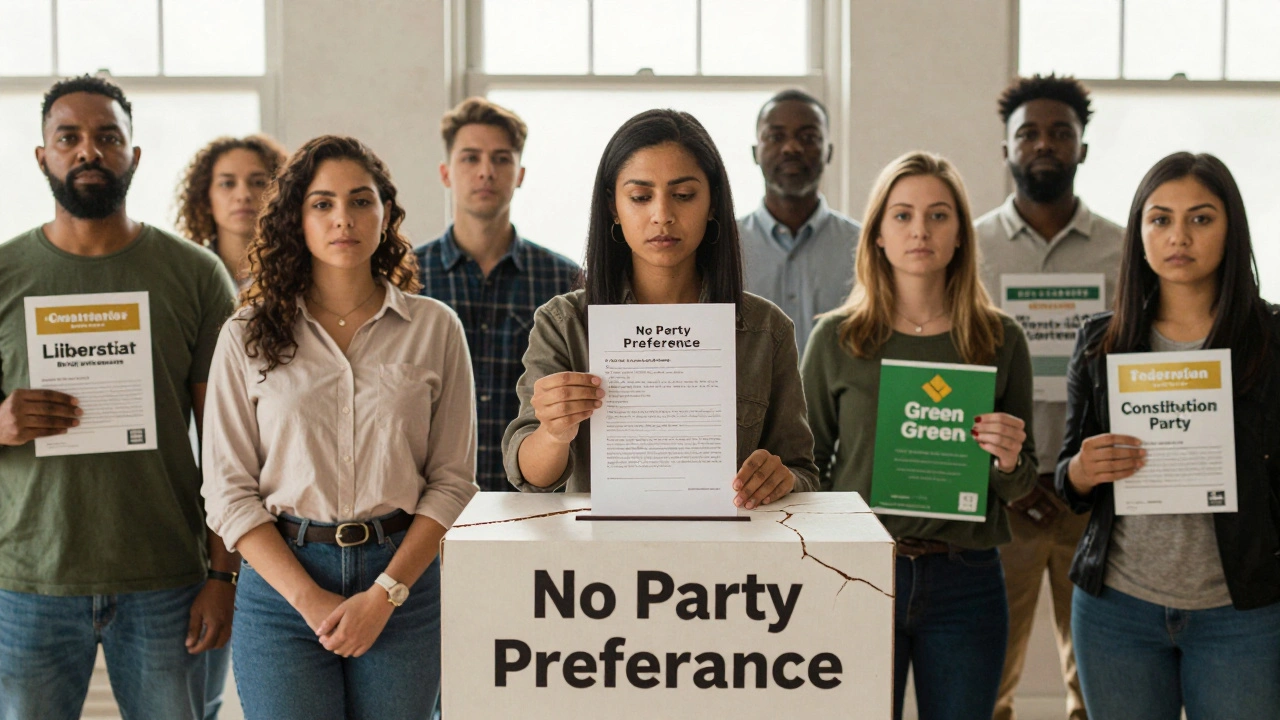
In 13 states, including New York and Pennsylvania, you can’t vote in a presidential primary unless you’re registered with that party. So if you want to pick your party’s nominee, you’re forced to pick one - even if you hate both. In California, you can register as “no party preference,” but you still can’t vote in Republican or Democratic primaries unless you request a crossover ballot. It’s a system built for two parties, not for people who don’t fit neatly into either.
What’s the Difference Between Independent, Unaffiliated, and Nonpartisan?
These terms sound interchangeable, but they’re not. “Unaffiliated” is the legal term used in 27 states to describe voters who don’t choose a party. “Independent” is what New York calls them. “No party preference” is California’s version. And “nonpartisan” usually means you don’t care about party labels at all - not even to register.
Then there are the third parties. People who actively join the Libertarian Party, Green Party, or Constitution Party aren’t just unaffiliated - they’re organized. The Libertarian Party had over 615,000 registered members in 2025. The Green Party had 215,000. The Constitution Party, though smaller, still ran candidates in every state in 2024. These aren’t fringe groups. They’re structured political organizations with platforms, fundraising, and ballot access.
Why Don’t Third Parties Win?
It’s not because people don’t like them. It’s because the system is designed to stop them.
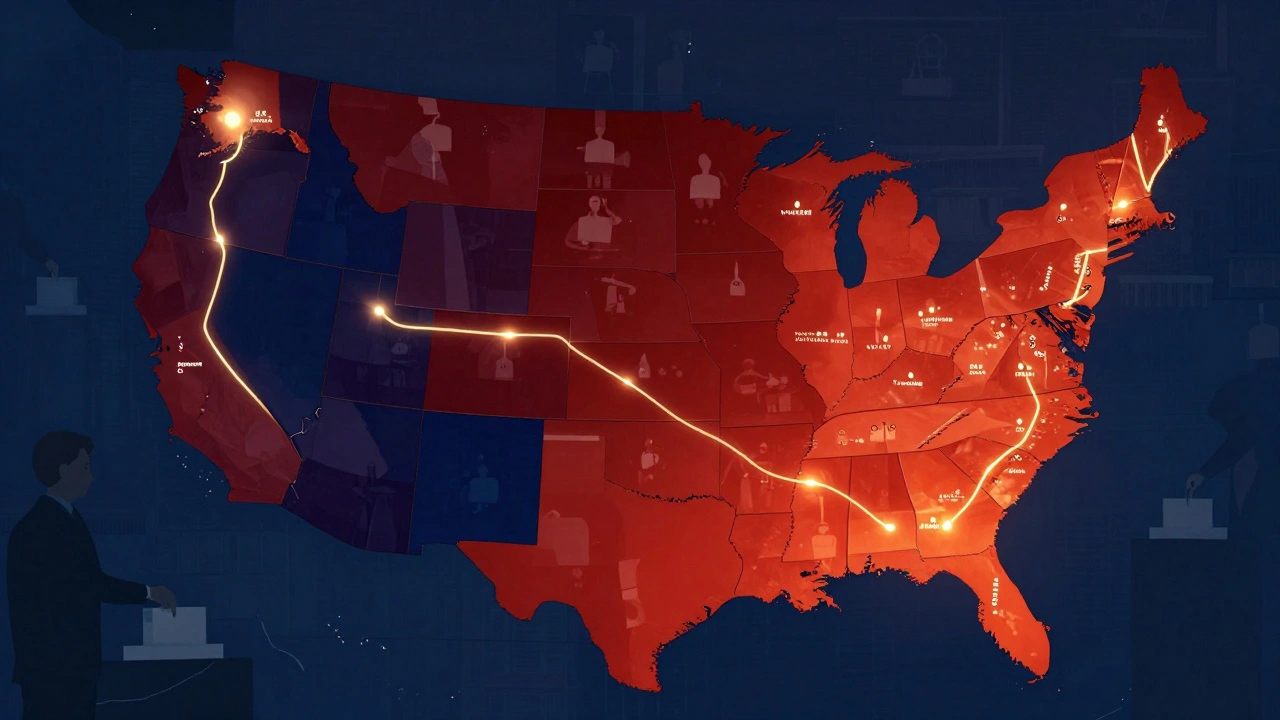
In 48 states, the winner takes all. That means if you vote for a third-party candidate, your vote doesn’t help elect anyone. It just counts as a protest. In 2020, the Libertarian candidate got 1.0% of the vote. The Green Party got 0.4%. Neither came close to winning a single electoral vote. But in states like Maine and Alaska, which use ranked-choice voting, third-party candidates have a real shot. In Maine’s 2022 governor’s race, a third-party candidate didn’t win - but their votes helped decide between the top two.
Ballot access is another wall. In Alabama, a third-party presidential candidate needs 35,000 verified signatures - spread across districts, not just total. In New Hampshire, it’s 3,000. That’s why the Libertarian Party is on the ballot in all 50 states, but the Green Party isn’t. One has the money and infrastructure. The other doesn’t.
Third Parties Have Shaped Major Party Politics - Even When They Lost
Here’s the twist: third parties don’t need to win to matter. They’ve changed American politics by forcing the two big parties to listen.
In 1892, the Populist Party pushed for income tax, direct election of senators, and railroad regulation. By 1912, both Democrats and Republicans had adopted those ideas. In 2000, Ralph Nader’s Green Party campaign took just 2.7% of the vote - but enough to tip Florida, and therefore the presidency, to George W. Bush. That made Democrats rethink their platform on corporate power and environmental policy.
Even when they lose, third parties expose what the major parties ignore. The Green Party pushed climate change to the front of the national conversation. The Libertarian Party made tax cuts and deregulation mainstream Republican talking points. The Constitution Party forced debates on religious influence in government. They’re not just candidates - they’re pressure valves.
Why Do So Many Independents Still Vote for the Two-Party Candidates?
Most people who say they’re independent still vote for Republicans or Democrats. Why? Because they’re not ideological purists - they’re practical.
A 2025 Cato Institute survey found that 41% of registered Libertarians in swing states voted for Trump or Biden in 2024, even though they preferred Chase Oliver. Why? Because they didn’t want the other side to win. It’s not loyalty. It’s fear.
And then there’s the primary problem. In states with closed primaries, independents can’t vote for their preferred nominee unless they switch parties. So they do. They become “Republicans” or “Democrats” for six months, just to have a voice. Then they go back to being unaffiliated. It’s a loophole, not a solution.
What’s Changing? And What Could Change It?
There are signs of movement. Ranked-choice voting is now used in Maine, Alaska, and Washington, D.C. It’s being tested in 47 cities, including Seattle and Salt Lake City. In St. Louis, approval voting - where you can pick more than one candidate - led to a 15% rise in voter satisfaction with third-party options.
But progress is slow. Seventeen states have banned ranked-choice voting outright. The Supreme Court just ruled in January 2026 that states can require third-party candidates to collect as many signatures as major parties - a rule that favors money and organization over ideas.
The Fair Representation Act, which would bring ranked-choice voting to all House elections, passed a committee in late 2025. It’s not law yet. But it’s the first serious national effort in decades to fix the system - not just tweak it.
What Should You Do If You’re Not a Republican or Democrat?
If you’re one of the 43% who don’t identify with either party, here’s what you can do:
- Check your state’s registration rules. Are you officially unaffiliated? Can you vote in primaries? Do you need to change your registration before October to vote in next year’s primaries?
- Look into third parties. The Libertarian, Green, and Constitution parties all have websites with state-specific info. You don’t have to vote for them - but you can join, donate, or volunteer.
- Support ranked-choice voting. If your city or state doesn’t have it, push for it. FairVote.org has free toolkits for organizing local campaigns.
- Vote strategically - but don’t pretend you’re happy with the choice. If you vote for a major party candidate because you fear the alternative, own it. Say it out loud. The system only changes when enough people say, “This isn’t good enough.”
Being nonpartisan isn’t a weakness. It’s a signal. It means you’re not buying what either side is selling. And that’s powerful - if you use it right.
What Happens If Nothing Changes?
If the system stays the same, third-party voters will keep being squeezed. The two parties will keep ignoring them - until they don’t have a choice.
MIT’s 2026 forecast says third-party vote share will drop to under 1% by 2032 if no reforms happen. But if ranked-choice voting spreads to 15 more states, it could jump to 3.2%. That’s not a majority. But it’s enough to make both parties nervous.
History shows that when voters feel unheard, they break the system. In 1992, Ross Perot got 19% of the vote. In 2024, 19% of voters switched from their party’s nominee - the highest defection rate since 1948. That’s not random. It’s a warning.
You don’t have to join a third party to be part of the change. You just have to stop pretending the two-party system works for you - and start demanding something better.
Can I vote for a third-party candidate without registering with them?
Yes. In most states, you can vote for any candidate on the ballot regardless of your party registration. You don’t need to be a member of the Libertarian, Green, or Constitution Party to vote for their candidate. Your registration only affects which primaries you can vote in - not who you can choose in the general election.
Why don’t more people join third parties if they’re unhappy with Republicans and Democrats?
Because joining a third party doesn’t always help. In closed-primary states, registering as a third-party voter locks you out of choosing the major party nominee. Many people avoid it because they still want to influence the primary. Others don’t join because third parties lack resources - no TV ads, no staff, no name recognition. It’s easier to stay unaffiliated than to fight an uphill battle with no infrastructure.
Is ranked-choice voting the solution to the two-party problem?
It’s the best tool we have right now. Ranked-choice voting lets voters pick their favorite candidate without fear of “wasting” their vote. If their top choice loses, their vote transfers to their second choice. This makes third-party candidates more viable. Maine and Alaska have seen more diverse candidates win under RCV. But it’s not magic - it requires public support, legal changes, and education. It won’t fix everything, but it removes the biggest barrier: the fear of splitting the vote.
Do third-party candidates ever win elections?
Rarely at the federal level - but yes, at the local level. In 2024, a Green Party candidate won a city council seat in Minneapolis. A Libertarian won a school board race in Colorado. In New York, fusion voting lets candidates run on multiple party lines, so a Democrat can also appear on the Working Families Party ballot. These wins are small, but they prove third parties can win when the rules allow it.
What’s the difference between being independent and being a third-party member?
Independent (or unaffiliated) means you don’t belong to any party. You’re not registered with anyone. A third-party member is someone who has officially joined a party like the Libertarian or Green Party. That means you get their newsletters, can vote in their primaries (if allowed), and sometimes even run for office under their banner. One is a label. The other is membership.


About Author
