What City Is Called the Big Smoke? The Real Story Behind the Nickname
Air Pollution Impact Calculator
Understanding the Great Smog of London
The 1952 Great Smog in London had PM10 levels reaching 345 μg/m³—a deadly pollution event that killed 4,000 people and sickened 100,000. Modern London averages 18 μg/m³. Adjust the slider below to see how pollution levels translate to health impacts.
Note: Current safe air quality standards by WHO recommend 10 μg/m³ for PM10 pollution.
Current London average: 18 μg/m³ (2022)
Health Impact Analysis
Adjust the slider to see how pollution levels translate to health impacts.
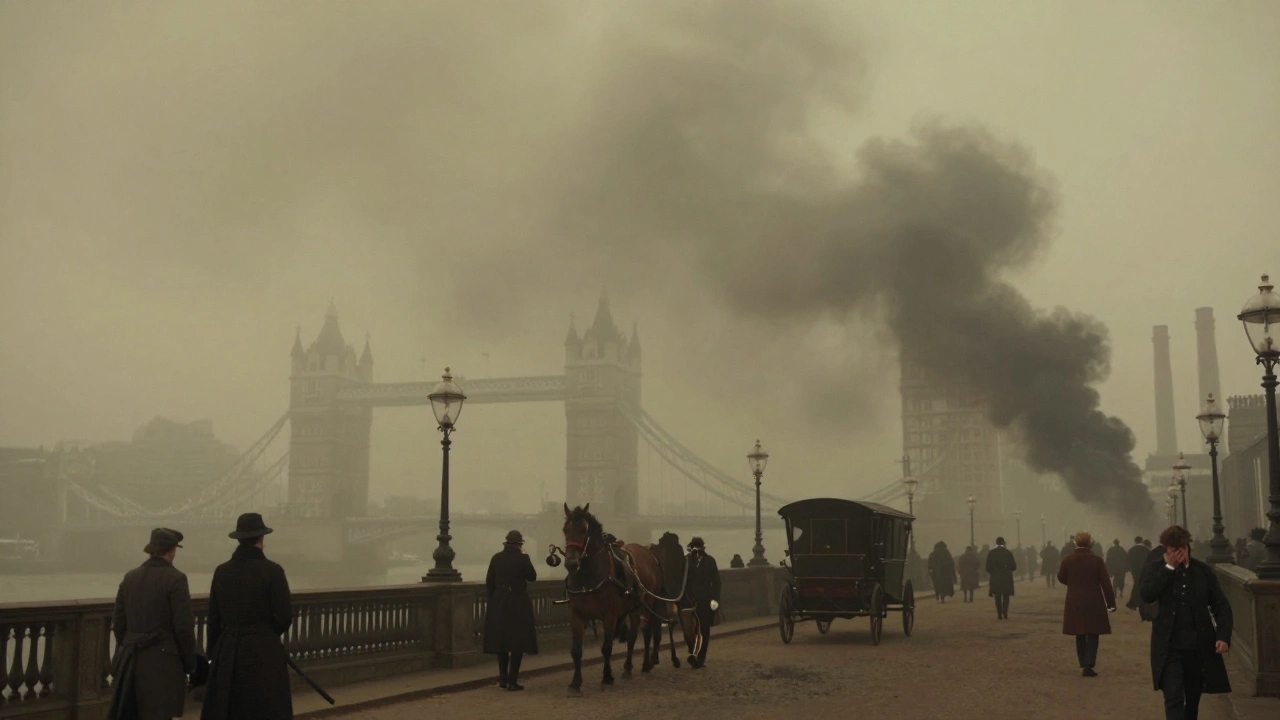
When someone says "the Big Smoke," most people think of London. But the truth is more complicated. The nickname didn’t start as a romantic label for a bustling metropolis-it was a grim, literal description of a city choking on its own smoke. For over 300 years, London was buried under thick, yellow-green fogs so bad you couldn’t see your hand in front of your face. That’s where "the Big Smoke" came from: coal fires, factory chimneys, and home hearths pumping out so much pollution that the air turned into soup.
How London Earned the Name
The term "the Big Smoke" wasn’t invented by poets or marketers. It was coined by people who lived outside the city and came to visit. Rural folks arriving by train or carriage in the 1800s would look up and see a dark, swirling cloud hanging over London. They called it "the smoke." By the mid-1800s, it was common enough to show up in newspapers and slang dictionaries. In 1862, a newspaper in County Kildare, Ireland, mentioned visitors coming "from the 'big smoke'"-meaning Dublin or London, depending on context. But London was the epicenter.
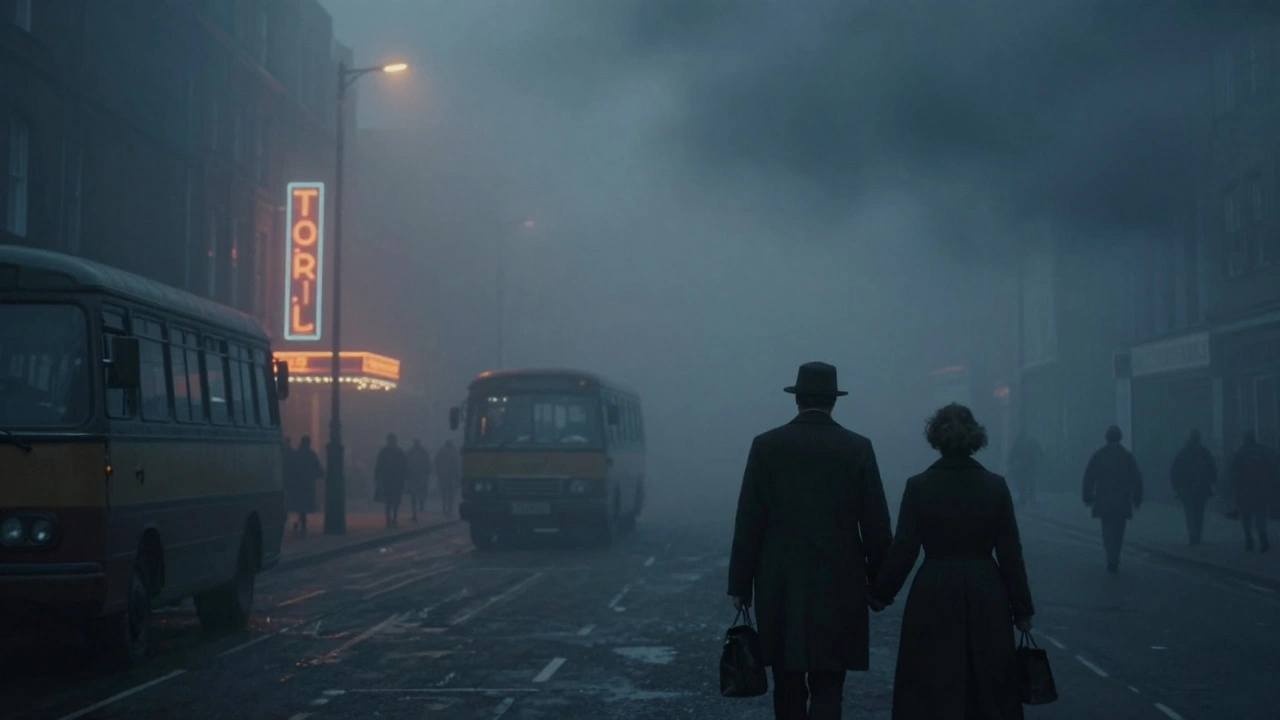
Coal was the lifeblood of the Industrial Revolution. Every home, factory, and train used it. By 1900, London burned over 10 million tons of coal a year. That’s like stacking 1,000 Eiffel Towers of coal every 12 months. The smoke didn’t just hang around-it clung. Cold, still weather trapped it. In December 1952, a perfect storm hit: a high-pressure system sat over the city, no wind blew, and temperatures dropped. The result? The Great Smog of London. Four days of thick, toxic air. People couldn’t see across the street. Buses stopped. Theatres canceled shows. Hospitals overflowed. Over 4,000 people died in those four days. Another 100,000 got sick. Blind people helped others navigate because they could feel their way home better than sighted people could see it.
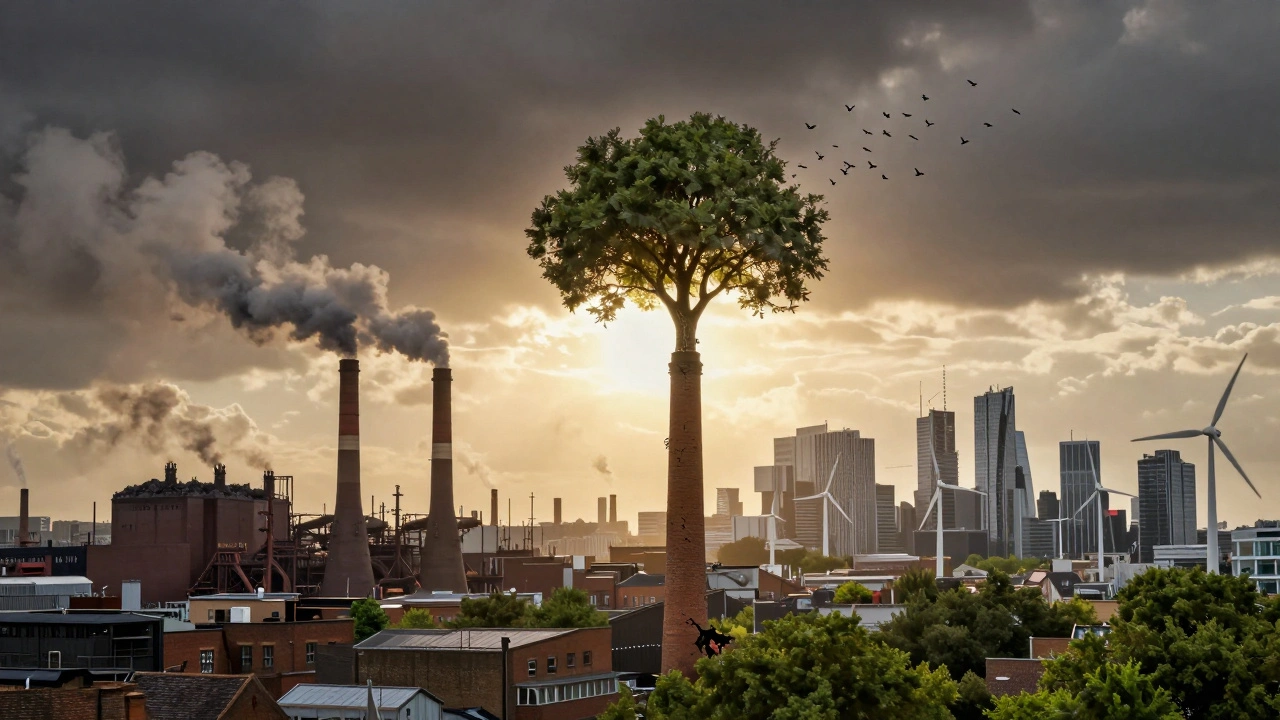
That event didn’t just kill people-it changed laws. The Clean Air Act of 1956 banned coal burning in cities. Smokeless fuels became mandatory. Chimneys had to be taller. Factories had to clean their emissions. Within a decade, London’s air cleared. The "pea-souper" fogs vanished. The nickname "the Big Smoke" started to feel like a relic.
Other Cities Called the Big Smoke
London wasn’t alone. Toronto, Canada, also got the nickname-but for very different reasons. In the early 1900s, Toronto had smog from coal and industry, sure. But the term didn’t stick because of pollution. It stuck because of attitude.
In the 1970s, Canadian journalist Alan Fotheringham used "the Big Smoke" sarcastically. He was poking fun at Toronto’s self-importance. "It’s a big city," he wrote, "but what’s it got to show for it?" The name caught on in media circles, but not among locals. Most Torontonians never called their city that. Today, you’ll hear "the 6" or "T-dot" more often-thanks to Drake and hip-hop culture.
Dublin, Ireland, also got called "the Smoke" by people from the countryside. In a 2019 survey, 41% of Irish respondents still recognized the term for Dublin. Brisbane, Australia, was called "Toom-virran"-"Big Smoke" in the local Gamilaraay language-as early as 1857. In Australia, "the Big Smoke" became slang for any big city, whether it was Melbourne, Sydney, or Perth. It wasn’t about pollution. It was about contrast: the quiet bush versus the noisy city.
Why the Name Faded
Today, London’s air quality is better than it’s been since the 1600s. In 1952, PM10 pollution levels hit 345 micrograms per cubic meter. In 2022, they were down to 18. That’s an 89% drop. Toronto’s air quality index averages "good" now. The coal is gone. The smoke is gone. The nickname doesn’t fit anymore.
Still, people use it. Tourists. Writers. Historians. In 2023, London’s mayor Sadiq Khan referenced "the Big Smoke" in a speech about modern air pollution-not coal smoke, but car exhaust and nitrogen dioxide. He wasn’t romanticizing the past. He was reminding people that clean air is still a fight.
But for most Londoners, the term feels like a museum piece. You’ll find it in old novels, in museum exhibits, in documentaries about the Industrial Revolution. You won’t hear it on the Tube. You won’t see it on a pub sign. The city moved on.
What the Name Means Today
"The Big Smoke" isn’t a nickname anymore. It’s a historical marker. It’s a warning. It’s a reminder of what happens when we ignore pollution until it kills people. It’s also a symbol of how cities can change-if they’re willing to act.
In Australia, "the Big Smoke" still gets tossed around casually. In Ireland, older folks might still say it. In Toronto, it’s mostly used by journalists writing about the city’s past. But when it comes to the origin, the scale, and the lasting impact-London is the only city that truly earned it.
So if you hear someone say "the Big Smoke," ask: Do they mean the city that once choked on coal? Or the one that cleaned itself up and became a model for the world?
Is the Nickname Still Used Today?
Not really-not as a daily term. In London, it’s mostly in books, films, or when someone wants to sound dramatic. A 2022 Reddit poll showed 78% of UK respondents linked "the Big Smoke" only to London. In Toronto, only 34% even recognized the term. The Australian National Dictionary Centre found over 20 cities across Australia were called "the Big Smoke" in the 1800s and 1900s, but today, it’s rarely used outside of nostalgic writing.
Even in media, the term is fading. Between 2010 and 2020, The Guardian used "Big Smoke" in 89 headlines about London. The Toronto Star used it 17 times. But by 2022, Visit London stopped using it in all marketing materials. Destination Toronto only used it in 3 out of 47 publications. The term is losing its grip.
Academic studies now call it a "historical lexical artifact." That’s a fancy way of saying: it’s a phrase that belonged to a different time. And like other relics-horse-drawn carriages, gas lamps, typewriters-it’s being preserved, not used.
Why This Matters Now
It’s easy to think of "the Big Smoke" as just an old joke. But it’s not. It’s a lesson. London didn’t fix its air because it was trendy. It fixed it because people died. And when they did, the government acted. That’s rare. Most cities wait until it’s too late.
Today, cities like Delhi, Beijing, and Lagos face pollution levels that would’ve killed Londoners in 1952. The science is clear. The solutions exist. What’s missing is the same urgency that followed the Great Smog.
So when someone asks, "What city is called the Big Smoke?"-the answer isn’t just about history. It’s about what we’re willing to do next.

About Author
