What Single Event Changed the World the Most? The Agricultural Revolution
Agricultural Revolution Impact Calculator
Simulate Civilization Growth
Compare ancient and modern farming efficiency to see how food production enabled population growth
Civilization Potential
This progress bar shows how much more efficiently modern farming supports civilization compared to ancient methods
How it works: Your calculations show how agricultural productivity enabled the development of cities, writing, government, and all modern civilization. The higher the multiplier, the more people could be supported without farmers having to produce all food themselves.
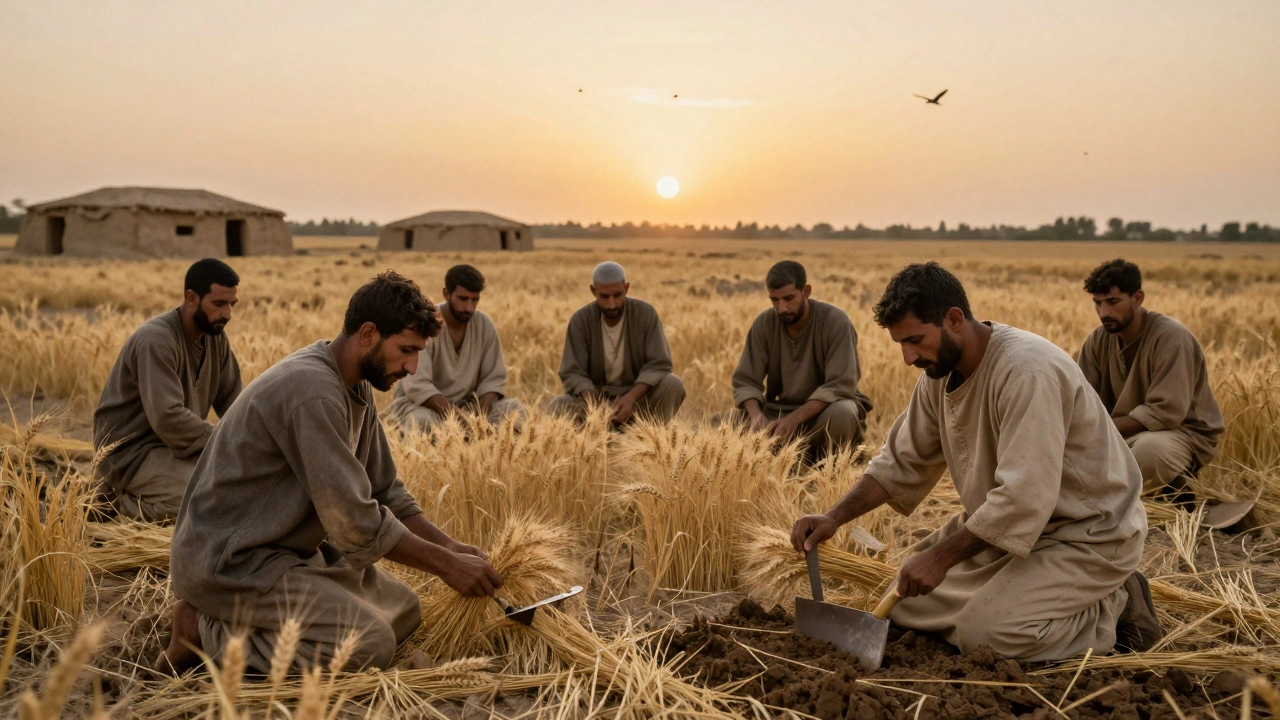
The world didn’t change because of a war, a discovery, or a revolution in politics. It changed because people stopped chasing animals and started planting seeds. Around 10,000 BCE, in the fertile lands between the Tigris and Euphrates rivers, humans began to grow wheat and barley. That quiet, slow shift - from moving with the seasons to staying in one place - was the moment everything changed. Not because it was loud or dramatic, but because it made every other thing possible.
The Before and After
Before agriculture, humans lived in small bands of 20 to 50 people. They moved constantly, carrying everything they owned. Their diet was diverse - wild berries, nuts, fish, deer - but unpredictable. Life was hard, but not always short. Skeletons from that time show fewer signs of malnutrition and disease than later farmers. They had more time for art, storytelling, and rituals. But they couldn’t support large groups.
Then came the shift. People started selecting the best seeds - the ones that didn’t scatter, the ones that grew faster, the ones that tasted better. They kept animals that were less aggressive, easier to feed. Over generations, wild grasses became wheat. Wild wolves became dogs. Wild boars became pigs. This wasn’t a single invention. It was a thousand tiny experiments, repeated across continents - in China with rice, in Mesoamerica with maize, in the Andes with potatoes.
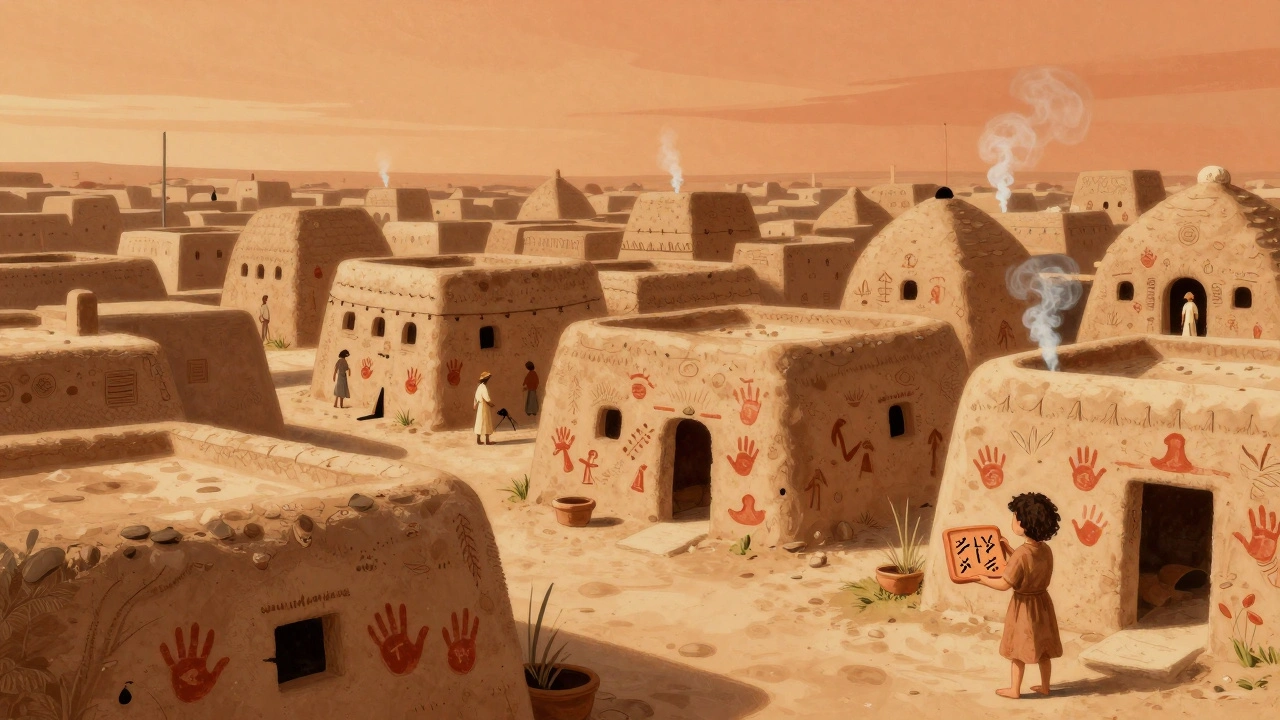
By 7500 BCE, Çatalhöyük, a settlement in modern-day Turkey, housed up to 10,000 people. That’s more than most cities in Europe would reach again for another 5,000 years. People lived in mud-brick houses, stacked like beehives. They buried their dead under their floors. They painted walls with scenes of hunting and ritual. None of this would’ve been possible if they’d had to pack up and move every few weeks.
Why This Was the Turning Point
Food surplus changed everything. When you grow more than you need to eat, you free up people to do other things. One person doesn’t have to spend all day foraging. They can make tools. They can weave cloth. They can keep records. They can lead. They can fight. They can pray.
Writing was invented to track grain stores. The first known tablets, from ancient Sumer, weren’t poems or laws - they were lists of barley, sheep, and laborers. Governments formed to manage land and water. Armies emerged to protect fields. Temples rose because people had the time and food to build them. Cities grew. Trade networks spread. Languages became more complex. Art, science, religion - all of it depended on the fact that someone, somewhere, had figured out how to make plants grow on command.
Compare this to other big events. The Industrial Revolution? It needed surplus food to feed factory workers. The Scientific Revolution? It needed literate societies with time to think - made possible by farmers feeding non-farmers. The printing press? It needed cities with enough people to buy books. The internet? It runs on power grids built on economies rooted in agriculture.
Even the American Revolution, with its ideals of liberty and democracy, happened because people had been living in settled, food-surplus societies for millennia. Without agriculture, there would be no states, no armies, no universities, no stock markets. Just scattered groups of people, living off what they could carry.
The Hidden Costs
It wasn’t all progress. Early farmers worked longer hours than hunter-gatherers. Their diets got worse - reliant on a few starchy crops, lacking variety. Skeletons from early farming sites show shorter stature, more tooth decay, and signs of chronic stress. Famine became a real threat when crops failed. Disease spread faster in crowded villages. Parasites thrived near human waste and domesticated animals.
Anthropologist James C. Scott called early agriculture a “trap.” Once you depended on a few crops, you couldn’t easily go back. If the wheat didn’t grow, you starved. Hunter-gatherers could move. Farmers couldn’t.
But here’s the thing: even if it was a trap, no one escaped it. Once a village had 500 people, you couldn’t just dissolve it and go back to the forest. Too many mouths to feed. Too many tools to maintain. Too many relationships built around land and harvests. The system had become too big to undo.
The Numbers Don’t Lie
Today, agriculture employs 1.07 billion people - 26% of the global workforce. That’s more than the entire population of the United States. Yet it contributes just 3.6% of global GDP. Why? Because modern farming is so efficient. One farmer in the U.S. can feed over 160 people. In 10,000 BCE, one person could barely feed themselves and maybe one other.
Modern wheat yields 10,000 kernels per plant. Wild wheat? About 50. That’s a 200-fold increase in productivity - all from selective breeding over thousands of years. The global agricultural market is worth $13.34 trillion. The tech industry? $5.3 trillion. Agriculture still underpins everything.
Eighty-three percent of the world’s food comes from just 12 plant and 5 animal species - all domesticated during that ancient revolution. We still eat the same crops our ancestors did. We just grow them better.
What It Means Today
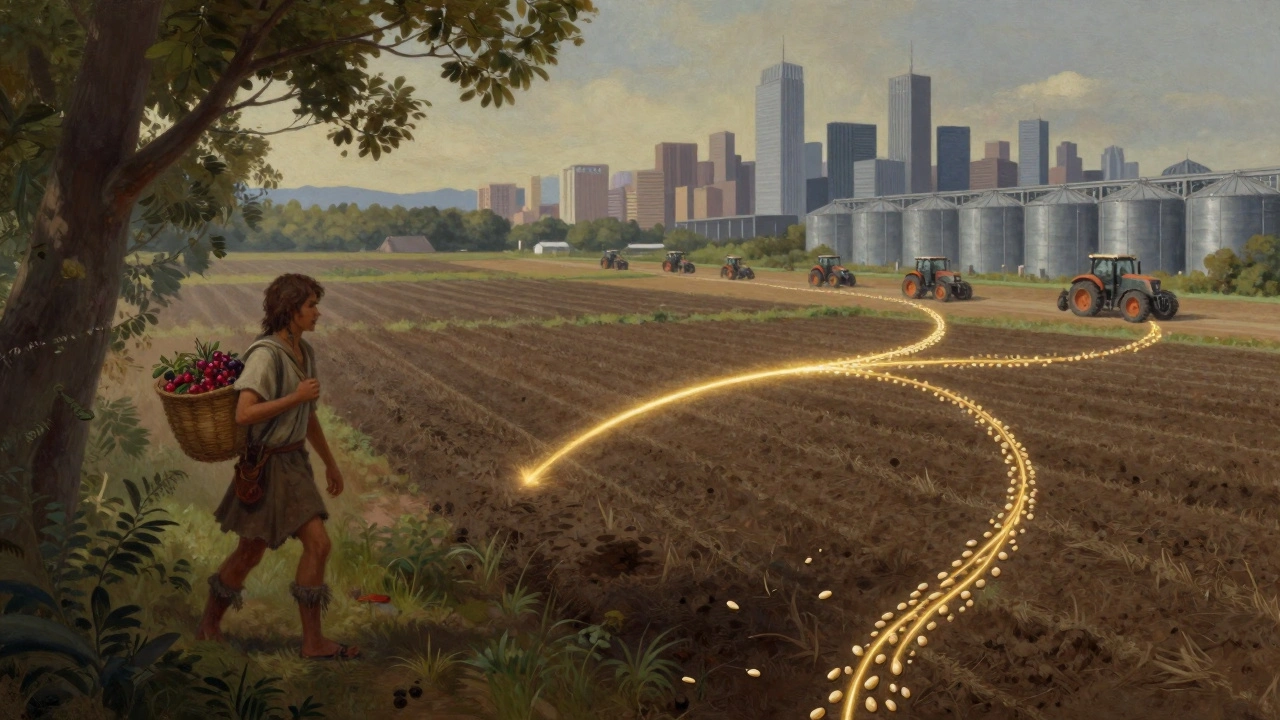
We talk about AI, quantum computing, space travel. But the foundation of all of it? Soil, seeds, and sweat. Every app you use, every hospital you visit, every car you drive - they exist because someone, 12,000 years ago, decided to save a seed instead of eating it.
Now we’re at another crossroads. Climate change threatens harvests. Water is running out. Soil is eroding. Scientists are editing genes with CRISPR to make crops resistant to drought. Lab-grown meat is rising. Vertical farms are sprouting in cities. But even these innovations are just the latest chapter in the same story: humans learning how to control nature to feed themselves.
There’s no going back. We can’t un-farm the world. We can’t return to the old ways. But we can learn from them. The people who first planted seeds didn’t know they were changing history. They just wanted to eat tomorrow. And in doing so, they built the world we live in.
Why This Matters Now
When we look at headlines - wars, elections, tech breakthroughs - we forget that none of it would exist without the quiet, ancient act of putting a seed in the ground. The Agricultural Revolution didn’t happen in a day. It didn’t have a single inventor. It wasn’t celebrated with fireworks. But it was the only event that made civilization possible.
Ask yourself: what would your life look like without bread? Without rice? Without milk or eggs? Without cities? Without schools? Without doctors? Without the ability to sit inside, reading this, while food is delivered from farms thousands of miles away?
That’s the power of a single, quiet shift. Not a bang. Not a battle. Just a handful of seeds, planted in the right soil, at the right time.
Was the Agricultural Revolution really more important than the Industrial Revolution?
Yes. The Industrial Revolution made production faster and machines more powerful, but it depended entirely on the surplus food created by agriculture. Without farmers feeding non-farmers, there would be no factory workers, no engineers, no scientists. The Industrial Revolution was an acceleration. The Agricultural Revolution was the starting line.
Did all human societies develop agriculture at the same time?
No. Agriculture emerged independently in at least seven places: the Fertile Crescent, China, Mesoamerica, the Andes, the Amazon, New Guinea, and the Sahel region of Africa. Each region domesticated different plants and animals. But once it started in one place, the idea spread - either through migration or imitation - and soon almost every human group adopted some form of farming.
Why didn’t hunter-gatherers just keep living that way if it was healthier?
Because population growth made it impossible. Once people started having more children - thanks to more reliable food - they needed more land. Hunter-gatherer groups couldn’t sustain large families without moving constantly. Farming allowed more kids to survive in one place. Over time, farming communities outgrew and replaced foraging ones. It wasn’t a choice between good and bad - it was a choice between growing and shrinking.
Could we go back to a hunter-gatherer lifestyle today?
No. The Earth can’t support 8 billion people as hunter-gatherers. Even if we wanted to, there’s not enough wild food left. Forests are gone. Animals are endangered. Land is owned, built on, or polluted. The world we live in was built on agriculture - and there’s no undo button.
What’s the biggest myth about the Agricultural Revolution?
That it was an obvious improvement. Many early farmers were worse off than their hunter-gatherer ancestors - shorter, sicker, working harder. But they had more children. And over generations, those children inherited the system. Progress isn’t always about comfort. Sometimes it’s about survival - and having more of your kind around to carry it forward.
What Comes Next
The same force that turned wild wheat into modern crops is now shaping food through gene editing, AI-driven farming, and lab-grown meat. But the core idea hasn’t changed: we still need to feed people. The tools are different. The stakes are higher. But the question remains the same - how do we grow enough, without destroying the land that grows it?
The answer won’t come from a new invention. It’ll come from remembering where we started - with a handful of seeds, and the quiet decision to plant them.

About Author
