Who Was the First Journalist in the World? The Real Story Behind the Title
Who Was the First Journalist? Explorer
Explore the Definition of Journalism
Different historical figures and systems claimed the title of "first journalist" based on varying criteria. Select which aspects of journalism matter most to you to see who best fits your definition.
Choose Your Criteria
Select one or more criteria that define journalism for you. The tool will show which historical figure or system best matches your selections.
There’s no simple answer to who was the first journalist in the world. It’s not like someone showed up one day with a notebook, asked a few questions, and suddenly journalism was born. Instead, the roots of journalism stretch back over two thousand years, across continents, and through different forms of communication - from official bulletins to eyewitness reports. The truth? There were many firsts.
Thucydides: The First Journalist by Modern Standards
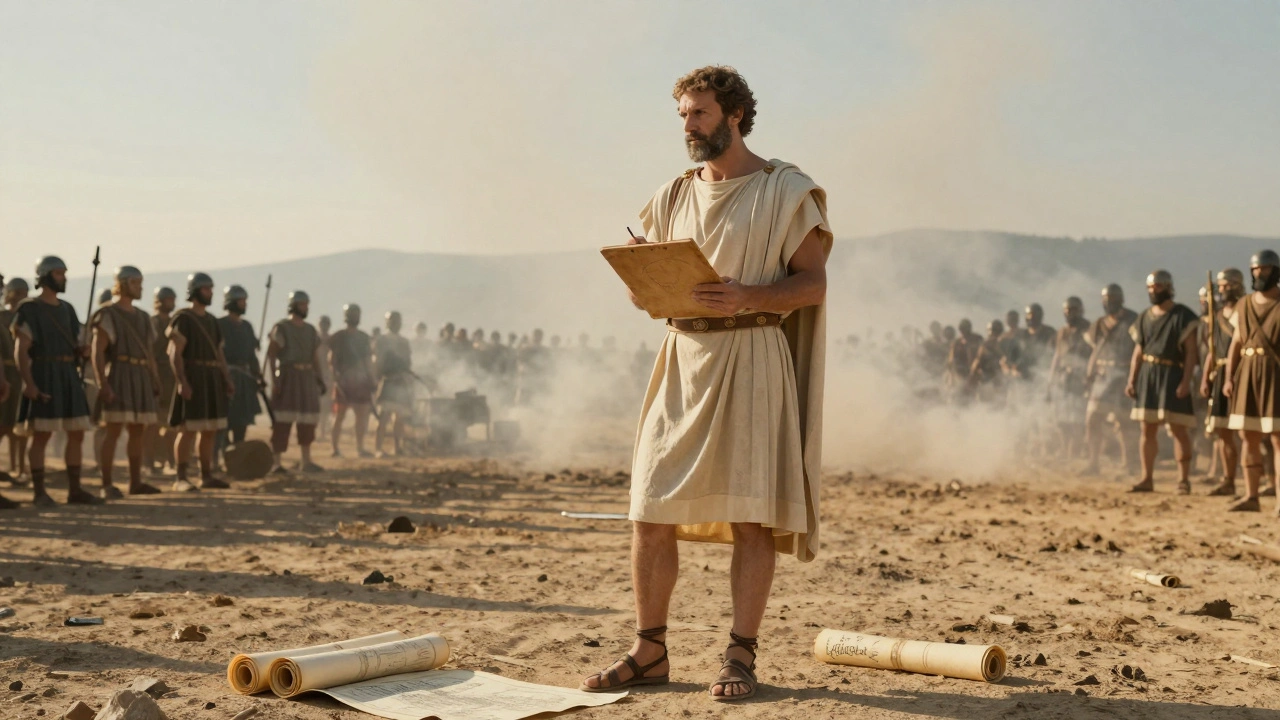
If you define journalism as gathering facts through direct observation, verifying them, and writing them down for public understanding, then the strongest case goes to Thucydides. He was an Athenian historian and general who lived around 460-400 BCE. When the Peloponnesian War broke out between Athens and Sparta, he didn’t just rely on rumors or court records. He traveled to battlefields, interviewed soldiers, cross-checked stories, and wrote what he saw - even when it contradicted popular beliefs.
His book, The History of the Peloponnesian War, doesn’t read like a myth or a moral tale. It reads like a news report. He wrote: “I have made it my purpose not to write down the first story that came to me, nor even what I myself thought was probable.” That’s not history writing - that’s journalism. He didn’t make things up to fit a narrative. He dug for truth. Modern scholars at Oxford University Press argue this makes him the first journalist, not just the first historian. And they’re right - if you care about accuracy over legend.
The Acta Diurna: The First News Bulletin
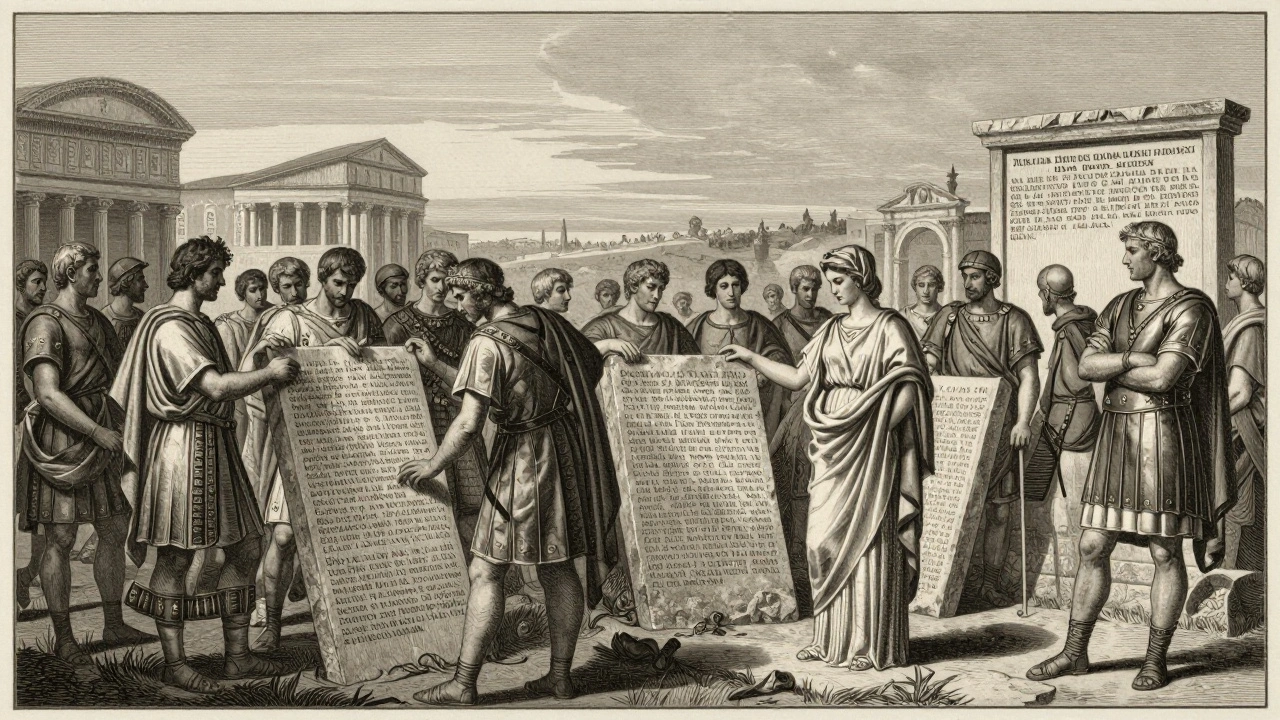
While Thucydides was writing in Greece, something similar was happening in Rome. Around 59 BCE, the Roman government started posting daily updates called the Acta Diurna - Latin for “Daily Acts.” These were carved into stone or written on whitened boards and nailed to public walls in the Forum. They included Senate decisions, military victories, births, deaths, and even court rulings. No byline. No interviews. Just facts, delivered by the state.
Was this journalism? It depended on your definition. If journalism means an independent person reporting the news, then no - this was propaganda. But if journalism means the organized, regular distribution of factual information to the public, then yes. The Acta Diurna was the world’s first news medium. It reached ordinary citizens, not just officials. And it set a precedent: people wanted to know what was happening.
China’s Bao: The World’s First Newspaper-Like Publication
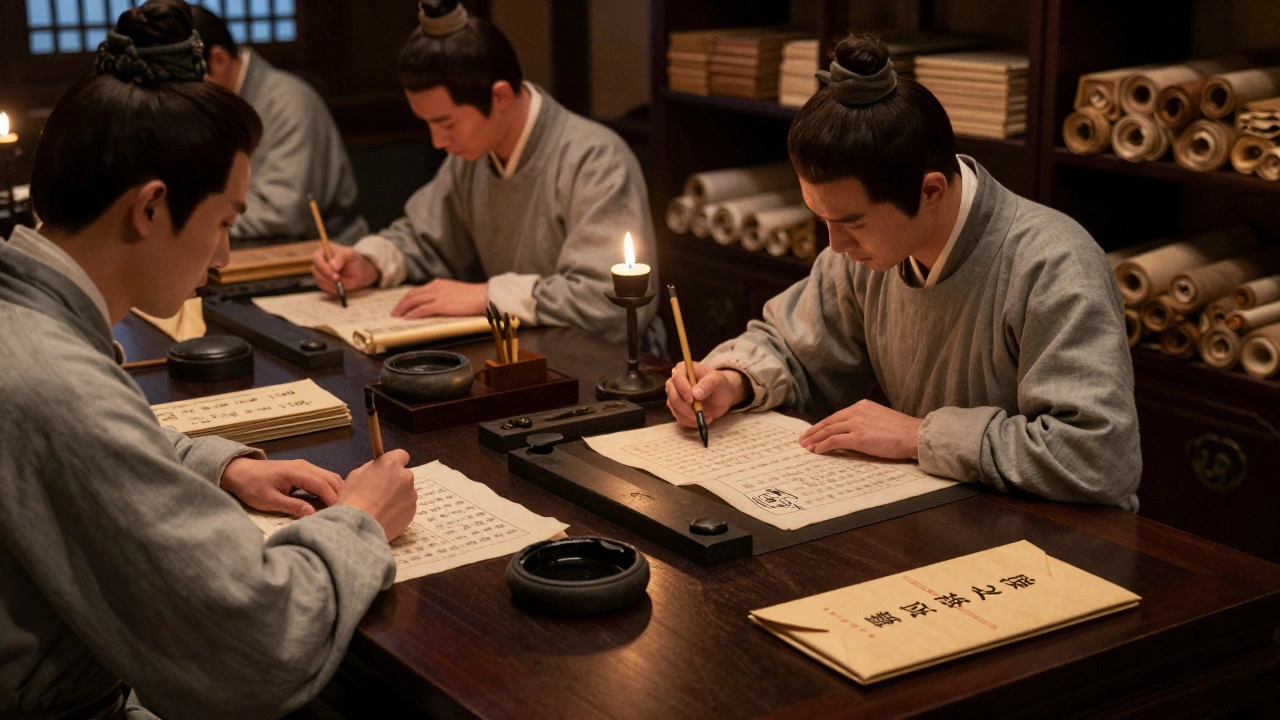
Meanwhile, halfway across the world in China, during the Tang Dynasty (618-907 CE), officials circulated handwritten reports called bao - meaning “report” or “bulletin.” These weren’t meant for the public. They were internal government memos, passed between ministers and regional governors. They included imperial decrees, tax records, rebellion reports, and foreign diplomacy updates.
Some sources call the bao the first newspaper. But that’s misleading. Newspapers are for the public. The bao was for the bureaucracy. Still, it’s important. It shows that the idea of systematically collecting and distributing news wasn’t unique to Europe. China had its own version - one that lasted over 1,300 years, until the fall of the Qing Dynasty in 1911. The bao didn’t have reporters. But it had editors, copyists, and a chain of command. It was journalism without the journalists - a system, not a person.
Johann Carolus and the First True Newspaper
Fast forward to 1605. Johannes Gutenberg’s printing press had been around for over 150 years. Books were cheaper. Information spread faster. In Strasbourg, a German printer named Johann Carolus started publishing a weekly sheet called Relation aller Fuernemmen und gedenckwürdigen Historien - “Account of All Distinguished and Memorable News.”
This wasn’t a government bulletin. It wasn’t a court memo. It was sold to the public. Carolus collected news from letters, official announcements, and travelers. He compiled it. He printed it. He sold it for a small fee. People paid for it. That’s the key difference. For the first time, journalism became a business. And Carolus became the first known person to operate a news publication as a commercial enterprise.
Historians from the World Association of Newspapers credit Carolus with publishing the first true newspaper. Not because he invented news. But because he turned news into something people could buy, read, and trust - regularly. He didn’t just report events. He built a habit.
Why the Debate Still Matters
Why do we care who was first? Because it changes how we see journalism today. If you believe Thucydides was the first journalist, then journalism is about truth-seeking, skepticism, and personal responsibility. If you believe Carolus was first, then journalism is about access, economics, and public demand. If you point to the Acta Diurna, then journalism is about power - who gets to control the flow of information.
Modern journalism doesn’t come from one person. It comes from layers. Thucydides gave us the ethics. The Acta Diurna gave us the format. The Chinese bao gave us the system. Carolus gave us the market. And then came the printing press, which made it all scalable.
The Rise of the Professional Reporter
It wasn’t until the 1800s that journalism became a recognized job. In 1835, James Gordon Bennett launched the New York Morning Herald. He didn’t just print the news - he sent reporters to crime scenes, hired foreign correspondents, and broke stories no one else had. He paid people to go out and find things, not just copy official notices.
Then came Nellie Bly, who went undercover in a mental hospital to expose abuse. She didn’t just report on women’s issues - she forced society to pay attention. These weren’t scholars or officials. They were workers. And they were paid to dig, to challenge, to ask uncomfortable questions.
By 1883, the first journalists’ union formed in England. By 1933, the American Newspaper Guild was born. Journalism stopped being a side gig for poets and pamphleteers. It became a profession.
So Who Was the First Journalist?
There’s no single answer. But here’s the clearest way to think about it:
- If you mean the first person to report news with integrity and firsthand observation: Thucydides.
- If you mean the first person to publish regular news for the public: Johann Carolus.
- If you mean the first organized news system: the Acta Diurna or the Chinese bao.
Thucydides is the closest to what we think of as a journalist today - curious, skeptical, independent. But without Carolus, journalism wouldn’t have survived beyond the elite. Without the bao or the Acta Diurna, we wouldn’t have had the model to build on.
Journalism didn’t start with one person. It started with many people, in many places, trying to answer the same question: What’s happening? And who’s going to tell us?
Why This Isn’t Just History
Today, when you read a news article on your phone, you’re connected to all of them. The fact-checking? Thucydides. The daily headlines? The Acta Diurna. The subscription model? Carolus. The investigative exposés? Nellie Bly.
The tools changed. The platforms changed. But the purpose hasn’t. Someone still has to go out, ask questions, and write it down - even when it’s hard, even when it’s unpopular. That’s why the question of who was first still matters. It reminds us that journalism isn’t about fame. It’s about function. And someone, somewhere, always has to do the work.


About Author
