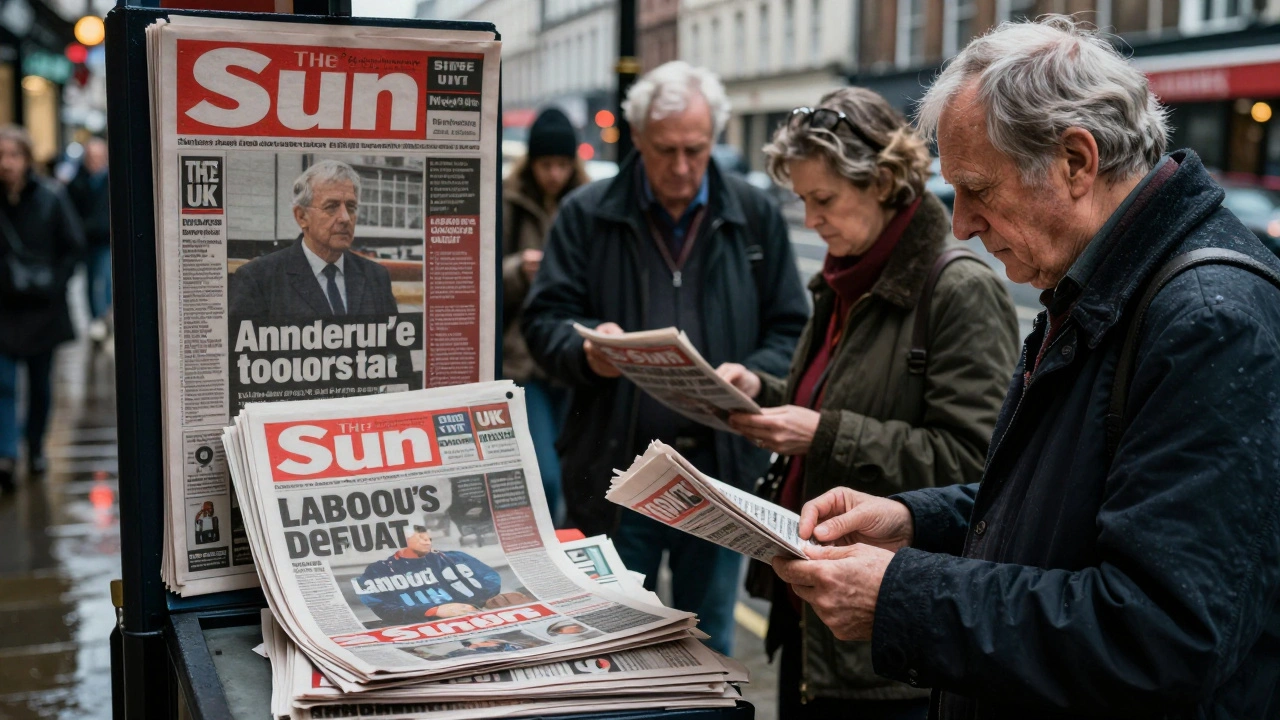
Is The Sun Newspaper Left or Right-Wing? UK, US, and New York Editions Compared
Sun Newspaper Comparison Tool
This tool helps you understand the significant differences between three publications with similar names:
The Sun UK (tabloid), The New York Sun (conservative broadsheet), and The US Sun (online-only spinoff).
These are completely separate publications with different owners, audiences, and political positions.
Political Orientation
Best-selling newspaper in Britain (1.1M copies daily)
Consistently supported Conservative Party since 2010
Historical shifts: Supported Labour (1974), back to Tories, then strategic support for New Labour (1997)
Current stance: Lower taxes, stricter immigration, skepticism toward EU
Political Orientation
Conservative broadsheet (not tabloid)
Founded in 2002 by Seth Lipsky (former WSJ editor)
Shut down in 2008, relaunched in 2022
Current stance: Advocates for lower taxes, school vouchers, free markets
Political Orientation
Online-only spinoff of The Sun UK
Launched in 2019
28.7 million monthly visits
Focuses on immigration, crime, 'woke culture'
| Category | The Sun UK | The New York Sun | The US Sun |
|---|---|---|---|
| Founded | 1964 | 2002 | 2019 |
| Format | Tabloid | Broadsheet | Online-only |
| Ownership | News UK (Rupert Murdoch) | Independent | Linked to The Sun UK |
| Current Political Stance | Strongly Right-Wing | Strongly Right-Wing | Right-Biased |
| Key Focus | Political influence, working-class issues | Policy influence, conservative ideology | Online outrage, emotional storytelling |
| Primary Audience | Older UK readers | Policy elites, conservatives | Younger digital readers |
When people ask if the sun is left or right-wing, they’re not talking about the star in the sky. They’re talking about The Sun - the newspaper. And the answer isn’t simple. There are three major publications with ‘Sun’ in their name, and they don’t all think the same way. The Sun in the UK, The Sun in the US, and The New York Sun are completely separate. They have different owners, different audiences, and very different politics. But if you’re asking because you saw a headline and wondered where it’s coming from - you’re not alone.
What The Sun (UK) Really Believes
The Sun in the UK is the most famous - and the most controversial. It’s the best-selling newspaper in Britain, with about 1.1 million copies sold every day. But its politics have shifted more than its front pages. In 1974, it famously backed Labour with the headline: ‘Why It Must Be Labour.’ Just months later, it switched to supporting the Conservatives. That wasn’t a fluke. It was the start of a long move right. By the 1980s, under Rupert Murdoch’s ownership, The Sun became a loud voice for Thatcherism. It cheered on privatization, attacked unions, and mocked Labour leaders. In 1997, it shocked everyone by backing Tony Blair’s New Labour. ‘THE SUN BACKS BLAIR’ screamed the front page. But that wasn’t a sign of leftward drift. It was a strategic move. Blair was centrist, modern, and electable. The Sun backed winners, not ideologies. By 2009, it turned on Labour again. ‘Labour’s Lost It’ was the headline. Then came the 2010 election: a clear call to vote Conservative. It’s been backing the Tories ever since. Even when it criticizes them - like in May 2024 when it told Rishi Sunak to ‘Fix the Truss Mess’ - it’s still operating from the right. The paper doesn’t want to destroy the Conservatives. It wants to shape them. The Hillsborough disaster in 1989 changed everything. The Sun published false claims that Liverpool fans stole from the dead and urinated on police. The paper was banned in Liverpool. To this day, many people there refuse to buy it. A 2025 study from Trinity College Dublin found that people in Liverpool who boycotted The Sun became more left-wing than those in other parts of Northern England. The paper didn’t just report the news - it moved the needle on politics.The New York Sun: A Conservative Niche
The New York Sun is not the same paper. It started in 2002, founded by Seth Lipsky, a former Wall Street Journal editor. It never had The Sun UK’s circulation - only about 17,000 readers at its peak. But it had influence. It was a broadsheet, not a tabloid. And it was unapologetically right-of-center. It backed Dick Cheney for president in 2007. It argued for lower taxes, school vouchers, and free markets. Columnists included William F. Buckley Jr., Mark Steyn, and Daniel Pipes - names that don’t show up in liberal papers. In 2013, it editorialized against raising the debt ceiling. That’s not moderate. That’s conservative policy activism. The paper shut down in 2008. But it came back in 2022. And it hasn’t softened. The new editor, Kelsey Bolar, has doubled down. In January 2026, it openly endorsed Project 2025 - a far-right policy blueprint from the Heritage Foundation. This isn’t just opinion. It’s advocacy. The New York Sun doesn’t want to win elections. It wants to define what conservatism means.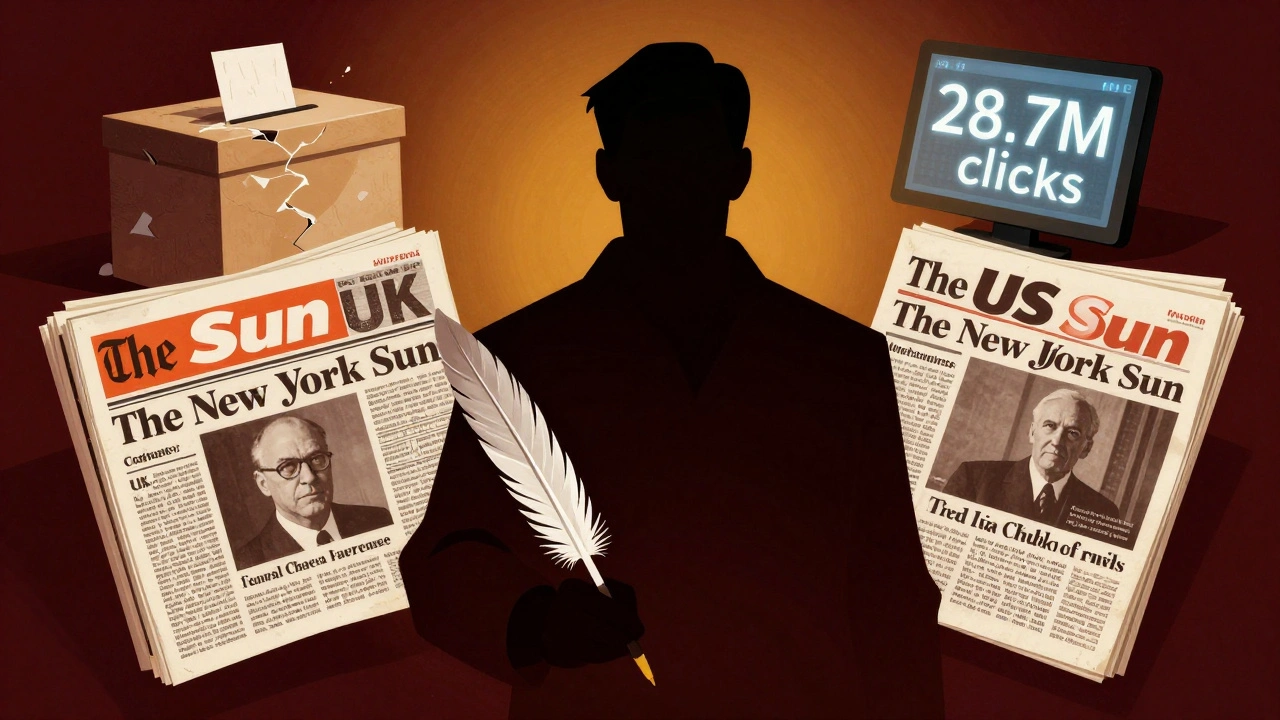
The US Sun: Digital-First Right-Wing Noise
The US Sun is the newest. Launched in 2019, it’s an online-only spin-off of the UK paper. It has no print edition. No offices in New York. Just a website that copies the tone, style, and bias of The Sun UK - but for American readers. Media Bias/Fact Check rates it as ‘Right Biased.’ AllSides says the same. Its headlines are loud. Its stories are often sensational. It pushes claims about immigration, crime, and ‘woke culture’ that mainstream outlets ignore. It doesn’t just report on conservative ideas - it amplifies them. A December 2025 analysis from Media Matters found that since 2023, its coverage has grown more partisan, more emotional, and less fact-checked. It gets 28.7 million monthly visits. Most of that traffic comes from the U.S. That’s more than most local newspapers. But its credibility is shaky. It’s been caught running misleading headlines and failing basic fact checks. It’s not trying to be the New York Times. It’s trying to be the loudest voice in the room.Why This Matters
People don’t just read newspapers for news. They read them to feel like they belong. The Sun UK isn’t just reporting on politics - it’s telling its readers who they are. ‘You’re the hardworking taxpayer,’ it says. ‘They’re the lazy, entitled, out-of-touch elite.’ That message doesn’t change just because the party in power changes. The same goes for The New York Sun and The US Sun. They’re not trying to inform. They’re trying to activate. They give people a narrative: that the country is being taken over, that traditional values are under attack, and that only strong leadership - usually conservative - can fix it. That’s why these papers still matter, even as print dies. They shape what people believe is normal. A 2025 study showed that when media outlets paint a political party as extreme, people become less likely to support it - even if the party isn’t extreme. The Sun didn’t need to lie about Hillsborough to hurt Labour. It just needed to keep calling them ‘soft on crime’ or ‘anti-business.’ Over time, that sticks.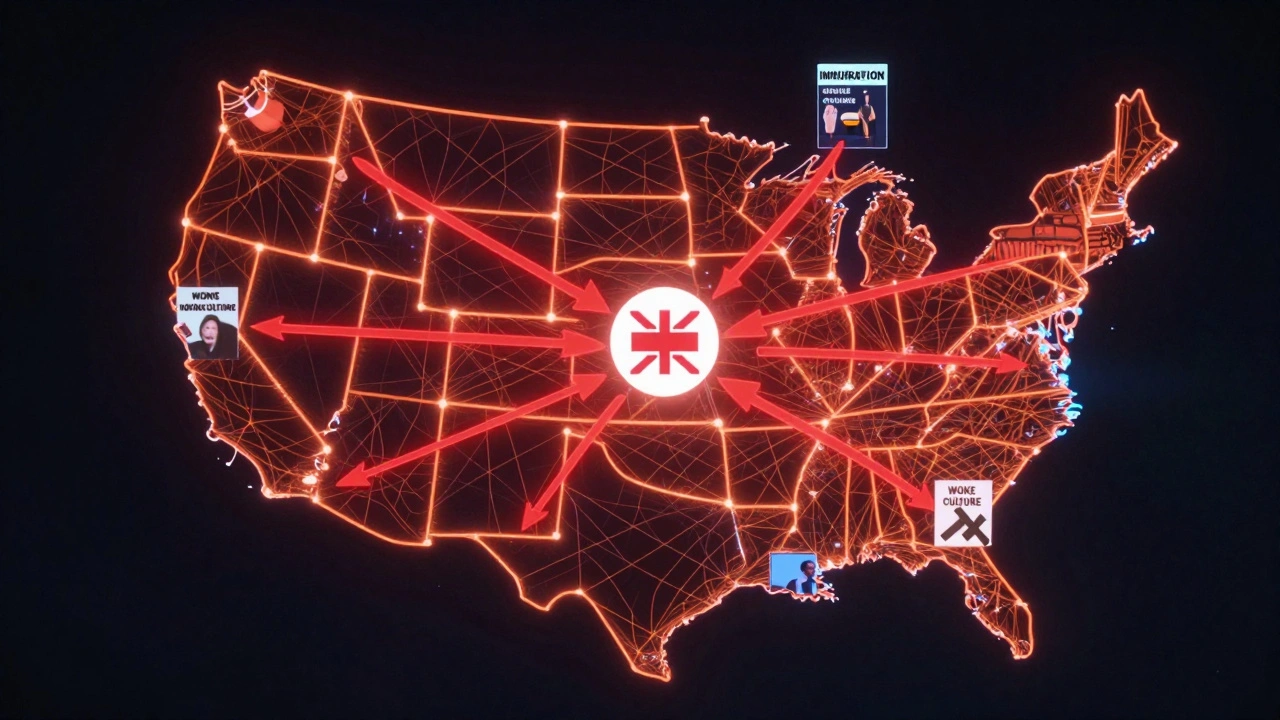
Who Still Reads These Papers?
The Sun UK still sells a million copies a day. But its audience is aging. The average reader is over 55. Younger people get their news from TikTok, Twitter, and YouTube. That’s why The US Sun focuses on digital. It doesn’t need print. It needs clicks. The New York Sun has a tiny audience, but it’s powerful. Its readers are donors, think tank staff, and conservative activists. They don’t care about circulation numbers. They care about policy. They write the ideas that later show up in Congress. The US Sun? It’s the middleman. It takes the UK’s tabloid rage and translates it for American audiences. It’s the bridge between Rupert Murdoch’s empire and the far-right online world.It’s Not About the Sun. It’s About Power.
Rupert Murdoch once told the UK Parliament he personally decides which party The Sun backs in elections. That’s not normal. That’s control. And it’s not just about one paper. It’s about a system. The Sun, The New York Sun, The US Sun - they’re parts of the same machine. Different gears. Same engine. If you want to understand modern politics in the UK and the US, you can’t ignore these papers. They don’t just reflect public opinion. They shape it. They make some ideas seem obvious. They make others seem dangerous. And they’ve been doing it for decades. The sun doesn’t have a political leaning. But the newspapers that share its name? They’re deeply, deliberately, politically aligned. And they’re still winning.Is The Sun UK still right-wing in 2026?
Yes. The Sun UK has been consistently backing the Conservative Party since 2010. While it occasionally criticizes specific Tory policies - like Rishi Sunak’s economic missteps in 2024 - it remains firmly on the right. Its editorial line supports lower taxes, stricter immigration, and skepticism toward the EU. It no longer has the same influence it did in the 1990s, but its core political stance hasn’t changed.
Did The Sun ever support Labour?
Yes, but only briefly and strategically. In February 1974, The Sun backed Labour with the headline ‘Why It Must Be Labour.’ It switched to the Conservatives by October that year. Then, in 1997, it endorsed Tony Blair’s New Labour - but only because Blair had moved the party to the center. The Sun doesn’t support parties. It supports winners. After Blair’s third win, it turned on Labour again in 2009 and has backed the Tories ever since.
Is The New York Sun the same as The Sun UK?
No. They’re completely separate. The New York Sun was founded in 2002 by former Wall Street Journal editor Seth Lipsky. It’s a conservative broadsheet that never had ties to Rupert Murdoch. It shut down in 2008 and relaunched in 2022. The Sun UK is a tabloid owned by News UK, part of Murdoch’s media empire. The US Sun is the only one directly linked to the UK paper.
Why does The US Sun exist?
The US Sun was created in 2019 to export The Sun UK’s style and political tone to American audiences. It’s not meant to be a serious news source. It’s designed to drive clicks with sensational headlines, conservative talking points, and emotionally charged stories. It’s part of a digital strategy to reach younger, online-only readers who don’t read print newspapers.
Are these papers still influential today?
The Sun UK’s influence has faded compared to its 1980s peak, but it still shapes conservative discourse. The New York Sun influences policy elites and think tanks. The US Sun drives online outrage and reaches millions of American readers. While younger people get news from social media, these papers still set the tone for what’s considered ‘common sense’ in right-wing circles.

About Author
